Posts Tagged ‘ abandoned structures ’

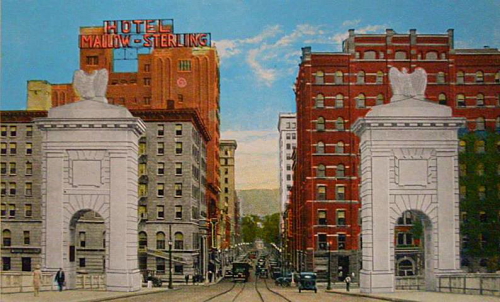
An Anniversary of Decline: The Significance of the Demolition of the Hotel Sterling

Picture 6 2

This is every community’s story in 2016 America. Crazy as it sounds, as you hear residents debate about the possibility of “saving” an abandoned or endangered  building, especially one of historical significance, have you ever considered the issue from the building’s point of view? Now you can, for free (at least from July 27th thru July 29th, 2016) at Amazon.com.

Picture 18 2

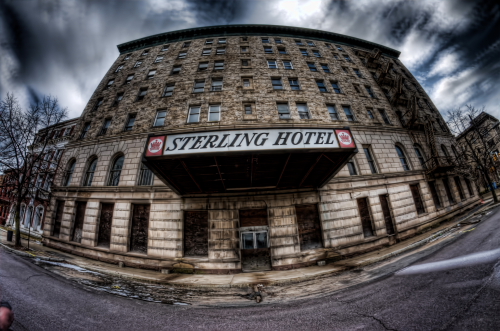
I had the opportunity to photograph what remained of the historical Hotel Sterling, prior to demolition, and I swear, it “spoke” to me–about the price of preservation, and the cost to communities when non-action occurs, while waiting for some unknown entity to step up with a solution and much needed funding.

First published in July of 2013 and currently ranked on Amazon’s Historical Preservation world-wide category at #121**, Welcome To The Zombie Hotel Sterling, will be available for free, in honor of its demolition anniversary, until Friday, July 29th, 2016.

**(Update: Currently #1 in Pop Culture on 7/27/16 & 7/28/16.  Sorry Taylor Swift!  Just kidding, I love Taylor….)

amazon


“History meets Pop Culture in a tale about time, consequence, and unrealized visions for the future, as an entire community attempts to outrun diminished expectations for a way of life they can no longer hope to maintain. Abandoned and rotting away along the banks of the mighty Susquehanna River, the zombified Hotel Sterling tells its tale of fading grandeur and woe to a photographer visiting the deteriorating structure, seeking to document the reality of the condition of the building, as the hotel waits for its beloved community to decide its fate, once and for all.”

So grab a digital copy for yourself, while you can, for free.  If you don’t have a Kindle App, you can get one, for you smartphone, computer, or tablet at:  Amazon Free Kindle App  .

*~*~*~*~*~*~*~*

 What does local Abandoned Pennsylvania History

have to do with the 2016 Presidential Race?

Visit:

Abandoned Scranton Lace:

A Visual Autopsy of The American Dream

facebook

Cheri Sundra © 2016 All Rights Reserved


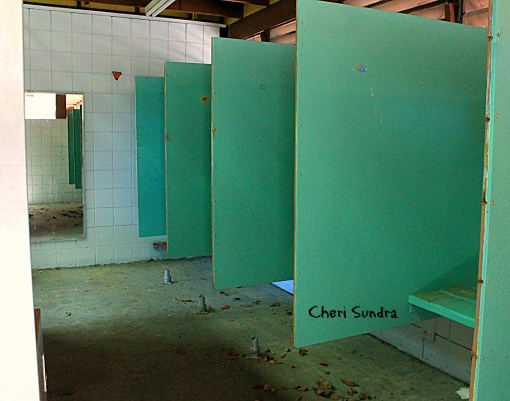
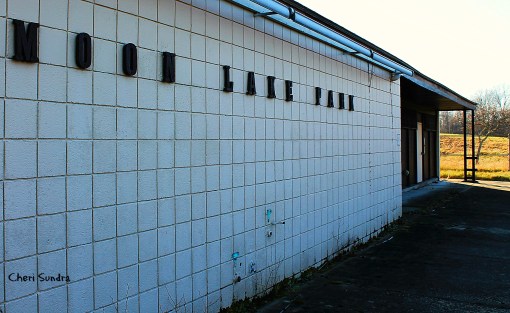
No Fun In The Sun Moon Lake Park

Moon Lake 1Photo courtesy of Stephanie Howard

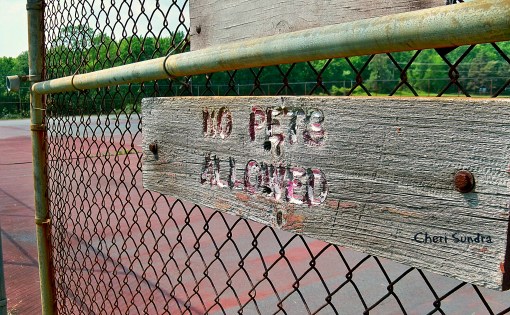
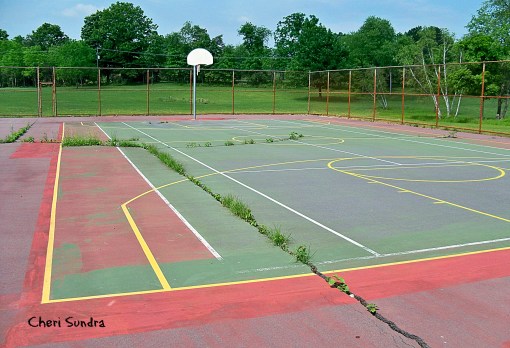
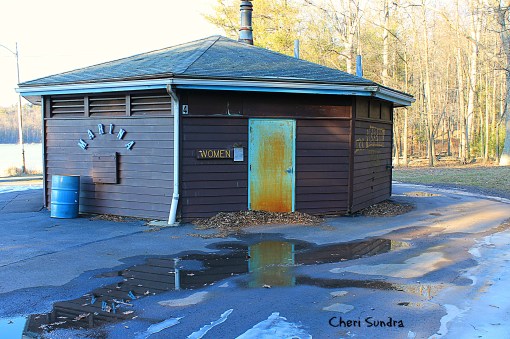
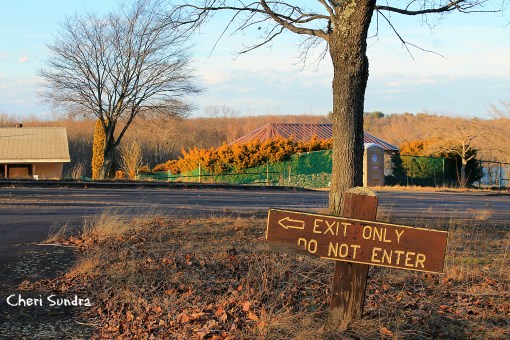
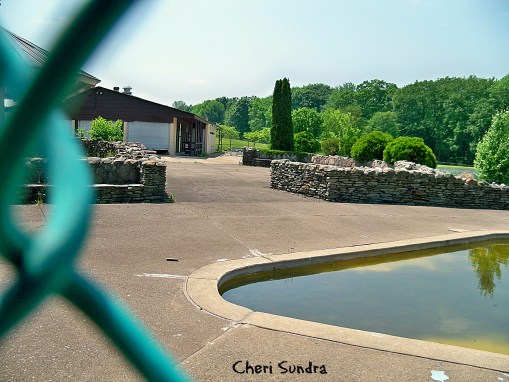
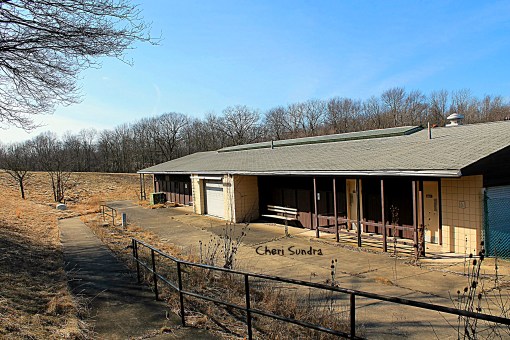
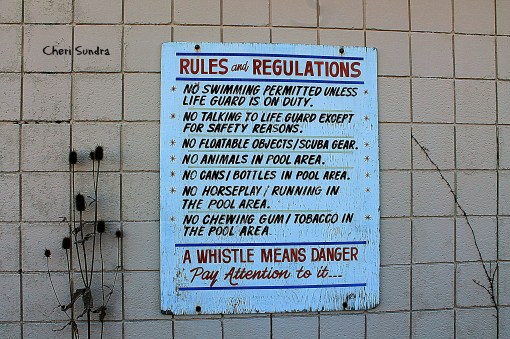
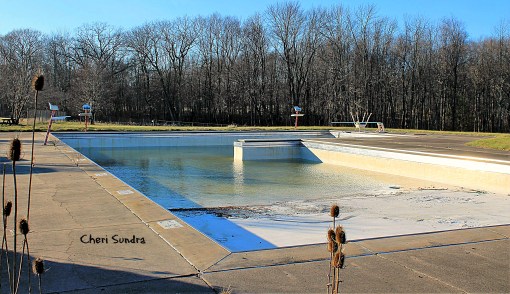
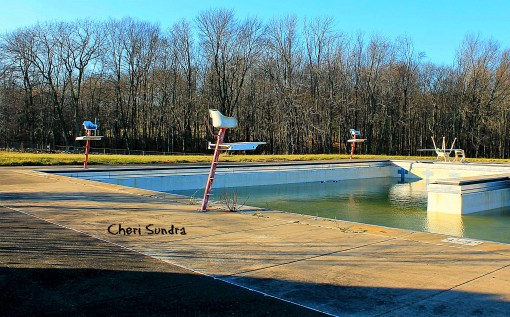
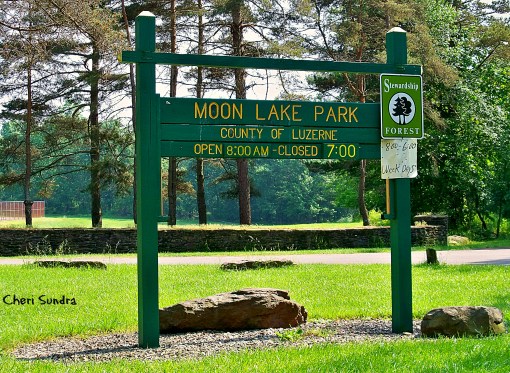
In 2011 and 2012, local papers were running stories about coming up with a multi-million dollar plan to save Luzerne County owned Moon Lake Park, because today, all plans have to be “multi-million”. For those who are not familiar with the area, Moon Lake Park, located in Pennsylvania, was a low key, inexpensive  (mostly free) kind of place, where people could go to enjoy the great outdoors, with access to a few amenities.  You could camp and fish.  You could bike and hike. It had a pool and some tennis courts.  Picnic tables, were sprinkled throughout the property.  It was a great place to kick back, enjoy nature, catch some rays, grill burgers, and hang out with friends and family.

ML 2

ML 4

ML 5

The View Thru A Missing Office Window

ML 6

By the time the public discussion began about how to fix the park, many amenities had been closed by Luzerne County for several years due to budgetary concerns. The facilities did show obvious signs of neglect when I started photographing the decline in 2012.  But it could have been greatly improved upon with some simple repairs, like repaving those tennis courts and repairing the picnic tables.

ML 7

ML 8

ML 9

ML 14

ML 12

But instead of coming up with a real world workable plan, government red tape dictated that the financially struggling county had to waste time and precious resources, like money, creating a completely unattainable $37 Million Dollar Master Plan, which was required to apply for grant money to move forward on an improvement project that could never possibly be implemented within the near future.  Input coming from the public suggested the plan include a water park, snow tubing, rock climbing, zip lining, and nature-survival activities so it could be designed to compete with places like The Great Wolf Lodge in the Poconos.

ML 17

ML 1

ML 10

ML 18

ML 19

ML 16

ML 20

ML 21

ML 22

ML 23

ML 24

ML 25

ML 26

ML 27

ML 27B

ML 28

ML 30

ML 31

ML 32

ML 33

ML 34

ML 35

Despite having a yearly budget of only $119,626 to run the park in 2011, the county commissioners approved a $120,000 contract with Sasaki Associates Inc., located in Massachusetts, to be the consultant in charge of creating the master plan that same year. The state agreed to pay for half of the cost while the county planned to spend bond proceeds borrowed in 2008 to fund its $60,000 share according to news reports. How did all of our little community improvement projects turn into these multi-million dollar endeavors, that are never going to be attainable in a county as financially strapped as this one? We couldn’t even afford to write the plan, let alone find the funds to execute it.

Maybe that’s the real issue. Government red tape, and community input with Dom Perignon taste, while trying to scrape together enough change to buy a dollar draft, wastes so much time creating these dream scenarios that our leaders don’t have the opportunity to think about realistic plans which would actually make sense.

ML 36

ML 37

ML 38

ML 39

ML 40

ML 41

ML 42

ML 43

ML 48

ML 49

ML 44

ML 45

ML 46

ML 47

ML 13

Recently, ownership of Moon Lake Park was transferred to the state of Pennsylvania’s Department of Conservation and Natural Resources Bureau of Forestry.  According to reports, they plan to allow most of the park area to return to its natural state, with paved roads being replaced with crushed stone as they deteriorate. The pool and other structures will disappear.  The new public bathrooms will be non-flushable sealed concrete vaults, and the designated camping areas will be rustic with no utility hook-up. Future plans include a new well-manicured area for picnics and a boat launch near the lake.

ML 15

facebook

####

It was Jennifer O’Malia who introduced me to the concept of Urban Exploration

Style Photography in 2010.  Jenn, who has the unique vision of a

social documentarian, is now offering her services as a freelance photographer.

Photo by Jennifer O’Malia

Ceremony-72soft

Back to Guerrilla History Table of Contents

The Death(s) of the Wilkes-Barre Train Station & The Funeral Train (Part 1)

Market Street Square

Once upon a time, getting from one place to another was much different than it is today. Life in the village of Wilkes-Barre was rustic, with mud streets running along ash sidewalks, and a water canal system serving as a viable way to transport goods from one location to another.

Consider this account by Wilkes-Barre resident Edith Brower from her book “Little Old Wilkes-Barre As I Knew It”, which was published in 1920:

“I plainly see myself, a child of three, sitting in outdoor winter clothing, waiting for the stage coach to stop at our house. It was the middle of the night, but the driver’s hours were as uncertain as is to-day the outgoing train from Bear Creek to the Junction. Somehow we had to make it to Easton, over the old turnpike, in time for a rather early morning train, if we wished to be in New York City that day. The (stage-coach) driver was not unlikely to be drunk—one had to keep warm you know; but he always managed, so it was said, to land his passengers in Easton safe, sound & prompt.”

Then, as luck, and the Coal Baron gods, would have it, the railroad came steaming into town along the bed of the old canal, doing away with the need of the services of the drunk stage coach driver, in order to have access to train travel. The city of Wilkes-Barre’s prosperity, during those days, is largely due to the Lehigh and Susquehanna Railroad, later known as the Central Railroad of New Jersey, which brought the local economy in touch with the development of commercial and manufacturing interests of the outside world.

Abandoned Train Station Money Shot

Abandoned Train Station Money Shot

Photo courtesy of the League of Gentlemen Explorers

Northeastern Pennsylvania is called the “Coal Region” because it holds the largest known deposits of anthracite coal in the Americas. Mining coal was like printing money and pouring it directly into the local economy. As a result, Wilkes-Barre acquired a train station of its own, built in 1868, the boom year of the railroad industry.

The Station Historical

At the same time, the city’s population was in the process of doubling in size within a twenty year span, and urban growth was creating a need for larger venues to accommodate travelers within close proximity to that bustling rail station and busy downtown area. Now the city of Wilkes-Barre had to accommodate the needs of travelers and business moguls using passenger train service, and the city grew as a result, even constructing a grand luxury hotel, the Hotel Sterling, to cater to travelers with money to blow and an appetite for the pampered life. As the years passed, daily express trains, as well as commuter trains by the thousands each year, made Wilkes-Barre a central transportation hub in the era when train travel was at its peak.

Train Schedule May 18, 1901

Train Schedule May 18, 1901

The Central Railroad of New Jersey became famous for its passenger trains in 1882, when the first parlor cars were run from Wilkes-Barre to Philadelphia. Central’s passenger service attracted the attention of the public and elicited universal commendation because of superior coach cars that ran on all of the passenger trains. Accounts from 1897 say that patrons received a quality of service that excelled the industry standards at the time. The coach cars used for passenger travel were illuminated by compressed gas, enabling the guests to read in comfort, while seated anywhere in the car. The finest Pullman cars were run between Scranton, Wilkes-Barre and New York where a buffet lunch was offered. The idea of running buffet-parlor cars on the trains of Central was an outgrowth of the company’s desire to cater to the public’s need for comfort in the best possible way.

Some of the early passenger trains stopping at the depot were ranked the finest in the nation at that time. One of the first was the “Central Flyer”, a fast train to New York inaugurated in 1893; a seashore train called “The Mermaid”; plus a New York Express called “The Bullet” which could make the run from Wilkes-Barre in four hours and ten minutes.

Train

The last passenger train left the city of Wilkes-Barre on July 1, 1963, after two passengers exited the coach car, ending the era of train travel in the city forever. And that was not the last railroad related economic blow to the region. As the demand for the mining industry declined, in 1972, the New Jersey Central Railroad line officially closed all rail operations.

Abandoned Train Station

Abandoned Train Station

Cheri Sundra–Guerrilla Historian

Up to the "Bird's Nest"

Up to the “Bird’s Nest”

Photo courtesy of the League of Gentlemen Explorers

Bench in the "Bird's Nest"

Bench in the “Bird’s Nest”

Cheri Sundra–Guerrilla Historian

Watch your step on the way down!

Watch your step on the way down!

Cheri Sundra–Guerrilla Historian

Abandoned Train Station

Abandoned Train Station

Photo courtesy of Katherine Rogers

In a newspaper interview, Donald Hawkins, who joined the New Jersey Central Railroad in 1942, described the last ride from the Ashley, Pennsylvania, rail yards, “It was a Saturday and I guided the miles of trains along their routes of our area. I had the feeling of loss. It was the end of an era; it was the end of a way of life; it was the beginning of hardships for many.”

The sting of economic adversity was already being felt in Luzerne County after the money that was fed into the local economy, because of World War II, came to a screeching halt. The War meant that American production lines and mineral mines were producing at full steam. Northeastern Pennsylvania was considered a hub, with thousands of trains carrying coal and war equipment. Puffing steam engines used to make their way out of the valley and over the mountains. But changes had already begun to occur. Diesels replaced the steam engine and oil tankers replaced coal cars. The demise of the anthracite coal industry could first be seen by watching the railroads. And at the same time, individualism, the open road and car travel began to replace traveling by train.

In 1972, the last freight train, under the symbol of the Central Rail Road of New Jersey, was assembled at the line’s Ashley Yards. Scheduled to leave on the eastbound track to Jersey City, New Jersey, it was being called “The Funeral Train” by CNJ employees. All of the engineers, fireman, brakemen and conductors called off “sick” that day, leaving the last bit of work to supervisory personnel.

Historic CNJ shot

This was a scene in the Ashley Yards of the Central Railroad of New Jersey in the mid-1970s as the CNJ prepared to close the yards.


The last CNJ freight was being put together by Donald Hawkins, Hanover Township, yardmaster, and Jack Tinner, Sugar Notch, general foreman. Asked what they would do at the end of their shifts, the men said they would do as they do on any other day. “We’ll put on our coats, walk out the door and go home,” one man said.

Lord of the Flies

Photo courtesy of George Foster


Train Station Exterior / Now Abandoned Night Club Interior

Train Station Exterior / Now Abandoned Night Club Interior

 Cheri Sundra--Guerrilla Historian

Record Player

Photo courtesy of George Foster

Staircase

Photo courtesy of Katherine Rogers

Don’t Miss Part 2:

A Resurrection Reversed:  The Playboy Bunnies & The Death(s) of the Wilkes-Barre Train Station

~*~*~*~*~

facebook

Return To

GUERRILLA HISTORY Table of Contents

Cheri Sundra © 2014
All Rights Reserved

The Huber Breaker: Machines of Corruption

     Like a glimpse into the future, I can remember when Beyond Fallen front man, Joe Karavis, performed an Iron Maiden song during a talent show at Hanover Area High School.  So it’s not surprising that he and his band, currently celebrating a decade together, have performed in venues like the Headbangers Open Air Festival in Germany.   Beyond Fallen is currently preparing to release a new CD on September 7th.

Beyond Fallen

     Looking to use imagery that was specific to Northeastern Pennsylvania, vocalist and cover designer, Joe Karavis, chose The Huber Breaker as the backdrop for the cover art for their fourth CD, “Machines of Corruption”.

     “It fits very well with the theme of the title track. The Breaker is kind of scary to me, and I thought it would make a great cover”, explained Karavis.  Like just about everyone else in Luzerne County, Joe has family ties to the coal industry, “Yeah,  I had some family members that worked in the mines… it made them pretty miserable I guess.”

     The Huber Breaker, which has been abandoned since the late 1970s, has been a popular Urban Exploration site for decades, and is often described by explorers as “ a death trap” and  “twisted metal” because of the condition of the structure.   “I went there to take the photos and I wanted to get done and out of there as fast as I could”, said Karavis about his experience photographing The Breaker. “It’s very quiet, and you feel like something or someone is about to jump out at you”, he explained.

     I asked Karavis why he’s remained true to his heavy metal musical roots.  “It was the type of music that best suited my voice. One thing led to another and I just went with it”, he replied.  I wondered if the genre has changed since his high school talent show days.   “It’s evolved”, Joe explained, “but not to the point that it’s gone too far away from the things that make the genre what it is. Many newer bands are doing some interesting things. It’s a style if you take it from the basics, that can branch out into many directions.”

     Beyond Fallen, which has quite an international following, is often described in articles as a “US Power Metal” band.  I asked Karavis if that means that it has a different sound than Metal from bands in other countries.  “I don’t think the labels on styles always interpret into what the music sounds like. Some people have called us that style. It could be that it’s faster and more energetic than traditional heavy metal, with a more riff-driven approach, but that’s not always the case”, Joe explained.

     In discussing NEPA’s influence on his artistic vision, why there is an interest in NEPA grown music abroad, and how music transcends geography, Joe said, “We tapped into a niche. We just found that we had more interest from the European metal community in what we were doing, so we focused more on that. I think we have some similarities with the Midlands Birmingham region of Great Britain, where legendary bands like Black Sabbath, Judas Priest came from. A blue collar industrial region. It’s also not exactly a cultural Mecca here like New York, London, Paris etc. so you try to find inspiration in other ways.”

      While Beyond Fallen enjoys an international fan base, they do all of their recording locally at SI Studios in Old Forge.  “It’s always been great working at SI”, said Karavis, “This is the fourth time this band has recorded there. We are lucky to have a studio like that in our area. The guys there are professionals, and we feel comfortable.”

     Joe Karavis writes all of the band’s lyrics himself, which have been described as politically and socially charged.  I asked Joe what fans can expect to find on their new CD.  “We have different topics for each song. One is about the Roman Emperor Caligula, corrupted by his own ego and hunger for power. The title track is about how humans are used and abused. The CD has all the lyrics included so I’ll leave the rest up to the listener”, he explained.

Beyond Fallen

Beyond Fallen

Photo Credit:  Keith A Barbuti

     I asked Karavis when he started writing his own music.  “I think when I was in grade school me and some other boys used to make up our own words to popular songs, like dirty limericks etc. The first couple recordings I did were horrible, but you have to start somewhere”, he said.

     When asked what he wanted people to know about the new CD, Karavis responded, “We are proud of it. Hopefully everyone will like it. It’s not for everyone, but it’s very creative and the songs have a lot of energy. We had more time to write these songs than the ones on the previous album. Every time we record there’s a sense that this could be the last thing we ever do, so we try our best to make it great.”

 @@@@@@@

Return To

GUERRILLA HISTORY Table of Contents

Cheri Sundra © 2013
All Rights Reserved

Hotel Sterling: Yesterday’s Papers are Such Bad News

Apartments for Rent HD

*~*

As Mick Jagger used to sing, “Yesterday’s paper’s are such bad news”,  and no truer words could be spoken about the Hotel Sterling, which has been reduced to rubble,  as of last week.  While demolishing the Hotel is still a controversial issue  among community members,  looking back at newspaper coverage since 2001, provides some important clues about why the project may have ultimately failed.

I did have this information up in another post titled “The Undead Days: Part 2”, which I am currently developing into another project about the Hotel Sterling, and as a result, had to remove the post from my website.  While much of the post was just a silly mash-up story, I think it is important to put the newspaper excerpts back out there for anyone who would like to read and digest what nuggets of insight may be contain within the facts that local journalists covering  the story felt were important to convey to the public.  This is by no means a complete list of all news stories about the Sterling.  But it may provide a starting point for anyone else who may be interested in delving into the topic, as reported to by the local newspapers in the past.

Hotel Sterling in the News

The advance state of disrepair the Hotel Sterling has fallen into in downtown Wilkes-Barre has local historians worried about its future.”—The Valley’s Vanishing History”, Citizens’ Voice, March 18, 2001  

Congressman Kanjorski has also been working behind the scenes for years to create opportunities for the resurrection of the Sterling.  On Wednesday, the federal lawmaker confirmed that last week he led a developer on a tour of the Sterling.  He has been in touch with four different developers over the past year.  He declined to identify them but stressed that it is important to get the Sterling in the hands of CityVest so that redevelopment proposals could be solicited to get the project moving forward.” — “Developers interested in Sterling”, Citizens’ Voice, May 9, 2002

The 425 room hotel was a symbol of Wilkes-Barre’s prominence.  Now, it’s a symbol of the city’s decay.–“Saving City, Sterling Go Hand in Hand”, Times Leader, December 17, 2002

CityVest is working to put the vacant hotel in moth balls and prevent additional damage from the elements“–Saving City, Sterling Go Hand in Hand”, Times Leader, December 17, 2002

Private development is the key to resurrection for the quickly declining hotel–“Saving City, Sterling Go Hand in Hand”, Times Leader, December 17, 2002

If projects like the inflatable damn, the downtown museum and the River Commons recreation area pan out, it will make the Sterling more attractive to developers.  But it won’t be enough.–“Saving City, Sterling Go Hand in Hand”, Times Leader, December 17, 2002

And unless we turn the tide, we’ll forever be a city that has seen better days, and the shell of the Sterling will stand as proof.  We can still hook a developer for the Sterling if things don’t turn around, but we’ll have to use smoke and mirrors. We’ll have to hide the newspapers when prospects visit, so they won’t read about our dirty politics, disappearing doctors, etc.–“Saving City, Sterling Go Hand in Hand”, Times Leader, December 17, 2002

 “In the past few months, other developers near and far have shown interest in the hotel, (Alex) Rogers said.  In addition, he added, residents, architects and others have offered to assist CityVest, which has secured the complex of buildings in an attempt to reduce further weather-related damage.”  — “Some Sterling Examples”, Times Leader, April 3, 2003   

Lincoln was chosen to find a developer (for the Hotel Sterling) because the firm has acquired a lot of experience in the region.  It has played a major role in guiding commercial development on Highland Park Boulevard near the Wachovia Arena in Wilkes-Barre Township and recently completed a detailed market study of Wilkes-Barre for the Diamond City Partnership. —“National Firm Will Market Sterling”, Citizens’ Voice, September 16, 2003

Gary Brandeis, senior vice president of Lincoln Properties and James Stevenson, vice president, were introduced, and both expressed confidence that the Sterling complex would be successfully transformed. —“National Firm Will Market Sterling”, Citizens’ Voice, September 16, 2003

CityVest paid $1 million for the dilapidated Sterling complex in November 2002 at sheriff sale, a benchmark event following years of abandonment, decay and protracted litigation. —“National Firm Will Market Sterling”, Citizens’ Voice, September 16, 2003

CityVest was provided with a $1 million federal grant from U.S. Rep. Paul Kanjorski, D-11 & a $4 million loan from the Luzerne County Office of Community Development.  Wilkes-Barre City, the Wilkes-Barre Area School District and Luzerne County agreed to forego $1 million in back taxes and penalties to facilitate the purchase and redevelopment of the Sterling. —“National Firm Will Market Sterling”, Citizens’ Voice, September 16, 2003

In January 2003, CityVest retained a team of local architects and engineers to assist them to stabilize and protect the complex from further decline. —“National Firm Will Market Sterling”, Citizens’ Voice, September 16, 2003

 With $9 million already raised, the corporation must look for new ways to come up with the remainder of the cash (to cover the first part of the project in excess of $29 million). “We anticipate raising private sector money and will continue to seek public assistance as well”, the chairman said.  Rogers said that with the capital that CityVest has already secured, the corporation could actively market the building. –- “Imagine the Possibilities”, The Sunday Voice, October 10, 2004

Renovations to the Hotel Sterling will begin this spring and will not be completed until at least 2007, according to CityVest Chairman Alex Rogers.  However, he said he has already fielded over 20 inquires about the proposed condominiums and offices. – “Market Shows interest in Condominiums”, The Sunday Voice, October 10, 2004    

Working from the seventh floor down, obvious challenges to redevelopment could be seen everywhere.  The building has problems with infestation and mold, and also sustained heavy water damage due to prolonged leakage in the roof.  A hole opened in the seventh floor penthouse suite, and Rogers said water came pouring into the building for four months.  Because of that, the suspended ceilings in many of the former apartments have crumbled, sending debris onto the floor.—“Imagine the Possibilities”, The Sunday Voice, October 10, 2004

 The commissioner (Vonderheid) said the Sterling project was specifically important because he feels there is a need for high end housing in the City of Wilkes-Barre.—“Market Shows Interest in Condominiums”, The Sunday Voice, October 10, 2004

The mayor agreed there is a market for upscale housing in the city of Wilkes-Barre.  “I’ve been told that if the housing industry changed in the city of Wilkes-Barre, people who live in the suburbs would seriously consider moving back into the city”, Leighton said.—“Market Shows Interest in Condominiums”, The Sunday Voice, October 10, 2004

 “The governor’s award of $3 million made it clear that we had sufficient capital to complete the project”, Alex Rogers, City Vest executive director — “Sterling Gets Developer”, Times Leader, December 1, 2004 

“CityVest, the nonprofit corporation driving the rehabilitation of the Hotel Sterling is no longer shopping the decrepit landmark to private developers, but is planning to take on the project itself”……“Interest in a reincarnated Sterling has already begun to manifest itself, (Alex) Rogers said.  “The number of inquiries we have received from people waiting to live or work in a refurbished Hotel Sterling has vastly surpassed any of our individual expectations.”—“CityVest To Do the Job Using Millions in Grants”, Times Leader, December 1, 2004 

“CityVest shifted gears from marketing the Sterling to developers to becoming the developer after receiving millions of dollars in state funding in September.”–“CityVest To Do the Job Using Millions in Grants”, Times Leader, December 1, 2004

The initial phase of the project has been projected to cost about $22 million.  Thus far, about $8 million in cash has been promised by federal, state and county sources, and $1 million in tax forgiveness has been by the city, county and school board.  “We are going to need a lot of private financing to go with the public money”, Rogers said.  -– “Firms:  Sterling Project Can Thrive”, Times Leader, April 15, 2005

He (Rogers) agrees with Congressman Paul E. Kanjorski, that the Hotel Sterling might be eligible for federal tax credits meant for development projects in low-income communities. –“State Ensuring Preservation of Hotel Sterling’s Legacy:  Bureau for Historical Preservation Will OK CityVest’s Progress”, Citizens’ Voice, June 7, 2005

 “Without any formal marketing, CityVest board members can’t go to any functions in town without somebody expressing interest”, Rogers said..–“State Ensuring Preservation of Hotel Sterling’s Legacy:  Bureau for Historical Preservation Will OK CityVest’s Progress”, Citizens’ Voice, June 7, 2005


The building schedule has not been established.  That’s up to CityVest which is still making environmental inspections and consulting with the state Bureau for Historical Preservation to make sure the landmark’s historical integrity is protected.–“Historic Landmarks Offer Potential, Pitfalls for Architects”, Citizens’ Voice, June 7, 2005

To date, the bureau remains pleased with the relationship with CityVest.–“State Ensuring Preservation of Hotel Sterling’s Legacy:  Bureau for Historical Preservation Will OK CityVest’s Progress”, Citizens’ Voice, June 7, 2005


Currently, CityVest has accounted for about $9 million of the projected $20 million to $22 million needed for renovation.  But Rogers is optimistic about CityVest’s chances of raising the needed $10 million to $12 million..–“State Ensuring Preservation of Hotel Sterling’s Legacy:  Bureau for Historical Preservation Will OK CityVest’s Progress”, Citizens’ Voice, June 7, 2005

 “The state is filled with historic structures facing demolition, he said. He’s been working with the owners of the massive former Pennhurst State School and Hospital in Chester County, which has an unknown future.  One of Kimmerly’s (of Preservation Pennsylvania) colleagues is involved in the potential demolition of a vacant former brewery in Allentown. “These are difficult times economically. Private funders don’t have money. The government doesn’t have any money, and typically that’s where money comes for historic preservation,” Kimmerly said. – “Preservation Pennsylvania is monitoring Hotel Sterling”, Times Leader, April 3, 2011

As the nonprofit CityVest embarked on the Hotel Sterling renovation project in 2001, officials and residents in a smaller Ohio city were taking on a similar project to try to save their deteriorating historic hotel. But while the Hotel Sterling is facing possible demolition, the Fort Piqua Plaza in Piqua, Ohio, is now home to a library, coffee shop, banquet hall, community museum and art gallery, said James Oda, director of the Piqua Public Library housed in the building. “It was a controversial issue locally. We had people who said, ‘Why don’t we tear it down and start over?’ Others said, ‘No. This is part of our community’s heritage,’” Oda said. “Fortunately, people who wanted to preserve the building opened their pocketbooks,” Oda said…….. “The private donations came from sources as diverse as an elementary school selling popsicles to some multimillion-dollar donations primarily from a prominent family,” Oda said. –“Ohio City’s Hotel Saved”, Times Leader, April 3, 2011   (NOTE:  The building opened in 2008)

The owner of the landmark Hotel Sterling wants Luzerne County government to determine the fate of the deteriorating structure, which would cost up to an estimated $26.8 million to $35.6 million to fully restore, according to a new study. CityVest asked county commissioners to decide whether the building will be saved or demolished because the county provided $6 million in funding for the nonprofit to acquire and preserve the building. “In recognition of the substantial investment the county has made and the broad community interest, we ask the county to review this study, select the preferred future direction, acquire title and serve as project manager,” the study says.—“Sterling’s Fate in County’s Hands”, Times Leader, April 16, 2011

The possibility of demolition of the River Street landmark has generated lots of debate since it became public last month, after a decade of promises that the building would be restored. Picketers have urged officials to save the once luxurious hotel, while others have demanded an end to government subsidy of the project. . ..CityVest, known as a last-resort developer, assumed ownership of the building from a back-tax sale in 2002.—“Sterling’s Fate in County’s Hands”, Times Leader, April 16, 2011

Renovating and converting the downtown Wilkes-Barre property into 32 condos, offices and retail space would generate an estimated $15.3 million in revenue, leaving a net government investment in the project of $11.5 million to $20.2 million, said the study released Friday by the building’s nonprofit owner and developer, CityVest. Demolition and site preparation would cost $900,000 to $1.2 million, the study says.—“Sterling’s Fate in County’s Hands”, Times Leader, April 16, 2011

The study is packed with deficiencies in the building.    Roofing experts estimated it would cost more than $1.4 million to complete permanent repairs to the roof framing and install a new rubber roof and roof drainage.  Despite roof shoring in 2007, some portions of the roof are collapsing, and water is getting into the building in “significant volumes,” the study said. The floor is sagging in numerous areas, and there’s evidence of mold and other potential toxins, including a “pretty, green ‘carpet’ of moss on some floors, ceilings and walls.” “If there is mold growing in the cells of the floor system (or even if public perception is that it is there), the building might not be insurable at an economic level,” the study says. The building’s structural steel system appears sufficient, but beams that have been regularly exposed to moisture may need to be repaired and replaced. The windows would also have to be replaced. Water is getting into the building in “significant volumes,” according to Keast & Hood Co. The brick masonry at the rear of the structure needs “considerable repair, re-pointing and cleaning.” The study says a major snow load, high wind storm or movement of the make-shift support bracing could result in a catastrophic failure of the building or integrity of the exterior façade. “The observations of local contractors and engineers further confirm these conditions to the point where concern has been expressed about the safety of anyone entering the upper portion of the building or performing any work in that area,” the study says.—“Sterling’s Fate in County’s Hands”, Times Leader, April 16, 2011

CityVest has provided detailed funding and site information to potential private developers, met with them and in one instance signed a letter of intent, the study says. “Every potential developer – including the firm that had signed the letter of intent – ultimately withdrew themselves from consideration,” the report said. All the developers who walked away from the project identified the cost of repairs as the reason, particularly when they couldn’t guarantee they could sell or rent the residential and/or commercial space at price points that would cover their expenses, the study said. —“Sterling’s Fate in County’s Hands”, Times Leader, April 16, 2011

Among the building deficiencies identified by developers:   Low ceiling height, compromised views from small windows, an inefficient layout for use as residential or hotel units, unusable space created by the large lobby and atrium, inconsistent floor elevations on the second floor, narrow elevators that don’t comply with the Americans with Disabilities Act, concern that replacement of the floors could risk structural instability of the building because of the way the floors are anchored to the building’s perimeter walls.– “Sterling’s Fate in County’s Hands”, Times Leader, April 16, 2011

The building has “physically and functionally” lost its status as a center of downtown Wilkes-Barre over the last 40 years..– “Sterling’s Fate in County’s Hands”, Times Leader, April 16, 2011

“Vacant, stripped of every item that contributed to a memorable experience, the remaining shell is cold, damp and lifeless,” said the study, which was prepared by Susquehanna Real Estate LP. “The current condition is not only poor, but also dangerous.” —“Sterling’s Fate in County’s Hands”, Times Leader, April 16, 2011

County Controller Walter Griffith told commissioners Wednesday that he is still auditing records on how the $6 million was spent, though his findings to date convince him that the county should have been more closely monitoring the project..  —“W-B building ‘emergency’ “, Times Leader, April 21, 2011

CityVest officials defended their handling of the project in a letter to citizens, saying the government funding was used to pay inherited back taxes, demolish an adjoining structure, acquire land to make the parcel larger and remove “cheap and rotting” interior walls in drop ceilings in the 113-year-old hotel. —“Sterling’s Fate in County’s Hands”, Times Leader, April 16, 2011

CityVest on Wednesday issued a statement in response that said a developer pulled out of the Sterling Hotel project in early 2010 when it was learned the $3 million was redirected. CityVest disputes the city’s claim that certain conditions were not met.—“CityVest, City Clash on $3M”, Times Leader, June 23, 2011

“Federal investigators following up on a grand jury subpoena issued last week to the Luzerne County commissioners took possession Monday of hundreds of documents chronicling the failed rehabilitation of the historic Hotel Sterling in Wilkes-Barre, officials said.”—“Feds Seize Hundreds of Hotel Sterling Documented”, Times Leader, December 7, 2011

If an agreement isn’t reached, Wilkes-Barre eventually may be forced to demolish the city-condemned structure at its expense. The city would then have to put a lien on the property in an attempt to recoup the money, though the county would also be in line with its own lien for $6 million.—“ CityVest yet to sign deal on Sterling”, Times Leader, February 9, 2012

CityVest owes the county $6 million loaned to preserve and market the structure, and the county has set aside another $1 million in community development funding for demolition. The nonprofit asked the county to take over the project last year because it’s out of money.  —“Architect wants to mothball Sterling”, Times Leader, February, 21, 2012

(Carl) Handman, who had worked on the Sterling project in 2003, has publicly criticized the building’s nonprofit owner, CityVest, for failing to heed his past recommendation to mothball the structure to prevent further deterioration. CityVest representatives have said the nonprofit relied on project manager Lincoln Property Co.’s expert opinion on what work should be completed with the limited funds allocated for the project. —“Architect wants to mothball Sterling”, Times Leader, February, 21, 2012

What did the interior of the Hotel Sterling actually look like at this point?  

See for yourself at

Hotel Sterling video: As The Vultures Picked Her Bones

A March 2011 report released by the Sterling’s nonprofit owner, CityVest, contained a $1.2 million estimate to demolish the property. The study also references a 2009 roofing company estimate of $1.4 million to redo the roof, replacing the wood framing with steel and metal. Other portions of the CityVest study say it will cost anywhere from $5 million to $7.7 million to stabilize and mothball the 114-year-old building at the corner of River and Market streets. —“Architect wants to mothball Sterling”, Times Leader, February, 21, 2012

Mothballing would involve structural work, roof repairs, window sealing and ventilation.  –“ Several Luzerne County Council members are willing to consider mothballing the landmark Hotel Sterling for potential future development, but most are leaning toward proceeding with demolition”, Times Leader, February 23, 2012

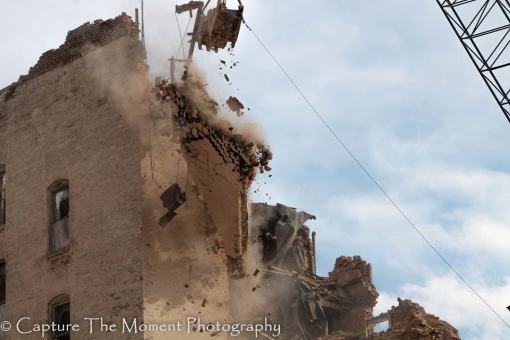
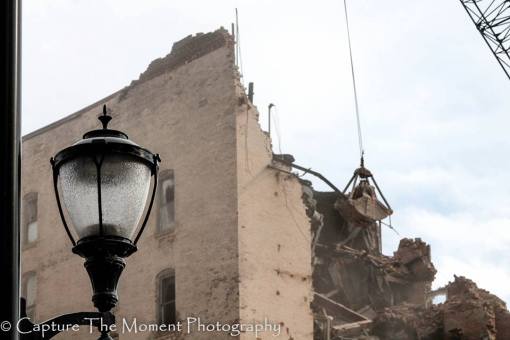
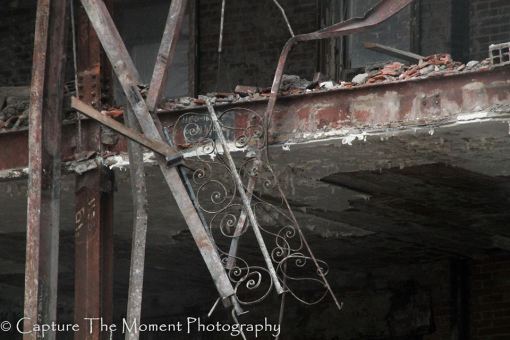
 The demolition of the Hotel Sterling began on July 25, 2013

~*~

You can see Hotel Sterling Time Lapse Demo Video HERE

~*~

Return To Guerrilla History

TABLE OF CONTENTS


Cheri Sundra © 2013
All Rights Reserved

Hotel Sterling: History Deconstructed

Hotel Sterling:  History Deconstructed

Whose Version of History Gets to be Saved?

3

Featuring a “Grand Luxury” Finale

of Hotel Sterling Demolition Photography

by Steve Woitkowski of

Capture the Moment Photography Studios

9

The definition of “history” is the past considered as a whole.  So until last week, the Hotel Sterling wasn’t “history”, it was actively part of the present.  The Hotel Sterling was still a “verb” in our community. 

This is what I find myself contemplating:   Considering that since 1964 the building had seriously declined way past the point where it was even being used as a hotel, which historical version of the building were historians and preservationists trying to “sell” to us as part of our collective history?

And, more importantly, whose history were they actually telling with that version?

Are there more people alive today, who have experienced the Hotel in the way that its history was being packaged for consumption, or do the majority of Luzerne County residents who are still alive, have a much different, and more important, history to recall about the Hotel Sterling?

To me, as an Urban Explorer, documenting the fallout from the financial decline of our community, it represents something MUCH different than a fancy Grand Luxury Hotel where people used to dine in The Palm Room, and dance the night away in the ballroom.

It's a Zombie Ballroom now at the Hotel Sterling

To most people in Generation X, Generation Y and whatever generation we are at now, the decrepit Hotel Sterling has never been anything close to that vision for them either.  In fact, for more than HALF of the years in the “life” of the Hotel Sterling, it looked NOTHING like the image that preservation proponents were trying to spoon-feed to the public.

Sterling 6

Sterling 2

For the majority of her years as a part of Luzerne County’s history, the Hotel Sterling was not THAT hotel being portrayed by preservationists—that “history” is only true for the years occurring between 1897 and 1949, which is only 52, of the Hotel Sterling’s 116 years, as a part of the Luzerne County community.

Then from 1949 to the day demolition began, 64 YEARS LATER, the reality is that the Sterling existed as a downgraded, community-centric version of its former self, until it eventually declined to the point of existing as a mold infested, water damaged, hunk of derelict, community resource pillaging,  real estate for the last few generations of Luzerne County residents to experience in the physical form.

How do you really interpret “collective history” when everyone’s experience, even of the physically present, can be so vastly different?  How do you ultimately decide whose “history” is most important to consider, and what gets to be documented, remembered and revered?

Sterling 7

Whose story gets to be told—the living or the dead?  The rich or the poor?  The young or the old?   And how long is it OK to put off creating the history of the future, in order to attempt to save the history of the past?

Sterling 9

I take real issue with people trying to sell any community on an historical preservation attempt that may not necessarily be in their best financial interest, based upon the assertion that buildings somehow ARE the heart and soul of that community.  Buildings and institutions are often more exclusionary in nature, than inclusive.   And I don’t mean that these places openly segregate community members in an overt fashion.  I’m talking about the kind of subtle socioeconomic based exclusion, that often goes unacknowledged by the people doing the excluding, but is felt at a core level by those being excluded.

Sterling 8

Obviously, the more affluent classes had wider access to the Hotel Sterling during its prime years as a Grand Luxury Hotel.  It was ultimately constructed strictly for the purpose of meeting the needs of the elite and business classes, while they were here in Luzerne County, exploiting the lower classes for profit. Working class people didn’t have the financial or social privilege of accessing that “string orchestra/Lobster Thermidor” version of the Hotel Sterling nearly as often as the wealthy got to have it.  The coal miners, for example,  with their dirty clothing and soot covered faces couldn’t belly up to the bar on their way home from work, to throw back a few beers, next to the same kind of people who were exploiting them for profit.

Sterling 3

Sterling 1

Sure as the “Grand” version of the Hotel began to slowly devolve, it became more inclusive to a larger portion of the Luzerne County community, as a venue for social club meetings and high school graduations.  More people of a different class structure began mingling at the bar. 

Sterling 4

And as the decline to eventual abandonment continued, the now decrepit Hotel Sterling became low income housing for the elderly, including some of those coal miners.  But much like the version of the Hotel Sterling that they lived in then, the retired coal miners were also slowly dying, because of the now diseased lungs that were inflicted upon them, as they worked for the people for whom the very Hotel Sterling was constructed,  for use as a Grand Luxury Hotel, and then cast aside, like the workers themselves, when no longer useful.

Sterling 5

Hotel Sterling Lobby During the 1972 Agnes Flood

And even at that point, a large portion of the Luzerne County population was STILL excluded from access to the now decaying Hotel Sterling,  based upon a different set of socioeconomic and age restrictions.  Until the day came when the doors closed for one last time, and an entire generation went through life in Luzerne County, with no active access to the Hotel Sterling whatsoever.  At least not by walking through the front door!  😉

Abandoned Hotel Sterling: The Harsh Light of Day

The Harsh Light of Day

Cheri Sundra–Guerrilla Historian

Actually, you could make a strong argument for the fact that the Hotel Sterling has robbed Generation X and Generation Y , of their own shot at experiencing a “Grand Luxury” version of their community and their future, because a blighted structure, with little hope of successful redevelopment, lingered for too long, on a prime parcel of real estate, impeding future economic growth in their hometown.   THAT’S the version of history that ALL of us will recall about the Hotel Sterling, and unfortunately, it’s the history that will have the most impact upon Luzerne County’s future.

Picture 23

Sterling

6

Photo Credit:  Steve Woitkowski

2

Photo Credit:  Steve Woitkowski

1

Photo Credit:  Steve Woitkowski

5

Photo Credit:  Steve Woitkowski

4Photo Credit:  Steve Woitkowski

7

Photo Credit:  Steve Woitkowski

8

Photo Credit:  Steve Woitkowski

10

Photo Credit:  Steve Woitkowski

~*~

Return To Guerrilla History

TABLE OF CONTENTS

Cheri Sundra © 2013
All Rights Reserved

The Hotel Sterling: Five History Lessons

The Hotel Sterling: Five History Lessons

(What is history REALLY telling us?)
Featuring the photography of Dawn Robinson & Stacy Shannon

With Ed Mountjoy of The Forgotten Places of NEPA, who ultimately  gets the last word!

DawnPhoto Credit: Dawn Robinson of Nocturnal Echo Imagery

About a decade or so ago, it was trendy in declining communities to sell people on the notion that historic preservation was the ticket to imparting eternal life. But as the literature of those who try to cheat death has shown us, the bid for immortality can come at a huge price.  While the walking dead may be all the rage in pop culture, no city wants to find itself plagued by zombie buildings, a term being adopted nationwide to describe the disease afflicting places where buildings are difficult to lease, or sell, because they are in physical disrepair, and their owners lack the resources to bring the building up to code .  Unfortunately, using millions of taxpayer dollars that were supposed to be spent on our city’s financial resuscitation, it appears that Wilkes-Barre has created a Zombie Hotel instead. 

The demolition of the once grand Hotel Sterling really only leaves one question–Why?  Why do beautiful things fall to disrepair?  Why did our community allow this place, with such a romanticized past, fall to ruin?  Why did this beloved building turn into a memento mori of Wilkes-Barre’s prosperity?  

StacyPhoto Credit: Stacy Shannon

Every time a historical landmark is left to die, a community is left   to confront failure.  The building failed to live up to expectations, the owners failed to maintain the structure, and  the community leaders failed to create a local market that could sustain successful business development.   Sadly, happy stories of rehabilitation and rescue are few and far between for the majority of places across the nation.  Instead the failure to preserve historic landmarks seems to be serving as the signal of the kind of economic collapse that begins with the start of a zombie building apocalypse in struggling communities nationwide.

Northeastern Pennsylvania’s three largest cities, including Wilkes-Barre, are currently standing on the ledge, looking into the abyss of financial failure.  Decades of arbitration-mandated labor-related costs are rising faster than tax revenues, large numbers of untaxed buildings are owned by nonprofits, and stagnating tax bases are deeply rooting these communities into the same dire financial situation that has contributed to the total collapse of cities like Detroit and Camden. 
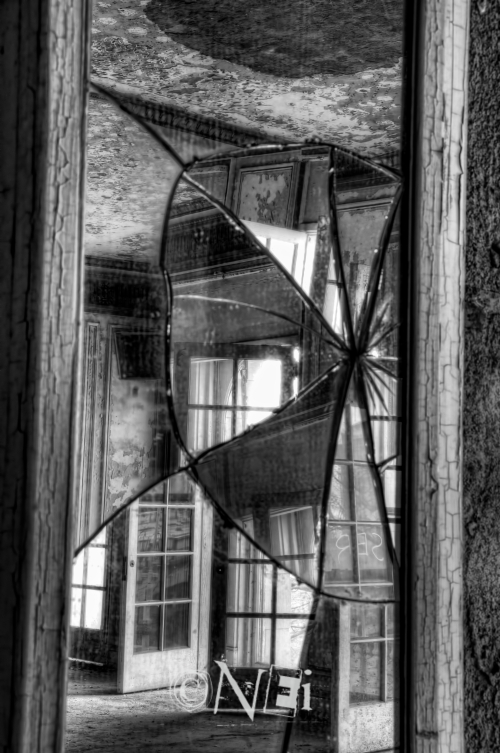
Dawn 1

Photo Credit: Dawn Robinson

About a decade ago, Wilkes-Barre’s leaders presented our community with a big plan that was supposed to save it from the same fate facing her two sister cities–Scranton and Hazleton.  This agenda, primarily consisting of historic preservation, was called the “Susquehanna Landing” project.  The plan included a newly renovated Hotel Sterling packed with shiny new residential units.  There would be yet another city parkade built which would somehow become part of the Luzerne County owned, and still vacant, Springbook Water Company, located behind and to the right of the Hotel Sterling.  There would be a museum in the still vacant Sterling Annex building,  which would connect  via some elaborate, elevated walkway system, to some newly built conference center that would somehow be linked to the still vacant Irem Temple, which is currently owned by the Chamber of Commerce. 

What was ultimately missing from this plan was a NEED for all of this redevelopment in the first place.

Hotel Sterling Historical Lesson #1—Create a Need

You construct your vision around a need that already exists.  You don’t attempt to build something that you hope will create one.  When the Hotel Sterling was built, droves of immigrants were motivated to cross the ocean to come to Luzerne County to work in our mining industry.  Coal was King and trains were depositing, and retrieving, large gatherings of business men at the train station on a daily basis.  It was because of this activity, that the Hotel Sterling was actually constructed.  These people needed somewhere to sleep, have meetings and entertain while visiting Wilkes-Barre for business purposes.   We didn’t build it in the hopes that they would come, we HAD to build it because they were already here!  If you don’t have a solid and identifiable need for your Susquehanna Landing-esque “vision of the future”, you have to begin by creating the “need”, not the vision. 
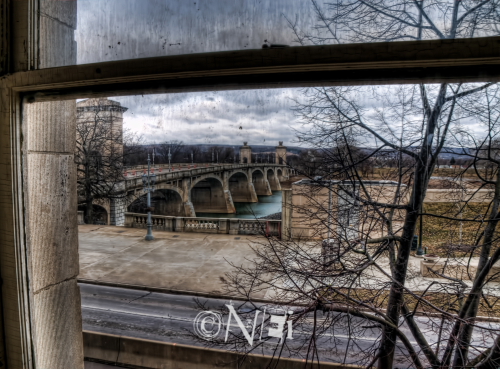
 Dawn 3

Photo Credit: Dawn Robinson

Hotel Sterling Historical Lesson #2—Look to the future, not the past

I am puzzled by the sentimental idea that we are “losing our soul” with the demolition of the Hotel Sterling.  No structure is the “soul” of a community….especially one that was built to cater to the rich and business classes, in a community that was predominately built by the exploitation of the working class.  In fact, it was BECAUSE of the working class that this structure was brought into existence, because the coal miners created the NEED for the Hotel Sterling.  BUT the coal miners, with their dirty clothing and soot covered faces would have surely been turned away if they showed up at the Hotel during the luncheon hour, or for a few beers at the bar on their way home from work.  When it was first built, the Hotel Sterling was strictly a venue constructed for “the 1%” exclusively, unless you happened to work for the Hotel.

Sure, as the place began to decline, it became more community-centric and the average person may have found themselves there, once or twice, for the occasional prom or office Christmas party.  But when we look back upon idealized memories of the Sterling, those usually aren’t the recollections that are looked upon with great historical significance, unless of course, a President or other famous figure happened to be passing by or staying at the Hotel.

Stacy 1Photo Credit: Stacy Shannon

And certainly, no one is looking back fondly at the last years of the building when it was still active, but had declined to the point that its only viable use was as low income housing.  No, this is a venue that historians like to recall with tales of string orchestras and Lobster Thermidor, not financially struggling elderly people existing in a building that was declining around them. 

What about the people who never had the chance to experience the Sterling at all, if it is the “soul” of our community?  What if you live in Wilkes-Barre and came of age AFTER the Hotel Sterling shut its doors forever?  Have those young people existed in a soulless community?  Doesn’t anything that they have grown up experiencing in Wilkes-Barre matter at all?  It’s silly to attach such extreme value to a building. Especially when history has taught us that great economic growth, as well as our future, is often connected to the creation of new buildings full new memories for the up and coming generation.
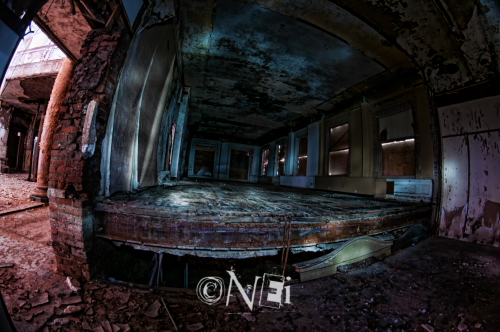
Dawn 6Photo Credit: Dawn Robinson

Once upon a time, there stood a music hall, where popular plays and musical comedies were performed.  People of that community remembered that venue fondly, sitting at the gateway to Wilkes-Barre.  Then the day arrived when that parcel of real estate seemed far too valuable for such a singular venue, and the music hall was demolished to make room for the Hotel Sterling.  After all, the Hotel was needed to meet the requirements of the growing population and industry that was knocking at the door of Wilkes-Barre. 

People looking towards the future; spend little time dwelling in the outmoded needs of the past.  We need leaders who think about our future!  You never have to mourn the loss of your past, if you are replacing it with a future that is brighter.  Only communities that lack hope for the future, cling so desperately to their “glory days” at all costs!


Hotel Sterling Historical Lesson #3—Historical Preservation

as an agenda does not assure a successful redevelopment project

It’s interesting to note that Preservation Pennsylvania, along many other preservation centered organizations, is NOW issuing recommendations about assessing financial feasibility when considering Historical Preservation Projects.   Many see this as a reaction to the failed trend in pushing historic preservation as a redevelopment plan in declining communities, as well as the fact that economic conditions nationwide are signaling an overall decline in America’s financial health.  Historic Preservation of a long-term vacant building is ALWAYS ultimately more expensive than new construction.

 In the publication, “How To Protect and Preserve the Historic Places That Matter to You, Preservation Pennsylvania provides a series of “reality checks” for assessing a project’s financial feasibility, a topic that often goes unmentioned when emotional attachment reigns during community discussions that involve “saving” beloved landmarks.  In fact, those pushing a “preservation agenda” will stop at nothing to see that a building is “saved” in the name of “history”, even if it requires completely stripping EVERYTHING from the structure that contributed to a memorable experience at that location, just for the sake of saving nothing but the shell of a building.  That’s an expensive proposition that will not be economically feasible for building owners and developers to entertain in communities facing financial issues like Wilkes-Barre.   

Stacy 5 Safe

Photo Credit: Stacy Shannon

In a section titled “Reality Check—Know when it’s time to walk away”, Preservation Pennsylvania says “There is no formula that can be used to determine when to call it quits, but if you are honest with yourself, clear on your objectives, and really understand the limitations of your resources, you will know when it is time to congratulate yourself for making the effort, learn from what didn’t work, and walk away.”  

I was recently asked whether or not the Hotel Sterling should have/could have been saved, in an interview for 570 Mine Fire.  Here is a portion of that interview:

“I’m a realist. I believe that the biggest error was in not demolishing the Hotel Sterling sooner. I do not believe that it was ever financially savable, even way back when it was still structurally savable. And both components have to be there in order to create a successful outcome in a preservation attempt. Just because a structure is historical, does not mean that it will result in a successful redevelopment project. I think that when CityVest ran out of their first batch of funding without a developer in sight, that the community should have just congratulated them for their efforts, and called it quits right there. But instead we found a way to find them even more money, despite the fact that developer after developer kept passing the project up for structural reasons.  According to one newspaper report:

“Among the building deficiencies identified by developers: Low ceiling height, compromised views from small windows, an inefficient layout for use as residential or hotel units, unusable space created by the large lobby and atrium, inconsistent floor elevations on the second floor, narrow elevators that don’t comply with the Americans with Disabilities Act, concern that replacement of the floors could risk structural instability of the building because of the way the floors are anchored to the building’s perimeter walls.”– “Sterling’s Fate in County’s Hands”, Times Leader, April 16, 2011

But as a community, we just kept going on this “preservation agenda” relentlessly. Given my short-lived experience as an activist for the building, I see how a fever begins to spread that ultimately builds these building owners up for a success that will never be realized because it is being built upon a false premise.  When I first started asking community leaders about what we could do to save the Sterling, most of them responded with “Tell the owner that you want to rent an apartment or commercial space in the building.” Which I found really weird, because I’m not a business owner and I don’t want to live near Market Street, so when I would push for a different answer or more information, they would tell me that it’s just what you do if you want to save a building.

Knowing that, while reading through old newspaper archives about the preservation project, one quote from the paper really stuck out in my mind:

 “Without any formal marketing, CityVest board members can’t go to any functions in town without somebody expressing interest”, Rogers said.” – “State Ensuring Preservation of Hotel Sterling’s Legacy:  Bureau for Historical Preservation Will OK CityVest’s Progress”, Citizens’ Voice, June 7, 2005

Were these people also being told to falsely tell CityVest representatives that they wanted to live/work in the building? And if so, would CityVest have stopped redevelopment plans sooner if there wasn’t this “false” community buzz about the project that didn’t reflect ANYTHING about the local economy or real estate market? I guess we’[ll never know, because with all of the finger-pointing going on, I’m sure no one affiliated with CityVest will ever agree to publicly talk about the failed project.  Which is a shame; there is a lot that we as a community could gain by having that discussion.”

Hotel Sterling Historical Lesson #4—Know when to walk away

While well intentioned,  the Hotel Sterling preservation seemed doomed almost from the very beginning when you take the time to look back over newspaper coverage concerning the project from the very beginning. (You can find excepts of this newspaper coverage (contained in another post on this site)  While many people blame the failure of the project on CityVest, the last owner of the Hotel Sterling, it is obvious that evidence clearly suggested that a positive preservation outcome may have been highly improbable to achieve in the end.  It is striking to realize that local journalists were referring to the structure as decaying and decrepit as far back as 2001—a red flag about the magnitude of the project itself and the funds required for completion.

Dawn 10Photo Credit:  Dawn Robinson

Another red flag that should have slapped our community leaders directly in the face was the fact that developer after developer passed on the project.  We should have just STOPPED at the point where funding had been exhausted with no developer in sight willing to take on a $32 million dollar historic preservation project.  But the hubris-filled love of our past, found our leaders scrambling for even MORE FUNDING  in order to declare the owners of the structure, CityVest, the “the developer of last chance”.   The fact that the newspapers were using that phrase should have signaled “danger” to the community at large. 

The entire concept for the Sterling project (& the other historic structures included in the “Susquehanna Landing” vision) may have been too “high-end” for the reality of the Wilkes-Barre real estate market. For years, the public was being sold on an upscale vision, when in reality, that market/location has only attracted volunteer services and companies specializing in addiction rehabilitation.

Another issue that was hinted at from the inception of the Sterling project was that Wilkes-Barre’s reputation for corrupt political dealings was going to make it difficult to attract serious developers who wanted to invest in our community. Since that time, we all know that things have only taken a turn for the worst—“Kids for Cash”, need I say more?!  The fact remains that the preservation enthusiasts in our community  need to consider the real-world obstacles that Wilkes-Barre faces while moving forward with any more projects now, or in the future. 
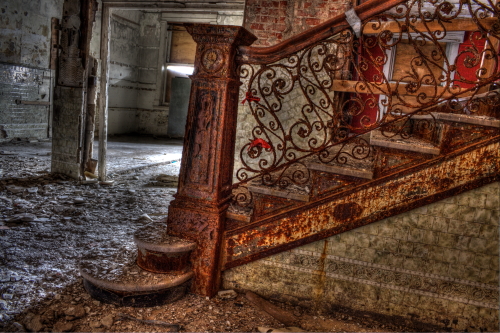
 Stacy 6

Photo Credit: Stacy Shannon

When historic preservation is discussed in Luzerne County, the conversation is very one-sided, and usually consists of attempts by preservationists to guilt the public into letting proponents have their way by insisting that people “don’t value history” if they are against a restoration project. It’s time to get real about historic preservation in Luzerne County. The fact is, that because of changes in the structure of the global market and the national economy, communities that have not been investing wisely in their history when things were really good, are going to lose a lot of that history now!

It makes more sense to maintain structures BEFORE they become long-term vacancies, than it does to attempt to engage in heroic “life saving” measures after the fact.   Like it or not, “saving history” is a big ticket project that requires the help of outside private developers who are going to be looking for a return on their investment. And while there are plenty of entities who will encourage communities to move forward with such projects, there are none who will assist them in assessing the situation beforehand to see if such a project is even viable in the first place.

HISTORIC PRESERVATION in and of itself is BIG BUSINESS. Who can we count on to tell us when taking on a project may not be feasible in our community? Is the consulting firm hired to market the project going to do it? Are all of the architect firms that stand to benefit from the proposed project going sound the alarms? Will non-profit entities such as Preservation Pennsylvania, who earn their keep pushing a preservation or “history” agenda, do it?  NO. 

Stacy 2Photo Credit: Stacy Shannon

When Wilkes-Barre discusses historic preservation, the conversation always seems focused on the structure itself and what CAN be done (& believe me, SOMETHING can ALWAYS be done) to save it, but no one ever seems to  question what SHOULD be done when all of the external factors are considered.
Stacy 4Photo Credit: Stacy Shannon

Many components need to be in place in a community to successfully complete a multi-million dollar historic preservation project. What in Luzerne County has changed that would make success in ANY expensive historic preservation effort a possibility today? I hope I’m wrong, but I don’t believe that anyone has an answer to that question as our community is now faced with deciding what should happen to the entire cluster of vacant “Zombie” historic buildings inhabiting the city block once designated for the “Susquehanna Landing” community redevelopment vision.

The fact that all of these vacancies even exist  is quite mind blowing,  considering that they have been sitting, untouched for years, just one block away from the epicenter of Wilkes-Barre, and also one block away from the city’s institutions of higher learning.  And just like the owners of the Hotel Sterling, the owners of these remaining structures cannot afford to fix or maintain them either!  And sadly, the taxpayers technically own many of these buildings, thanks to someone’s failed plan that involved community entities buying them AFTER they became vacant!

Hotel Sterling Historical Lesson #5–Even when “zombie” real-estate is privately owned,

if the owner falls into financial dire straits,

the distressed building becomes a burden for the taxpayer

What a grand, public resource eating, Zombie Hotel the Sterling eventually became!  And this is often the case for all Zombie Buildings, even if they are historic!  People forget that just sitting there, doing nothing, these vacant buildings are costing SOMEONE money—usually the taxpayer in one way or another! Taxes are either being paid or are being forgiven.  Insurance premiums need to be maintained by SOMEONE.  The price of having vacant and blighted real estate littering the landscape can become an insurmountable burden for any city, scaring away prospective business owners and real estate investors. 

And now we are forced to ponder the ugly and expensive question about what needs to be done with the rest of the zombie real estate that has taken up residence within this same block, waiting for the day when our past was supposed to redeem our city in the present.  How many more parcels of the decaying remains of a by-gone era can our community possibly try to maintain before we push ourselves beyond the prospect of having any real hope for the future?
Dawn 8Photo Credit: Dawn Robinson

Today as we begin the process of dismantling our brick and fake marble corpse of innovation and prosperity known as the Hotel Sterling, we SHOULD mourn its passing because it was built to fulfill a need created by abundance.  Unfortunately, whatever we put there now, will ultimately be damned, because we will be building it out of desperation.    

We are a community, extinguishing our past in the present, and transitioning into what we will become in the future.  The Hotel Sterling is a story about the death of a chapter in American History that begins with the end of the industrial revolution.  For decades, our community has attempted to outrun our diminished expectations for a way of life that we can no longer hope to maintain.   The demolition of the Hotel Sterling should serve as a harsh wake-up call about our community’s impoverished current reality. At one point considered a monolith of our affluent class’s achievement, what remained was ultimately nothing but blight on our city’s landscape.  

~*~

ONE FINAL WORD FROM THE FORGOTTEN PLACES OF NEPA

Ed 1Photo Credit:  Ed Mountjoy

Ed Mountjoy, the face behind The Forgotten Place of NEPA on Facebook, had the extraordinary opportunity to watch the fireworks display at Kirby Park, from inside of the abandoned Hotel Sterling this year. (Way to go Ed!  You are my Urban Exploration hero!)  He explains:

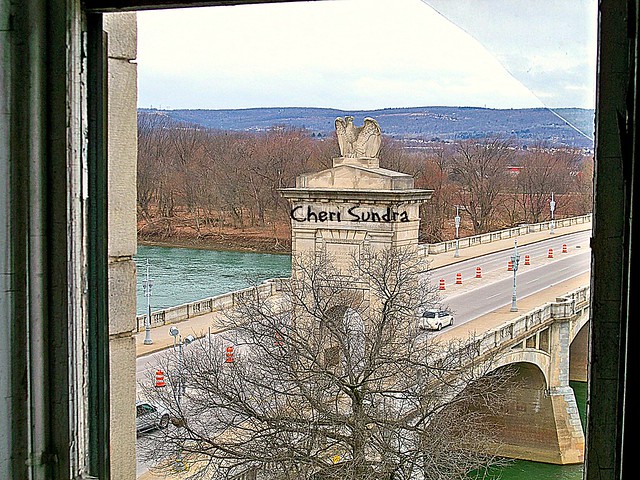
“Seeing the fireworks from the Hotel Sterling that night was surely something I don’t ever expect to forget. Being up there, on the seventh floor, sitting there by that window, which was missing its bottom part of glass, was an odd feeling. It wasn’t odd in a bad way, but odd as in that I could actually picture people doing the very same thing back when the Sterling was occupied. The fact that it was dark all around, except for outside, added to the feeling, since the darkness covered up the fact about how gutted and decayed the building really was. While sitting on the floor watching the fireworks, I could just imagine someone in that very room doing the same thing decades ago. It was a historic view that many got to see in the past and, with this passing Fourth of July, it would be the last time anyone would get this view, from this very building, of the fireworks. Knowing this would be the very last year, I knew I had to get up there to see them.”

Ed Continues:

“This is WHY I maintain The Forgotten Places of NEPA and The Forgotten Coal Industry of NEPA on Facebook.  Places like the Sterling, won’t always be around.  Many, if not all, of the places I’ve been to have meaning to at least someone, whether it’s a small building on the side of a barely used road or structures that occupy spaces at the busiest of intersections. At some point, people worked and/or lived in these places, people I am sure have relatives that are alive today, relatives that may wanna see where their ancestors worked/lived at. I maintain these pages to keep those memories as alive as I can and I’m sure others seeing these photos trigger memories of either them working/living there, or knowing about family and/or friends who worked/lived there. Many might think that my pages are strictly just about urban exploring, but it’s not. Granted, most my photos involve having to do so, but I do it because I know many who’d like to see such photos can’t go there themselves. I do so, not just to explore the locations and get piles of photos, even though that is the best part of the experience, but to, hopefully, trigger some memories from others and maybe even learn a little more about these locations from those people.”

 SANYO DIGITAL CAMERA

Photo Credit: Ed Mountjoy

~*~

Return To Guerrilla History

TABLE OF CONTENTS


 Cheri Sundra © 2013
All Rights Reserved
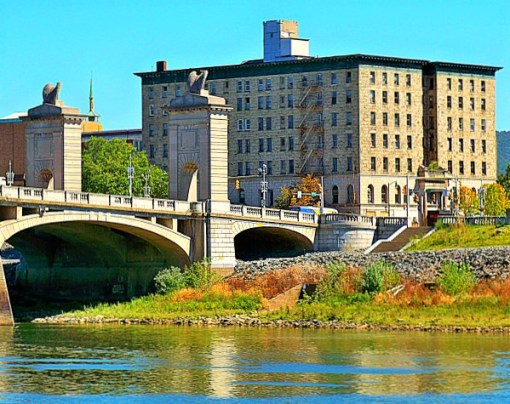


Hotel Sterling: The UnDead Days

Abandoned Hotel Sterling: A Room With A View

 Zombie buildings are real.  It was a term first coined by financial analysts to explain the national collapse of the commercial real estate market as far back as 2006, and has expanded to represent all buildings that are unusable due to disrepair, because they are owned by entities that are too broke to fix them.

Based upon “Hotel Sterling: The UnDead Days”,  Welcome To The Zombie Hotel Sterling is now available for digital download at Amazon.com!  If you don’t have a Kindle device, don’t worry, you can download a free Kindle app for your smart phone or computer right here!

Book Description:

Abandoned and rotting away along the banks of the mighty Susquehanna River, the zombified Hotel Sterling tells its tale of fading grandeur and woe to a photographer visiting the deteriorating structure, seeking to photographically document the reality of the condition of the building, as the hotel waits for its beloved community to decide its fate, once and for all.

~*~

Read an interview about “Welcome to the Zombie Sterling” at: 570 Mine Fire

~*~

Back To

Guerrilla History

Table of Contents 

Cheri Sundra © 2013
All Rights Reserved

The Huber Breaker Rocks –with ASTORIAN STIGMATA

“Standing at the edge where beauty meets decay

Re-born through death

Time fades away and leaves a memory

But that red sky rests so quite

Upon the ashes of innocence

And some things never really come alive

Until after they have died.”

–“The Beginning Of An End”  (ASTORIAN STIGMATA)

Huber Breaker Ruins:  The Art of Industrial DecayThe Huber Breaker in Ashley,  Pennsylvania, USA

Sometimes, engaging in urban exploration is like experiencing an alternative reality.   In these abandoned and often beloved structures, ghost-like representations of what “once was” collide head-on with their current state of decay and ruination, representing a dream-like status between existence and non-existence, somewhere in the middle of life and death.  

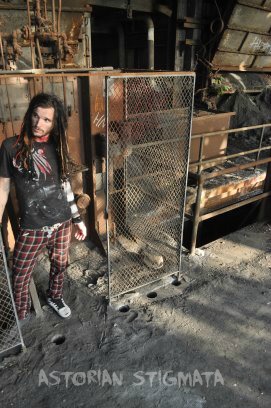
Naturally, a local band with a name based upon the concept of an alternative reality, combined with the imagery of open wounds, and the catch phrase “Stay Dead”, would conclude that one of Northeastern Pennsylvania’s most popular urban exploration sites would be the perfect setting for filming a music video or two!  

As5

But according to Astorian Stigmata founder and front man, Dennis Condusta, his hometown, which is referred to as the “Victorian Corner of Pennsylvania” on the band’s Facebook page, always stars in his videos.  “I’ve traveled extensively and it has really helped me notice that Wilkes-Barre is a truly unique place in many ways”, Dennis explains, “Most of them aren’t positive ways, but in the architectural sense, it really has a “decayed elegance” feel.  Like it was once a prospering place during the coal mine era and now it’s kinda run down, and somewhat dismal.  I noticed over the years that the message in my music was very similar to that.  I’ve always been drawn to the concept of once beautiful things fading away.  I know that they always can return.   It’s kind of a positive way to look at decay and things falling apart. And “Victorian Corner” is just a reference to a lot of the Victorian era architecture in the surrounding area of Wilkes-Barre. I’ve always been drawn to its class, and most of our records have Victorian era houses on the cover.”

While discussing the Astorian Stigmata video “Ballroom Dancing, Condusta said that their European fans often make comments about how much they love the look of the old historical stuff here in Pennsylvania.  “Most of those shots (in the video) were right in the downtown area, the apartments across from the River Front, and close up shots of the Sterling Hotel”, he stated, “And the European fans say things like “I’d love to visit Wilkes-Barre!” Ha-ha. I think it has a lot to do with the way it’s represented”, he explained, “We really romanticized the place in all our work.  And people from here never realize how truly unique and beautiful a lot of the things we have around here are, mostly things left over from the coal era.  If we become a bigger band it’s going to be a good thing for Wilkes-Barre tourism!  Ha-ha.  It always kinda bugged me how bands move away from their home to embrace the music scene other places or whatever, and that’s all fine.  But I see myself as an artist far before a musician who is trying to “make it” or anything like that.  So I do my best to represent the area I am from because it has played such a huge part in my artistic understanding of the world around me.”

Abandoned Hotel Sterling: The Harsh Light of DayThe Hotel Sterling ruins in Wilkes-Barre, Pennsylvania, USA

Condusta came up with the band name in 2003 while watching an HBO show called “Carnival”–specifically,  an episode titled “The Road to Astoria”, when he became intrigued by the idea of an alternative reality, but one  very similar to the one we know. That “alternative reality” notion  is the main reason I chose to write about Astorian Stigmata for my blog about urban exploration, because that is the very concept that urban explorers are trying to capture when they photograph the abandoned structures where people once lived, worked, played, worshipped, dreamed or suffered. 

AS2

Condusta was drawn to the word Stigmata for its powerful look and strong pronunciation.  Which is a relevant choice, because the visual images portrayed in many of the band’s videos are both harsh and destructive.  Yet, in listening to the lyrics, you can’t miss the sentimental vibe—like a verbalized wish that life was less fragile and that people, places and things could be more permanent.  

Dennis explained that “most of my lyrics are about dualities.  Which is also why we use black and white stripes so consistently in our logo and branding—they represent the ups and downs of life, and that they are both equal, and both present at all times.”    Many of their song lyrics are quite philosophical, touching upon concepts such as being “re-born through death”, as in the lyrics of the one video filmed at the Huber Breaker.  “It refers to an existential death and coming back to life as a better person, but only after your old sense of self has died”, Dennis stated.  Fans consider the band’s catch phrase, “Stay Dead” and their entire “death” theme, as a metaphor for the kind of self-fulfillment that leads to happiness by remaining true to yourself.

In fact, staying true to themselves is even embraced by Astorian Stigmata in their business model, because they literally do everything themselves.  Dennis explains that being an “indie” band allows you to do things, your way, all the time, when you want. We’re pretty specific about what we are trying to say and do.”  According to Dennis, “I’ve always loved design/photography/hand printing t-shirts/video/editing/music recording/writing and production–even the hard work like hand making every CD. Our guitar player, DJ, is the same way. He  enjoys it all and we work well together as a team. We don’t call ourselves a “punk” band, but we carry that flag and ethic as hard as anyone.  Not because we want to, but because no one is gonna do anything for us.  We’ve been offered record deals and things, but we’re not dumb dudes in a band. We understand how business works, and how things happen, and that 90% of the industry side of music is there to fool you into making them money.”  

Condusta further explains that as an artist, his focus isn’t the same as that of a corporate business entity, only interested in creating mainstream conceptual “art” that is made popular for the purpose of selling it quickly, “We make lasting art. Songs we wrote 5 years ago have as much relevance now as they did then, and will still be relevant 20 years from now.”

AS1

Dennis Condusta became interested in playing guitar at a young age, because his older brother also played.  As luck would have it, he won a guitar when he was 16, at a BMX riding contest.  He was influenced by the music of Modest Mouse (“Dramamine”) and Taking Back Sunday (“A New American Classic”) plus a strong desire to create his own music.   “I have no interest in learning cover songs.  I just knew I had a feeling inside me and I wanted to learn to get it out as fast as possible”, he said.  Dennis also states that his most important influences are his brother and his friends. 

Condusta, a life-long resident of this region, known for its working-class sensibilities, which are often hallmarked by the suppression of individualism, did note that this area sometimes has a lack of respect for a broad variety artistic expression.   Still, he credits this area for helping him to form his artistic vision, and openly accepts the responsibility and challenges required to act as the ambassador of his own vision, “I do not see that as their fault for misunderstanding me, I see it as my own fault for not doing a good enough job at being understood.  I am not afraid to dress strange or to wear two different shoes, it reminds me not to take life too seriously. You’d probably be surprised at how little people notice/care about how crazy someone looks if you do it confidently.  It’s when you feel uncomfortable or out-of-place that people can sense it, then they insult you.”

As6

Much of our local history is dark and reflective of the oppression of the human spirit, because for a long period of our recent history, the area was monopolized by an industry that told people daily that they did not matter.  In fact, the mules that worked in the anthracite coal mines were insured, while the humans laboring there were not!  Local workers had to resign themselves to the fact that they were being exploited, just for the opportunity to earn a paycheck.  “That coal miner mentality is still engrained in the people from this area. I think it plays an enormous role in the art I create, so I respect it very much and choose to embrace it”, Dennis said, “There is a dark cloud of oppression that just sits over this valley, although it’s not strong enough to keep me down in any sense.  I find it comforting– in a totally sick and twisted kinda way. Ha-ha”

One of the prominent remnants of the coal mining era, the Huber Breaker ruins, has a starring role in two of Astorian Stigmata’s videos. (For those of you outside of Northeastern Pennsylvania, a coal breaker is literally a place where the coal that was brought up from the mines was broken into smaller pieces using machinery.) This location is popular with urban explorers because they love to photograph the machinery and vanishing points that are contained within the decaying walls of this now obsolete industrial complex.  I asked Dennis to explain the inspiration behind using this location for these videos.  “It’s one of a kind”, he said, “And it’s in rather good shape for how old it is.  That place has a feeling and a beauty to it I’ve never felt anywhere else.  It’s special in that sense and it’s really inspiring in many ways. It’s hard to explain.”

AS4

I asked Dennis if he thought that exposing non-history buffs or individuals unfamiliar with our local history, to our historic locations in a non-traditional artistic context is a good way to inspire an interest in the subject matter.  “Yes, I do”, he responded, “Our target audience has never been local.  We’ve always strived to appeal to a worldly audience.  Most local people think the Huber is played out, ‘cause they’ve seen it so many times, but there’s a person sitting in Norway right now watching that video thinking that’s the coolest place they’ve ever seen.”  

And believe me, he’s not kidding!  One of my personal, most interesting experiences with the Huber Breaker includes running into a group of students from Germany, taking pictures of the Breaker, as one of their stops on an “Urban Exploration” tour of the industrial ruins along the east coast of the United States!

I asked Condusta, a descendent of coal miners himself–both of his great grandfathers were employed by this industry–if he had any thoughts about using a place where men, and even little boys, were oppressed and exploited to express himself artistically.  He said, “Yes, I always think of that.  And sadly the world still works that way.  I always kinda wished people knew the background on the industry and of that place ‘cause it would add a whole new dimension to the message I’m trying to send.”  Although Dennis maintains that the videos and pictures are primarily for aesthetic purposes, and produced for a world-wide audience who does not see such places as they go about their daily lives.     “While I understand and respect the history personally”, Dennis explains, “I don’t expect someone in Spain to think of that.”

AS3

Of the two Astorian Stigmata videos filmed at the Huber Breaker, “The Beginning Of An End” is the most artistic in nature, and therefore open to individual interpretation.  I thought it would be interesting to analyze the video/lyrics within the context of the historical setting with Condusta. 

The start of this video features a guy in a camouflage suit collecting water samples from this industrial site in a post apocalyptic world.   I found it somewhat poetic that in the beginning of the video you hear “stay safe”, because the irony is that for the men who worked at that dangerous site, in such a high-risk industry, that’s what they, and their loved ones, were thinking every day.  Dennis found that interpretation interesting, but said that it wasn’t quite what he was thinking while creating that scene for the video.   The video also features a vampire, which I interpreted as a representation of the coal company literally feeding off of the coal miners to turn a profit for themselves, while their employees often lived in impoverished conditions.

The song lyrics contain the phrase “where beauty meets decay”.  I asked Condusta if he thought there was something tragically beautiful about this specific abandoned industrial site.  “Yes, most certainly”, he said, “It’s symbolic of what was once flourishing, busy and a source of life and jobs for an entire city. And now it’s pushed aside and forgotten. That’s the central theme of my artistic being.”

I asked Dennis why he chose to end the video with the sound of a laughing child.  “That was just to provide and exaggerate the feeling of unease that I was attempting to convey”, he explained.

The video “Strange Nights (Live From The End Of The World), was also filmed on location at the Huber Breaker.  I asked Condusta if there was something about the location that promoted an “end of the world” feeling.  “Yes”, he responded, “It reminds me of what the world would look, and feel like if it were to suddenly end. I found a worker’s time card in the breaker dated from 1962.  It’s just interesting to think about how so much of that place seems like the workers just walked out at the end of the shift, and didn’t come back. It doesn’t feel like it ever planned to close–it has a feeling of unrest.”

In conclusion, I asked Dennis if there was anything that he wanted people to know about himself or Astorian Stigmata.  “Myself personally?  I’m not a terribly interesting person”, was his response, “I put my life into art and I ask for nothing in return. I don’t do this for money/fame or reputation. I was just born with a soul that needs to express itself, and I hope somewhere along the way someone else gets some enjoyment from the work I do.”

You can find more information about Astorian Stigmata by visiting their official website  and  Facebook page .   

Max 3

Maximilian Aladar was born on May 28th 2005.  He is the creation of Dennis Condusta who was in need of someone to play the drums for his band, because at that time, he was playing all of the instruments himself on the recordings.  Dennis made Max that very night, never finishing his legs or giving him a mouth.  This way, Max could not talk back (using words) or run away.  Today, Max serves as the guide for Astorian Stigmata.  He is the puppet master who is a puppet…..

Max 1


Back To

GUERRILLA HISTORY

Table of Contents

Cheri Sundra © 2012
All Rights Reserved