What do we really know about the Kirby Park Zoo?
The Kirby Park Zoo, once located in Kirby Park somewhere along the river, completely vanished into history during the World War II era. Still, the zoo is one of Wilkes-Barre’s legends. And rightly so, it is captivating to imagine a simpler time when communities nationwide not only had amusement parks right in their own back yards, but municipal zoos were also popular local attractions. And the Kirby Park Zoo was popular! It had somewhere between 2,000 to 3,000 visitors during the weekends in the summer months, according to newspaper coverage from the days when the zoo was in operation.

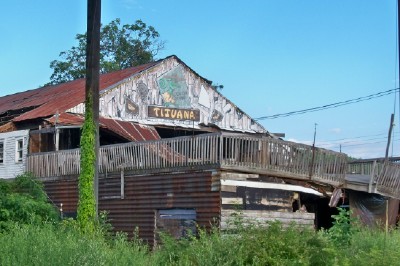
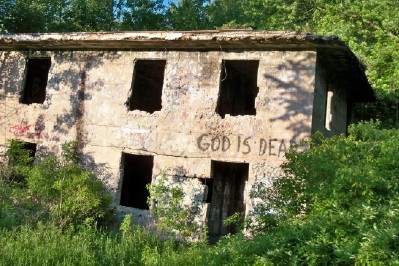
“Zoo” Grafitti
I don’t quite understand why, but there is a tendency for locals to “spin” these regional venues in such a way that they become shrouded in controversy and mystery over time. It must be a function of the human mind to weave our childhood fantasies into our memories about events and locations.
When I was doing research about the Kirby Park Zoo, on more than one occasion, people told me that their deceased relatives told them stories about the elephants of the Kirby Park Zoo. Which is just bizarre, there is no way that the city of Wilkes-Barre housed elephants right next to the Susquehanna River! I wrote these instances off as just a miscommunication created as a result of being a generation or two removed from actual historical events.

Abandoned Giraffe Sculpture at Nay Aug Park Zoo
But I recently became aware of the fact that this phenomenon also happens within the generation of people with first-hand experience, while photographing the remains of the now defunct Nay Aug Park Zoo in Scranton. A couple stopped by the remaining zoo cages with their adult children, and proceeded to tell them about their “memories” of the giraffes that lived right there–in the elephant house! Apparently, when you DO have elephants in your local zoo, people remember giraffes instead!

Nay Aug Park Elephant House At Christmas
The mystery surrounding the Kirby Park Zoo is magnified by the fact that the location itself was cut off from Kirby Park more than 70 years ago when the levee was constructed to protect the area from flooding. While the park on one side of the levee remained a neatly manicured public area, the other side became overgrown and even served as an illegal dumping ground for unwanted debris for several decades. During the 1990s, preservationists started clearing the long-forgotten area between the levee and the Susquehanna River, uncovering a handful of lost ruins. That’s when the urban legends about the long forgotten Kirby Park Zoo began to grow as more people began to frequent the area while walking or fishing along the Olmsted Trail and would come across these structures.

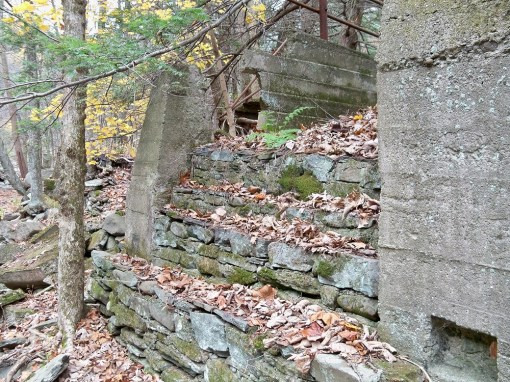
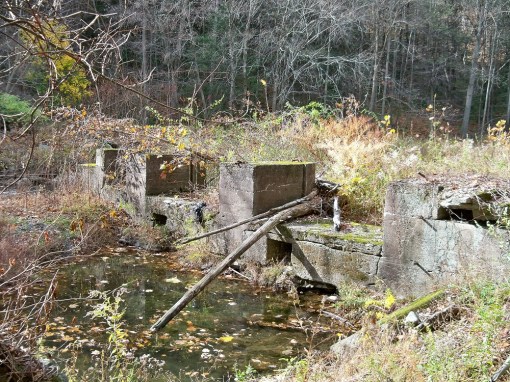
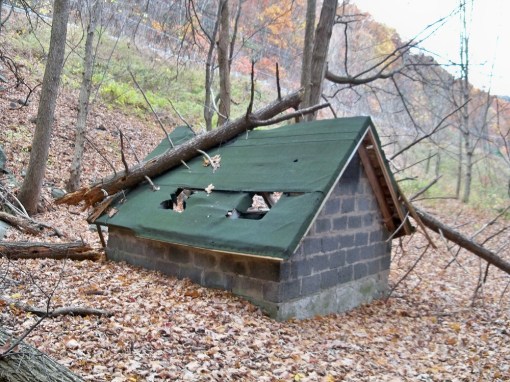
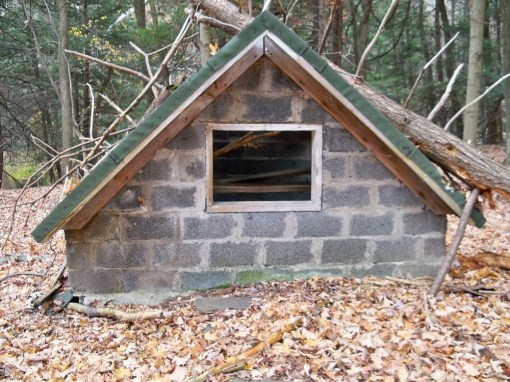
Kirby Park Zoo “Ruins”
Through research, I’ve learned that the Kirby Park Zoo was mentioned in the original Olmsted Brother’s plans for Kirby Park, but as far as I can tell (please, someone prove me wrong!), the world renowned firm did not design plans for the Kirby Park Zoo per say, although the Olmsted’s did (obviously) design the Olmsted Trail where the zoo most likely would have been located.

We know the zoo was definitely in place by 1932, because Wilkes-Barre architect Clark Wright Evans (architect of the Westmoreland Club) designed an improved “zoological building” for Kirby Park in that same year. His plans were advertised for bid in the November, 9 1932, edition of the Philadelphia Real Estate Record and Builders Guide. The index for those plans says that the building was “destroyed by flooding in 1936”, but local newspaper articles about the zoo make it impossible to believe that it was ever built in the first place! (Hmmm….Typical “Luzerne County Style” politics at work even back then? –-Of course we lost our un-built zoo building in the flood, can we get some federal compensation for it?!)
Based on contemporary newspaper descriptions of the zoo, it’s hard to conclude that any of the “ruins” in today’s Kirby Park Natural Area were ever used to house zoo animals, which was a popular belief perpetrated by local news coverage. (You can read all about my research concerning the remaining structures here.) Because of all of the mystery, some people have suggested to me that maybe the zoo never existed at all! On the contrary, our local newspaper coverage shows that not only did the zoo exist; the community loved these animals so much that they were personified and their actions were often part of local news coverage. The zoo also became embroiled in controversy as community members became more aware of the potential for unintended animal cruelty because of the limitations experienced when cultivating a small community zoo, much in the same manner as other comparable zoos nationwide, like Nay Aug Park.
While the Kirby Park Zoo did not have a happy ending, which is most likely the main reason its history has been “lost” and its actual location forgotten, I still think that it is an important part of our local history, indicating a lot about the character of our community. The story speaks of values and politics, and tells us about what we were like as a culture during that snapshot in time through our relationship with animals. And for that reason alone, the rise and fall of the Kirby Park Zoo is a tale that needs to be told!
News Coverage: Kirby Park Zoo Animals From Start to Finish
(As if sorting out the information about this vanished landmark isn’t difficult enough, a 1994 article in the Times Leader says that the zoo opened in 1932, “with great fanfare” (“Monkeys Made Kirby Park Swinging Place”, July 13, 1994). BUT, as you can see, news accounts about the zoo predate the “opening date”. AND the architect mentioned above was just advertising his zoo plans for bid in November of 1932. )
April 10, 1926
“Bear Given to City—Gift Will Mark Start of Zoo in Kirby Park Maurer Announces”~~Wilkes-Barre Record
“An eight month old black bear was presented to the city yesterday. The bear was turned over to Councilman Maurer, commissioner of parks, who had it sent to Kirby Park, where according to Councilman Maurer it is the intention to establish a zoo in keeping with the wishes of F. M. Kirby, donor of the park.
“The bear romped around in the windows of Decker-MacLean store for several weeks prior to the fire. But at the time of the conflagration, it was in a garage below South Main Street.” (I don’t know what that means…..but it sounds awfully suspicious!)
“According to Councilman Maurer the bear is as tame as a kitten and was the playmate of children while in the store.” (Yikes!)
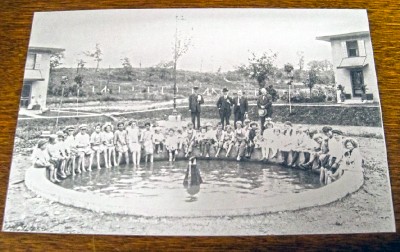
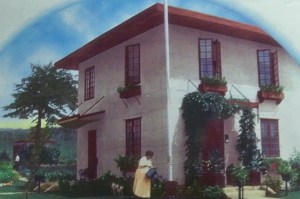
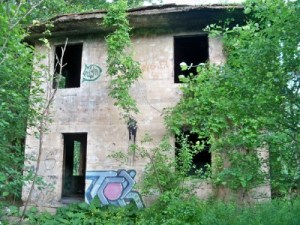
“Yesterday afternoon the bear was taken to Kirby Park in a street department truck and placed in a temporary home in the rear of the residence of Thomas Phillips, supervisor of parks. (Who was this bear? Winnie-the Pooh?! Why are they playing with this bear and taking the bear home with them?) It is the plan to erect a wire fence in the wooded section of Kirby Park south of the residence overlooking the river and which was erected by Thomas Podmore (Caretaker Cottage). A dug-out is to be built for the bear and the environment will be made as natural for him as possible.”
 Caretaker Cottage then
 Caretaker Cottage Ruins Today
July 29, 1930
“Monkey Percher Back in Zoo, Thanks to Cat”~~Wilkes-Barre Record
“It’s not a case of “and the cat came back”, not this time. It’s the monkey, for the gay young female of Kirby Park Zoo was returned to her habitat yesterday after a week’s perching in and about various trees in Nesbitt and Kirby Parks. However, it was a cat that was responsible for her return.”
“Miss Simian, or whatever her name is, after tiring of her tree perching and wandering about aimlessly in the park, decided that being in the Anthracite region she should explore a colliery.”
The article goes on to describe how the monkey was cornered by the cat owned by the watchman at the Glen Alden Coal Company and returned to her cage at the Kirby Park Zoo.
October 18, 1930
Wilkes-Barre Record
It is mentioned that an opossum that was captured by a PP&L employee and presented to Councilman John Noble to place in the Kirby Park Zoo. (Also interesting to note: a second one was brought to him on October 21!)
March 19, 1936
“Bears Moan As They Cling To The Top of Their Park Cages” (During the flood of 1936)~~Wilkes-Barre Record

Kirby Park Zoo Bears 1936 Flood
“Human life comes first, but the plight of the three black bears left in their high wire cage in Kirby Park when the river rose for a second time within a week, yesterday afternoon touched hearts of officials and others who had the right to be on the western end of Market Street Bridge.”
“As the waters rose, the bears climbed onto the top of their curved roof home. They had been forced from other high spots in their cage during Thursday night and were compelled to seek refuge on the roof.”
“Although efforts are said to have been made to reach the animals, they were not removed. As the river steadily rose, the three moved around precariously on their small roof and at dusk appeared to have about three or four feet before the water would hit the apex of the curved roof, which is about six feet long.”
“Pitiful moans rent the air during the afternoon as motorboats and row boats took refugees from their homes to the western approach of the new bridge to be transported to central city ambulances.”
“The deep toned cries, and occasional high pitched screech, cast a weird spell over those who were on the western edge of the bridge and although within seeing distance, were separated from the bear den by a stretch of water several hundred feet wide and as deep as 10 feet, according to what could be seen of the light standards in the section of the park.”
“It sends shivers up and down my back every time I hear the poor things cry or moan”, said Chief County Detective Richard Powell. It’s too bad they were not removed. They are like humans and they sense and see the danger and they are panicky.”
“The bears appear to be hanging for dear life by their claws. Every once in a while two of the animals would rub their necks and noses together as if one was attempting to console the other. One, said to be the oldest, and said to be suffering from rheumatism spent most of his time on one side of the curves roof away from the other two.”
“Dr. Emory Lutes, city veterinarian, was asked last night about the plight of the bears. He said the animals were on the roof of their home and that if the water reached the apex of the structure, most of the city of Wilkes-Barre would be under water.”
March 28, 1936
“Flood Damage Vast in Park” ~~Wilkes-Barre Record
“Pictures of Kirby Park after the flood were obtained by council yesterday and reveal an enormous damage.”
March 29, 1936
“Zoo at Kirby Park Regains Occupants”~~Sunday Independent
“Tranquility once again prevails at Kirby Park zoo. Turmoil, provoked by high water of the Susquehanna, routed all animals, the rescue work being carried out by city employees under direction of Park Supervisor Tom Phillips. Last night the “refugees” were back home. Only one casualty, the male buffalo, was listed. Poisoned food hastened the end of the quadruped, according to Councilman John Nobel. A female buffalo, all fox, rabbits, groundhog, honey bears, monkeys and the eagle were quartered in the 109th armory during the flood. Three bears, cynosure of all juveniles visiting Kirby Park, withstood ravages of the disaster. The water came up so rapidly they could not be rescued and were forced to perch atop a stone house inside a cage. The animals were foodless for five days and did virtually no sleeping during the flood period. Over four feet of water swept through the bears’ habitat. Alas and alack – Pete, the pet gose [sic], joined his colleagues yesterday. Pete laughed at “Old Man River” when it began to swell. The winged pet watched the water flow over the west shore and continued to smile. On the third day Pete was hungry. He emulated Johnny Weismuller and swam all the way to Edwardsville, where he was picked up by two youths. The boys, fearful of prosecution, returned Pete yesterday to the park and they were told arrests would not follow. So all again is peaceful with the speechless population of Kirby Park.”
May 12, 1936
“Shoes Needed For Kirby Park”~~Wilkes-Barre Record
“Barefooted children will be barred from Kirby Park because of the presence of small pieces of glass and nails.”
“With the announcement by Councilman Houser yesterday that Alex the Bear , of Harvey’s Lake and Noxen fame, had been lent to the city zoo it was reported that some deer were forthcoming from the state.”
May 12, 1936
“Alex Takes More Than Fall Out of Wrestling Mate, So He’s in Cooler”~~Wilkes-Barre Record
“Alex, the bear is behind bars—at Kirby Park Zoo—all because of a bad attack of stage fright. Emery Newell of Noxen, enterprising butcher, won Alex in a contest in January, wooed him with tidbits and tenderness and trained him to wrestle with some of his Noxen neighbors.”
The article goes on to explain how Emery took Alex to “some kind of carnival” in Phoenixville with his neighbor and Alex’s wrestling partner, Sam Dymond, also of Noxen. Alex became too aggressive during the “performance” and injured Sam. During the return trip Emery decides to drop Alex off at the Kirby Park Zoo to “cool off” while he hangs out with the other bears for the rest of the summer.
The article continues to describe the more past dangerous exploits experienced by the entire Newell Family as well as another neighbor because Emery insists upon keeping Alex around as a vaudeville money-maker. Emery tells the Kirby Park Zoo foreman William Law that he will return to pick up Alex for his next vaudeville tour.
August 7, 1936
“Kirby Park Eagle Freed—Bird Liberated Near Wyalusing Where Others of Its Kind Are Seen”~~Wilkes-Barre Record
“Wilkes-Barre’s eagle over whose head a lusty debate once raged has been liberated.”
“It was finally decided that perhaps Dr. H. M. Beck, local dentist and sportsman, has been right all along, and the eagle did not have enough room in its gilded cage. Dr. Beck and others have held that it was verging on criminal to coop up a bird like an eagle when it should be soaring over mountaintops and ledges.”
“So the decision was reached this week, following a renewed protest by the dentist to liberate the bird. Councilman Houser, who inherited the eagle together with a lot of goats, buffaloes, bears, etc., in Kirby Park as commissioner, was not adverse to letting the eagle go as much as he said he would like to have the youngsters see it in the park.”
November 17, 1936
“Park Eagle Pete is Dead and Stuffed , Nobel Says—Former Park Commissioner Says He is Prepared to Show Liberation of Bird Was Mistake”~~Wilkes-Barre Record
“Is old Pete, the caged eagle in the Kirby Park Zoo for five years dead or alive? Councilman John Nobel, former park commissioner and strong advocate of keeping the eagle in the zoo for the growing generation to see, says the American liberty token has been dead since five days after he was freed on Wyalusing Mountain, last June.”
Now, as if you don’t already think this story is weird, it’s about to get a lot weirder!
“Dead by the hand of a relative of Mr. Nobel, a coincidence not discovered until last week when the councilman visited near Towanda and was informed an eagle had been shot. He was told the bird was mounted and on display in the window of a Towanda main street merchant. Recognizing it at once, Nobel said yesterday he will bring the bird to this city and display him in a Public Square window for all to see.”
“Let him bring it, say the advocates of the bird’s liberation. They held that the bird’s cage was so located in the zoo that it was not possible to watch it, and the boys threw stones and poked sticks at it and teased it and annoyed it continually. The Humane Society, Dr H S Beck and others pleaded for its freedom. But Nobel, as park commissioner was adamant.”
“Then election came along last year and Mr. Nobel was replaced by William B. Houser as park commissioner. Houser promised that the bird would be freed and so it was in June.”
“Later, stories from St. Stephen’s Boys Camp at Vosburg related how the eagle had been seen on ‘them thar’ mountains. The story even got out that Pete had mated and started to prorogate the species. Whether this is true or not has not been thoroughly proven. If Mr. Nobel is right, than the other story cannot be right.”
“However, Mr. Nobel’s threat to bring the eagle back for the citizens to see as a really dead one brought forth hope that he would do so by the Humane Society officers last night. Nobel says the eagle’s beak is marked from the bars. The others say it was not. It’s marked in other ways though and that will be the proof, they say. William Law, park foreman, who fed the bird for five years is considered the mainspring in the debate, for if he cannot identify the bird, no one can.”
March 28, 1937
Sunday Independent
Page A-13
“There are seven monkeys, one baboon, two parrots, three macaws from South America, two raccoons, three foxes, about two dozen pigeons, three horned owls, four sheep, five bear, two wild goats from South America, one North American goat, one buffalo and two geese.”
In the same article, Ernest Vivian, the zookeeper, noted that the Kirby Park zoo could not accommodate additional animals:
“’If we had a larger and more substantial set of buildings than we have now, we could handle more of the gifts people are continually offering us but right now it’s impossible to take care of them.’ What were some of the animals offered as gifts? ‘Well, for example, pheasants and peacocks. We had to turn them down. We hadn’t any room and nothing could be done right now.’
‘The snakes and alligators the zoo had were given up. The snakes dug out of their pit one day and there wasn’t any way of keeping them safe unless we had a concrete base and a glass cage. But we have a lot of other animals here and the children and their parents will find that in a few weeks, when we open up, the collection will be as fine if not better than ever.”’
The article went on to note that:
“When summer is in full swing, between 2,000 and 3,000 people visit on Sunday and about the same number come in during the six week days.
Wilkes-Barre has a fine zoo for the amount of money expended on it. However, if the straitened financial conditions of the city ever are arranged so that a permanent structure can be built, the improvement would improve the zoo many fold.”
April 14, 1940
Sunday Independent
Page A-4
“Announcement that the Kirby Park zoo probably will be reduced to a monkey house – and nothing more – shows the change of the years. It’s not so long ago that most ambitious plans were in the air for the Kirby Park zoo. The park department still has some pretty pictures of the plans that were made. It was hoped to have a splendid building, big runways and everything to permit the animals to live as nearly as they do in natural surroundings. There were hopes of expansion so that a great variety of animals would be on display, for the amusement and education of the entire valley. That is a far cry from latest plans to have a monkey house – and nothing more. And it’s all a matter of money. In the old days the trust fund provided by Fred M. Kirby for the upkeep of the park brought in from $25,000 to $28,000 every year . . . Then came the depression. Now the amount the fund gives the city – after a couple of years of nothing at all – is about half what it used to be . . . Blame the depression.”
How NOT To Take Notes!
**I didn’t write down the date for this, but given the chain of events, it seems to go here…
“Alex and Bear Pal, Sold for $25, May Be Turned Loose in Mountain—Houser Says City Will Be Rid of Costly Zoo Animals”
“Purchaser of Alex and his pal in the big cage that is to be turned into a monkey house, Dr Emory Lutes presented the check to the Park Department head yesterday.”
The article goes on to say that Dr. Lutes along with the president of the Humane Society would announce the final decision about the bears at a meeting, but in all probability, they would be released back into the wild.
“Councilman Houser was well pleased with the deal, particularly at the prospect of getting rid of Alex. “He was a mighty bad boy when we had him in Kirby Park and last year killed another bear in the cage”, Houser explained. “The flood caused us so much trouble and expense and brought so many rats that we all decided to eliminate all the animals at the zoo except monkeys. We plan to build a good house for the eight to 10 monkeys remaining and will use the bear cage this summer so the youngsters who visit the park can enjoy them.”
“Three other bears were in the cage at Kirby Park in recent years but all died or were killed. The city’s decision to eliminate the zoo meets with the approval of the Humane Society. Dr. Lutes recalled that at least 10 deer and several buffalo have died in their cages in recent years and the goats and a fox drowned. Since rats infested the cages, the Human Association officials said the decision to tear down the wooden structures is wise.”

Deer Cage at Kirby Park Zoo
May 5, 1940
“Filth at Kirby Park Zoo Forced Humane Society to Act”~~Sunday Independent
“The Kirby Park Zoo, for which the city of Wilkes-Barre spent thousands of dollars to establish and many more thousands to maintain, has turned out to be a filth-infested, highly unsanitary “haven” for wild birds and animals. Because health conditions are deplorable, reaching the point where the majority of the animal populace has either died or been killed off, the zoo now must be abandoned.”
“Survey of the situation yesterday revealed the fact that there are but two bears, one silver fox and a horned owl, outside of a flock of monkeys, remaining in the penned areas. The Luzerne County Humane Society has interested itself in the situation, as a step in clearing up matters, paid $25 to take over everything but the monkeys. The city will maintain cages for these.”
“In addition to filth brought by high river water, and given only western exposure and wooden houses when eastern exposure and concrete shelters are needed, it is reported thousands of rats have infested the pens at Kirby Park to aggravate a bad situation. These rats made life miserable for other animals by stealing food and, it is believed, spread disease among the inmates.”
In addition to the drowning of a silver fox and two goats in the recent flood, three bears recently “murdered” each other and killed a cub, the two buffalo and a calf have passed away, while none of the ten deer survived. It is believed the zoo was improperly located from the start, situated in soggy ground, and another matter that enters into the picture is the fact that feeding and care of the animals in recent years was but a sideline of caretakers at the West Side Park.”
The coverage concluded by describing how the Humane Society planned to release the two bears into the woods of Noxen Mountain.”
May 12, 1940
Sunday Independent
“To all intents and purposes the Kirby Park Zoo – the Wilkes-Barre City Zoo – has gone and the fact that it had to go, plus the manner of its passing, is not exactly a boost for the town.”
“The zoo was situated in a park, the upkeep of which along with that of the animals was provided for by the philanthropy of Fred M. Kirby.”
“Naturally, the income from the bonds Mr. Kirby provided has shrunk, but hardly is it likely that it has shrunk as much as the park of which the city once was so proud.”
“Conceived as a place of beauty for the city, the main expanse of the park has been taken over to a great extent by the dike leaving, with the zoo gone, several baseball fields on the flat stretch next to the armory and, nearby, the tennis courts.”
“Worst of all, however, was the action of the Humane Society in “buying” the animals. This, they said, they felt was necessary in order to live up to the creed of their organization. They did not consider the animals were being treated in a humane manner at the zoo.”
“Life will go on in Wyoming Valley, of course, as it did before. Many other little niceties also could go and some people seem intent on removing them too, getting the general population down to the elementary necessities of eating, drinking, sleeping and working. (Interesting statement!)
But the zoo was enjoyed by many – including the children. It added just a bit to their pleasure and helped make the park and the city of which we boast more complete. It also is to be noted that many other cities, unaided by the gift of a philanthropist, consider it worthwhile to spend their own money on such things. Furthermore, they do a good job of it.
So it is not exactly something to be proud of when it is proved that Wilkes-Barre lacks even the ability to keep a zoo – after the money is provided.”
August 29, 1942
“Kirby Park Monkeys Feed on Dehydrated Bananas”~~Wilkes-Barre Record
The article references the war and a submarine menace interfering with ocean travel to the extent that even banana boats can’t get through on schedule.
“This shortage of the fruit so much liked by monkeys and apes has been a serious matter for keepers of zoos, and while Wilkes-Barre does not boast a zoo, it nevertheless has 13 monkeys at Kirby Park which it houses and feeds.”
February 10, 1946
“Once Proud Kirby Park Zoo is Just About Finished—Monkeys’ Departure Recalls Days of Many Animals, Big Crowds and Plans for Enlargement and Improvement”~~Sunday Independent
“The city’s monkeys, those at the Kirby Park Zoo and not those in City Hall—are soon with us, but soon to depart. When they go, gone will be the last remnant of what was once a rather colorful and highly interesting assortment of animal life which added considerable to the pleasure of thousands who made their trips to the park to see them. But even that which we did enjoy at the peak of Wilkes-Barre’s zoological effort did not come up to the hopes. “
“If they dig deep enough in the archives of the park department office in City Hall, they probably will find plans for even more still better things. While those plans could not be called over-ambitious or too pretentious, they did show a studied effort to have a display of animals in a manner as close as possible to the natural habitat of the beasts and birds which were here then and the others they hoped to get. “
“Those were the days when we had not only monkeys, but a few bears, a buffalo, some varied goats, deer, sheep, raccoons, parrots and perhaps some more. It was not a bad display for a small town and was enjoyed by a rather large section of the population.”
“And the peculiar part of it is that all of this was kept up and added throughout the darkest days of the depression. The Kirby Park Zoo began to fade just when prosperity started to return. Several reasons are given. One of these has to do with costs since right up to date it has been costing about $80 a year, plus much of the time of a man to keep the monkeys. “
“Also, the amount of the money received from the generous endowment of the late F. M. Kirby, began to shrink. Another thing was the rapid decline of interest—at least in City Hall. Whether the interest of the public did the same has not been announced, although as the once active display shrank to near nothingness, it was but natural that fewer people would stop and look.”
“Just what kind of new era will be needed to recreate the old enthusiasm is not known. But, no doubt, it will come back again and the city will start all over again. It would help to be sure, if the monkeys and things could only vote.”
You can be a History Detective too!
I cannot figure out where the zoo would have been specifically located. So I need your help…..These are the clues that history provides (that I know of so far!)
Zoo Location Clues:
1. “given only western exposure and wooden houses when eastern exposure and concrete shelters are needed”
2. Notes: “Zoological garden. 1 Bear, 2 owls, 2 pheasants, 1 coon. Have it in the northwest corner.” – Kirby Park Zoo Plans, REPORT OF VISIT BY H. J. Koehler, September 16, 1926 (and granted “plans” doesn’t mean it happened that way!)
3. A 1931 article (Thank You Tom Mooney) about a howitzer (cannon?) being given to the city, saying that it was to be placed “on a platform to the rear of the present site of the Kirby Park Zoo”. Anyone remember cannon in the Kirby Park Zoo?! Ask your elderly relatives!

Howitzer
Bear Cage Location Clues
1. “It is the plan to erect a wire fence in the wooded section of Kirby Park south of the residence overlooking the river and which was erected by Thomas Podmore. (Caretaker Cottage) (From article above)
2. “those who were on the western edge of the bridge and although within seeing distance, were separated from the bear den by a stretch of water.” (From article above)
3. We have a picture!

If you think you know where the zoo was, or if you find any zoo information while doing other research, please contact me! I’d love to hear from you….
Return to
Cheri Sundra © 2012
All Rights Reserved
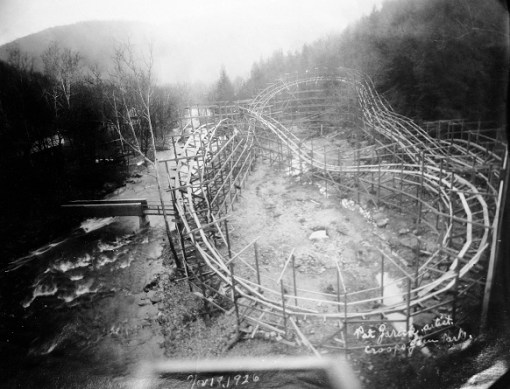


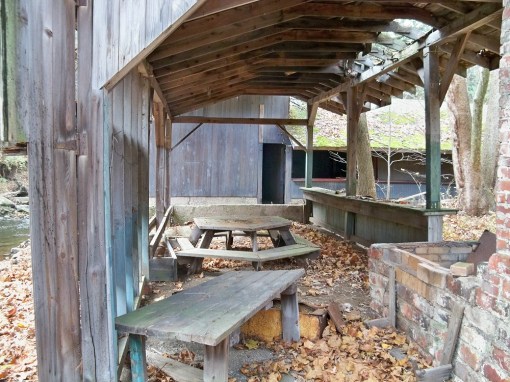
 Abandoned Park Picnic Tables in 2010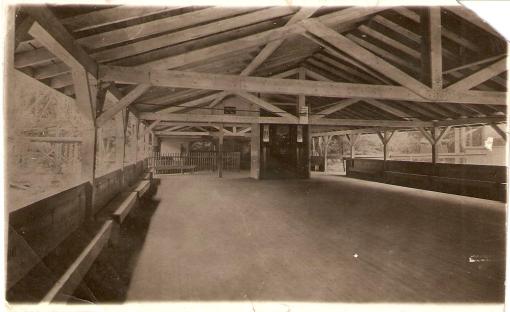


 Abandoned Park Picnic Grove Structure in 2010
 Cheri Sundra © 2012 All Rights Reserved



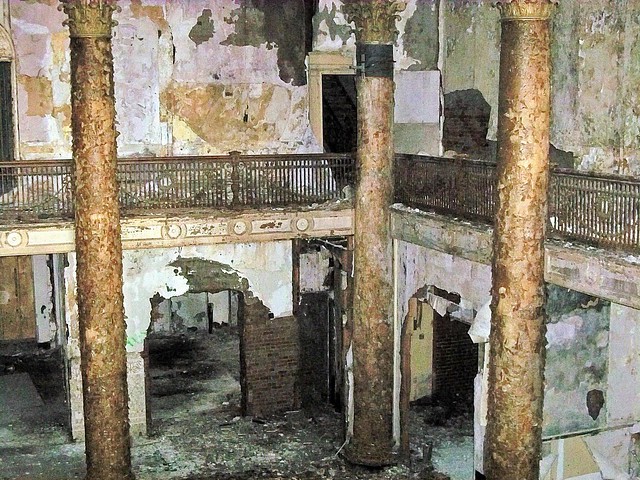
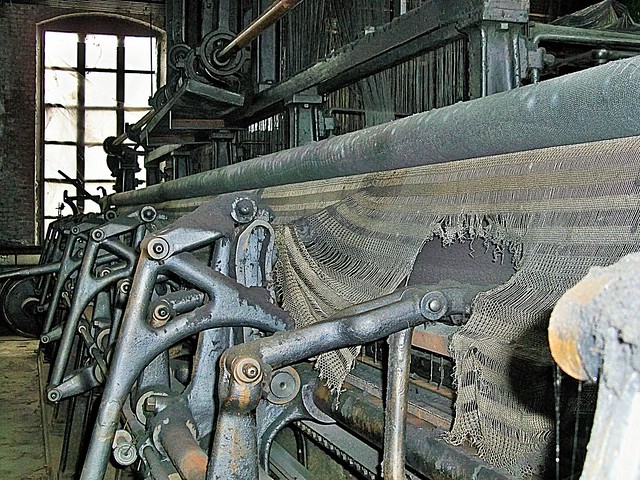
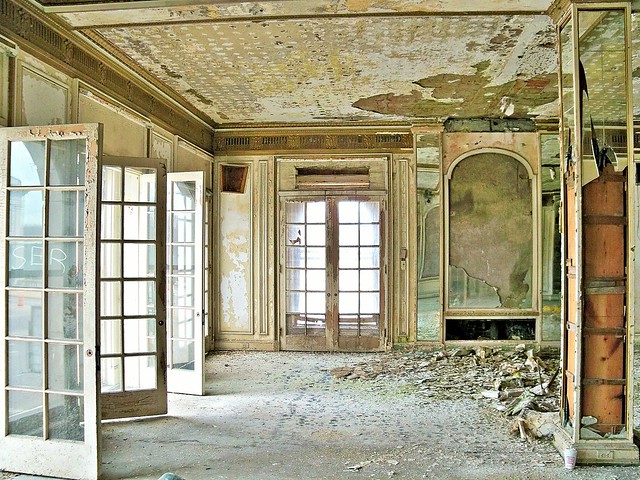

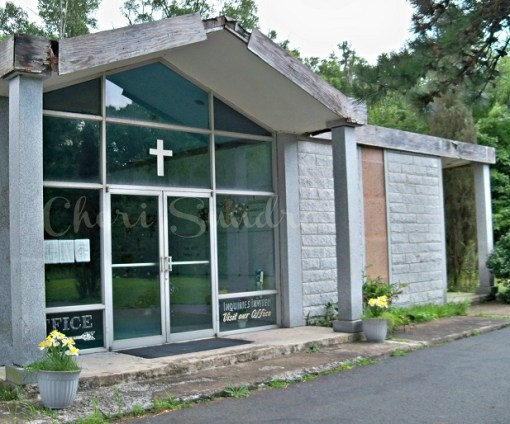


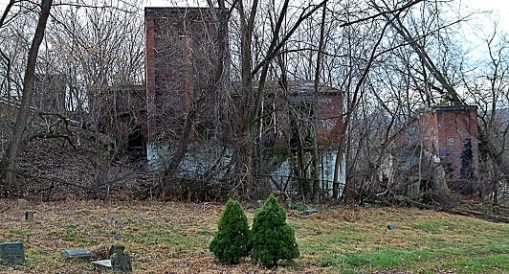

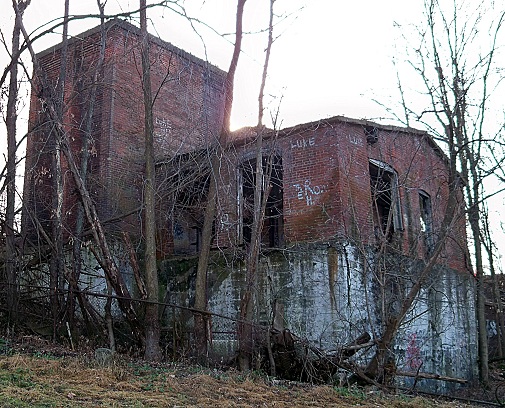


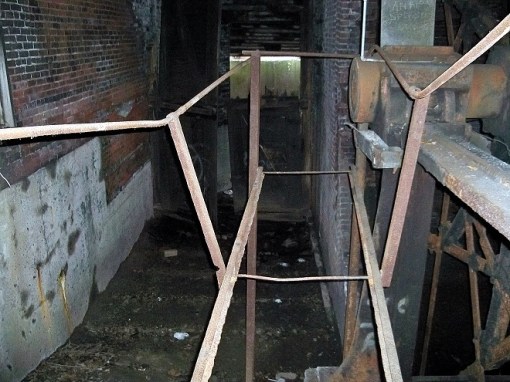
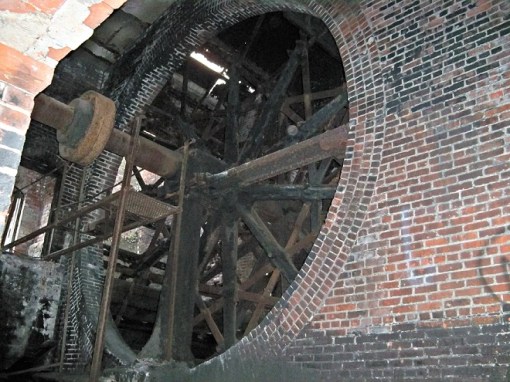
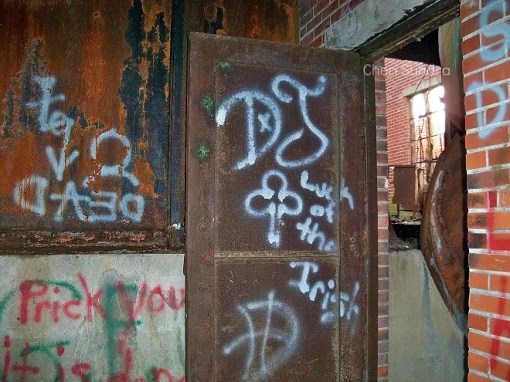
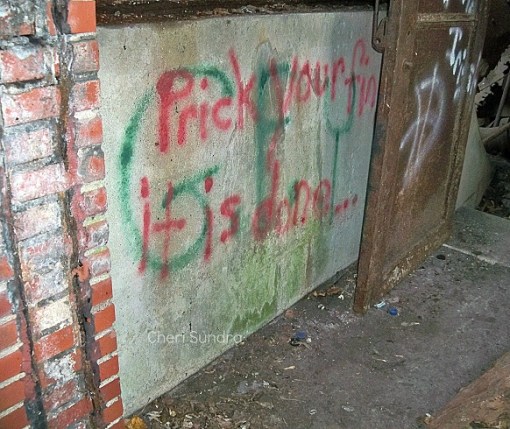




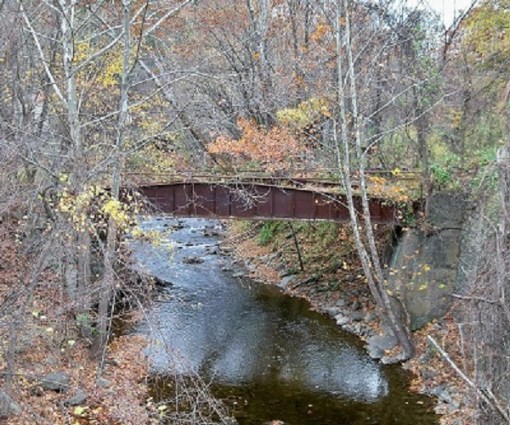


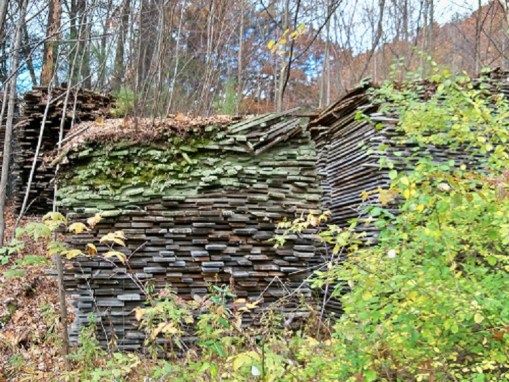

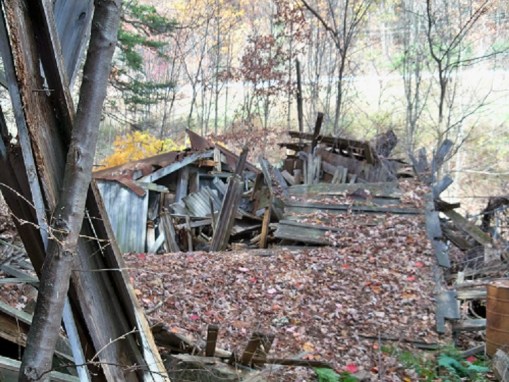








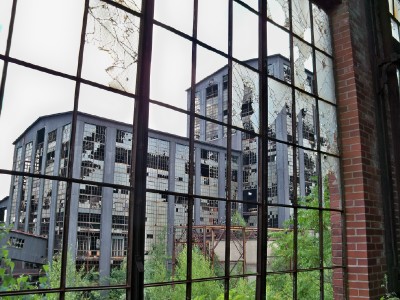
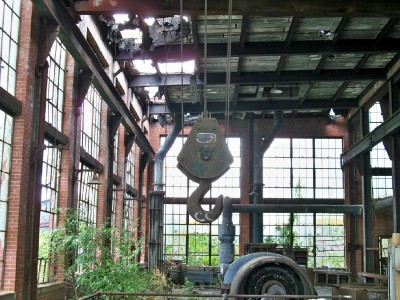
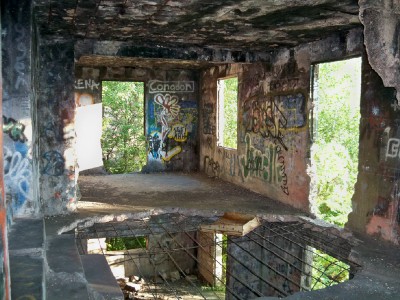
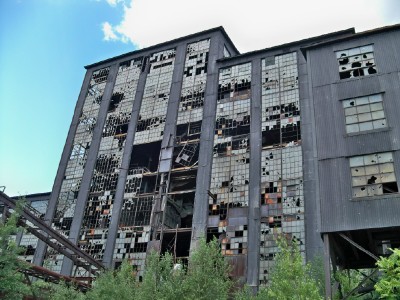 Eleven stories of tar-coated steel, scads of partially dismantled machinery, hundreds of broken steel-reinforced windows and more insight into the ravages of time than you can hope to absorb in one visit make the Ashley/Huber Breaker a popular site for urban explorers in Northeastern Pennsylvania. Since closing in 1976, this mammoth structure has had to survive salvage operations, vandalism and Mother Nature, in addition to fears about typical Luzerne County style politics.
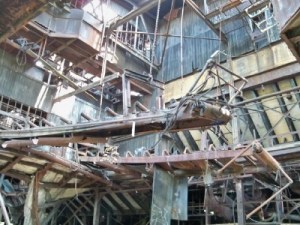 When it was built in 1939 to replace an older and out-dated structure, the Huber Coal Breaker was considered a technological marvel.
 The facility was operated by the Glen Alden Coal Company to process coal from three nearby mines. Seven to ten thousand people have worked at the Huber Breaker sorting, washing and loading 7,000 tons of coal daily into train gondolas.
 Long before companies like Nike and Ralph Lauren embraced the color “Pop” merchandising display technique to seduce consumers into buying their products, the Glen Alden Coal Company painted their coal blue as a marketing ploy that resulted in the moniker “Blue Coal Company”.








 Cheri Sundra