Huber Breaker Ruins: The Art of Industrial Decay
***Every photo also serves as a link to more of each photographer’s work

Photographer Scott Frederick, Philadelphia, Pennsylvania
Existing in a state of ruin and completely stripped of all functionality, the Huber Breaker looms over the bleak landscape of Ashley, Pennsylvania, a monument of the industrial revolution reduced to a useless scar, blighting the landscape. A detritus of a bygone way of life, it has the power to tell us things about the past, while existing very much in the present.

Photographer Jamie Clarke (aka RiddimRyder), Ontario, Canada
The Huber Breaker, a facility created for literally breaking chunks of coal into smaller bits, is a decaying piece of infrastructure from an industry that built an entire region. Today the deafening noises and the human element of its function have been replaced by silence and total desolation as the abandoned breaker sits brooding on the landscape, now a decaying tomb in the post-industrial world. Amazingly, it almost resembles something from a sci-fi movie set, in defiance of the fact that the machinery became outdated decades ago.
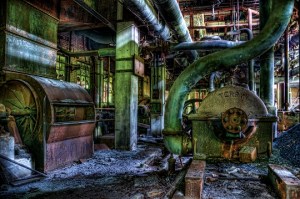
Photographer Dawn Robinson—Baltimore, Maryland
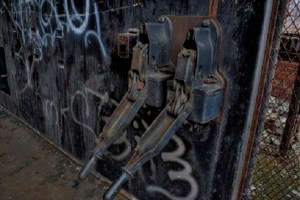
Photographer Stacy Shannon—Alexandria, Virginia

Photographer Enrico Fiore
History tells us that the breaker’s windows were designed for maximum use of sunlight, yet today the structure remains characteristically dark and somber, creating a compelling atmosphere for the photographers stopping by to ponder the passage of time and to bear witness to the slow destruction of this forsaken structure left behind by a long defunct enterprise.

Photographer Enrico Fiore

Photographer Stacy Shannon—Alexandria, Virginia

Photographer LUIGI ROMANO (aka Egoista_73) with model Nicholas Bishop Michael of Model Mayhem #1634905
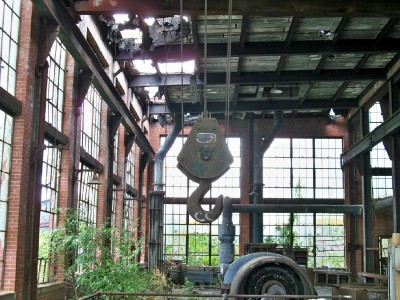
Machines often have a steampunk quality that can fuel the artistic imagination while the setting is comprised of titanic spaces that lend themselves to appearing like majestic ruins full of twisted metal and distant vanishing points.
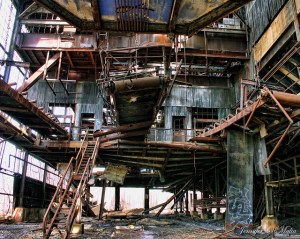
Photographer Jenn O’Malia—Groton, Connecticut

Photographer Dawn Robinson—Baltimore, Maryland
Blight itself can inspire all kinds of emotions in people because it is a display of failure that gives voice to the darker aspects of our communities. It can be shocking to directly confront the kind of neglect that sets in when the bottom falls out of a region’s economy. You are forced to realize that an industry once thrived at that location, generating wealth and opportunity for a privileged few, and all that remains for the community today is a massive hulk of neglect and decay, asking why the real estate that it stands on isn’t even valuable enough to warrant redevelopment.

Photographer LUIGI ROMANO (aka Egoista_73) with model Nicholas Bishop Michael of Model Mayhem #1634905
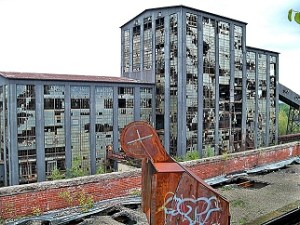
Photographer Cheri Sundra
The obligatory history:
The Huber Breaker opened in 1939 to meet the bustling needs of the Anthracite coal industry and was able to process 7,000 tons of coal daily. The company dyed the coal a blue color as a branding gimmick and it was advertised as “Blue Coal”. When demand for the mining industry declined, the facility closed in 1976. Since that time, it has been left abandoned and open to vandals and scrappers.

Photographer Geo Romolo, Toronto, Ontario
“This coal breaker, along with many others, is very special to me. They capture “Americana” at its best. The American Heartland could not be represented without these industrial backbones of our past. They represent to me the men and women that labored here. Our cities were and still are built on coal and steel. One image cannot even begin to capture the hard labor our forefathers put into pioneering the industrialization of America as we know it.”~~ Geo Romolo
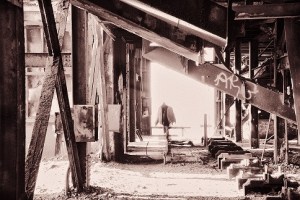
Photographer Jim Cook, Tunkhannock, Pennsylvania
“As a child growing up in the Wyoming Valley, the heart of the northeastern coal region, I always wondered while passing by that gargantuan structure on the highway what it would have been like to work there, or even be inside such a massive place. It wasn’t until I was older that I had an opportunity to step inside and take a look for myself. At that point in time the breaker had seen better days; the floors were starting to cave and the windows were mostly broken. However, I really enjoyed exploring the breaker for various reasons, the most significant being the fact that it was such an integral part of the community where I grew up and its demise left the area and its occupants depressed. It is rich in history and that is why I enjoy photographing and documenting these forgotten places.”~~Jenn O’Malia

Photographer Jenn O’Malia—Groton, Connecticut
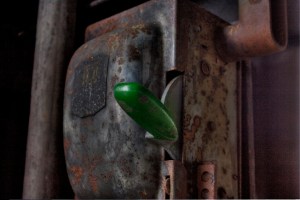
Photographer Stacy Shannon—Alexandria, Virginia

Photographer Dawn Robinson—Baltimore, Maryland
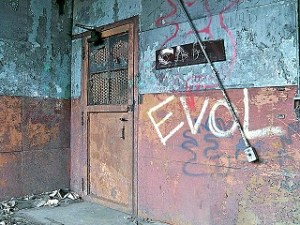
Photographer Cheri Sundra
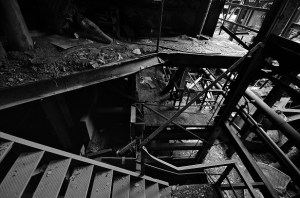
Photographer Katherine Rogers (aka Dilated Pupil) , Tattoo Artist, Reading, Pennsylvania
“The Huber Coal Breaker was the first stop on our adventure this week and what a beauty it was! ….This location is a bit unsafe because of the broken stairs and hanging debris, but we made our way up through the maze of death as I like to call it! The more time we spent in the Huber the more there was to shoot.” ~~Scott Frederick Photography Blog

A Christo-esque Breaker Moment: I can’t help but wonder if this was a leftover background embellishment from a photo shoot, just a prank or was someone trying to make an artistic statement?~~Cheri Sundra
@@@@@
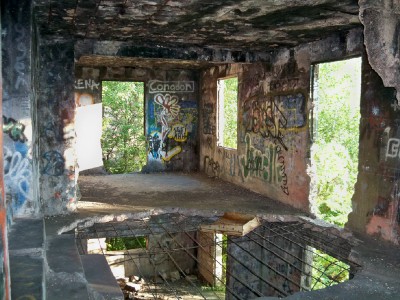
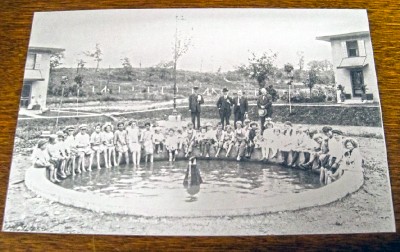
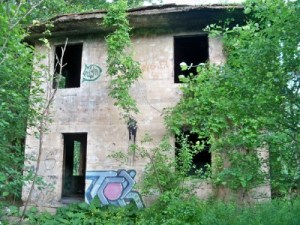
I was recently interviewed for an article about the Kirby Park Zoo Ruins:
~*~*~*~*~*~
Return To
GUERRILLA HISTORY Table of Contents
Cheri Sundra © 2012
All Rights Reserved

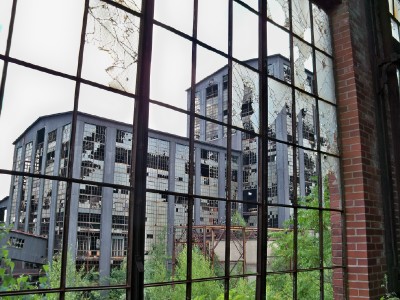
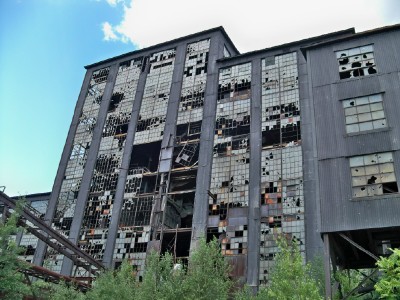 Eleven stories of tar-coated steel, scads of partially dismantled machinery, hundreds of broken steel-reinforced windows and more insight into the ravages of time than you can hope to absorb in one visit make the Ashley/Huber Breaker a popular site for urban explorers in Northeastern Pennsylvania. Since closing in 1976, this mammoth structure has had to survive salvage operations, vandalism and Mother Nature, in addition to fears about typical Luzerne County style politics.
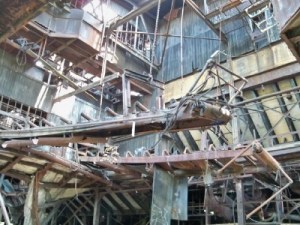 When it was built in 1939 to replace an older and out-dated structure, the Huber Coal Breaker was considered a technological marvel.
 The facility was operated by the Glen Alden Coal Company to process coal from three nearby mines. Seven to ten thousand people have worked at the Huber Breaker sorting, washing and loading 7,000 tons of coal daily into train gondolas.
 Long before companies like Nike and Ralph Lauren embraced the color “Pop” merchandising display technique to seduce consumers into buying their products, the Glen Alden Coal Company painted their coal blue as a marketing ploy that resulted in the moniker “Blue Coal Company”.









 Cheri Sundra