Posts Tagged ‘ Luzerne County Historical Society ’

A Resurrection Reversed: The Playboy Bunnies & The Death(s) of the Wilkes-Barre Train Station (Part 2)

GFoster 1

Photo courtesy of George Foster

(If resurrection is the concept of coming back to life after death, how do you measure the success, or failure, of one?)

Wilkes-Barre Train Station 2014

Wilkes-Barre Train Station 2014

Some townspeople, in a “has-seen-better-days” place named Wilkes-Barre, Pennsylvania, are looking for someone to save their tragic little train station……again. This is unquestionably a noble goal. But any potential philanthropists, preservationists and “do-gooders-in-general” should be forewarned that this is a community with a history of its own—a history that includes squandering the gift of historic resurrection.

Allow me to photographically illustrate a story that will break your heart. It is a tale about a man with a dream, who invested millions of dollars, in a labor of love, to give the gift of history and heritage back to his hometown.

I’m talking about an old-school, self-made, “no-government-grant-money-needed”, community philanthropist with a vision for the future, who spent his own cash to restore a vacant and quickly deteriorating historical landmark.

What did that community do with the living piece of history that he so lovingly and generously invested in for them to enjoy for years to come?

In an act of betrayal, the town just complacently watched, as the property reverted back into a state of abandonment and ruin once again, very shortly after their benefactor entrusted the train station’s care to other community members. This is a frightening tale about what can happen to history when commercial non-profitability and loss of accountability in local government collide.

Let’s begin our story right here:
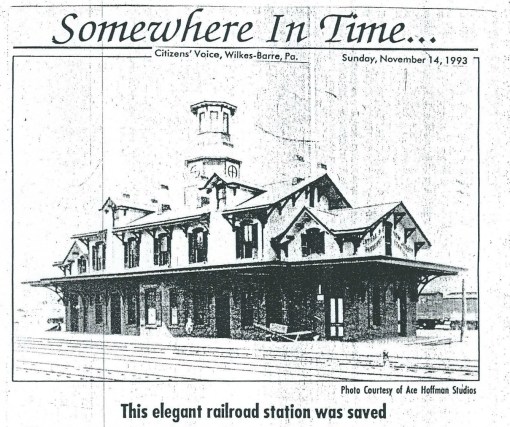
Scan0005a

Once upon a time, many years ago…..in 1974, to be exact…..there was a historic little train station who had seen much better days. After playing a major role in the prosperous years of the fair city that it calls home (See Part 1), this particular train station was viewed as an abandoned building merely existing in a state of ruin, and standing in the way of “progress”. It was nothing but a hopeless abandonment, plagued by vandals, and slated for demolition. The Luzerne County Redevelopment Authority planned to remove the structure, since it was in the direct path of an extension planned to make way for a downtown automobile traffic distributor—whatever that is! But the community stepped up and got involved in trying to rally support for this endangered landmark.

First, there was a Senator named Hugh Scott who urged local communities in Pennsylvania to try to save old rail depots throughout the state so they could serve as museums or something useful.

Then people began writing letters and articles urging the community to save Wilkes-Barre’s little monument to the halcyon days of passenger train service, which usually began with statements such as:

“No longer the trim, ornate passenger station it once was back in the hey-day of rail travel in Wyoming Valley, the Central Railroad depot now is a run-down, dilapidated structure; its boarded-up lower floors, broken windows and mouldering (sic) cupola stand as mute evidence of Wilkes-Barre’s historic past.”

While that newspaper blurb sounds eerily like it could be pulled from 2014, it actually ran in the September 28, 1974 issue of the Wilkes-Barre newspaper! Forty years ago, this community was looking at the SAME train station, in the SAME condition that it sits today, wondering what to do with this magnificent piece of history that sat in ruins. What has transpired in Wilkes-Barre over those four decades is a tale of hope, transformation, and then a decline that should make the business leaders and elected officials in that community hang their heads in shame.
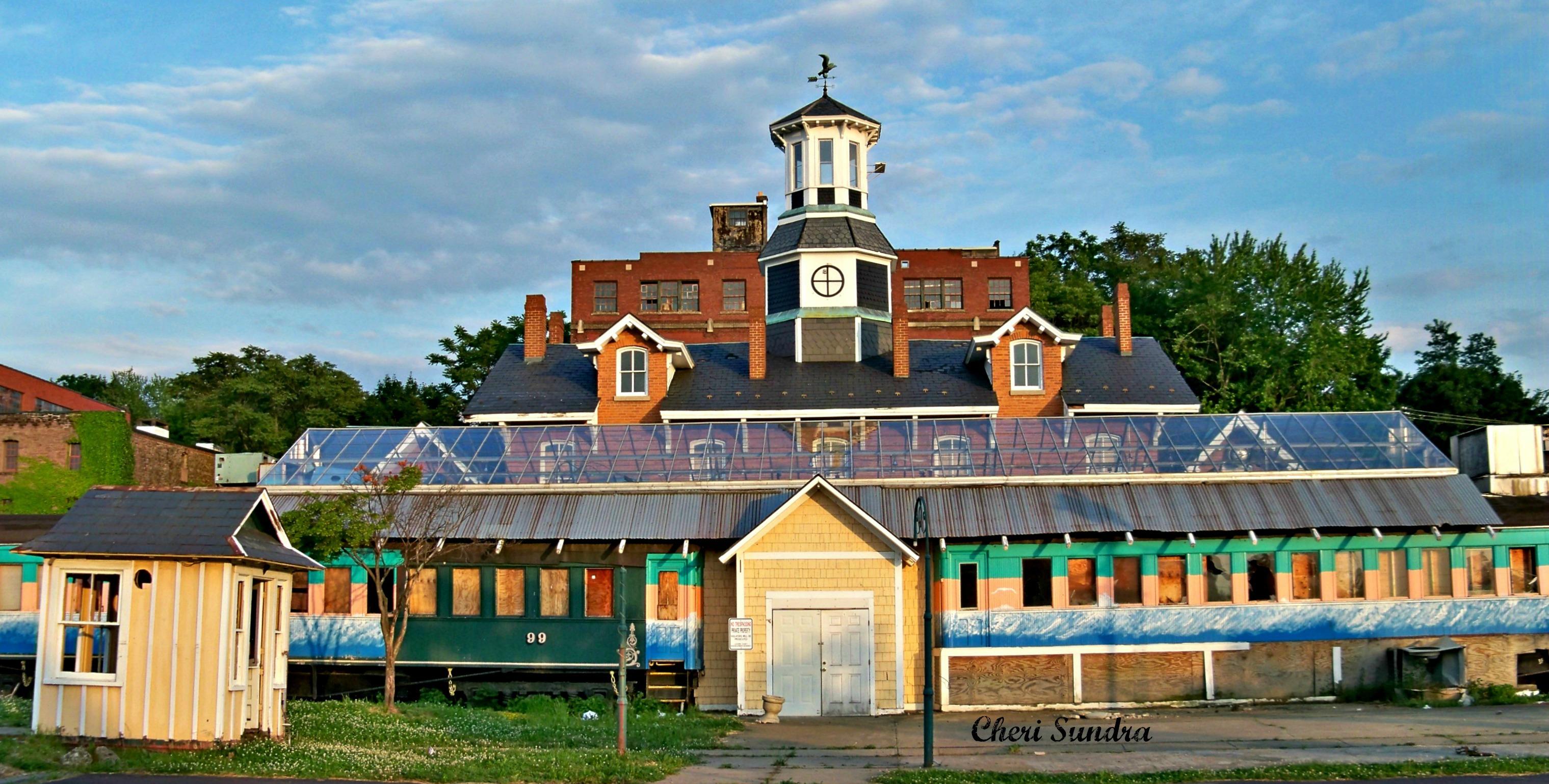
Wilkes-Barre Train Station 2014

Wilkes-Barre Train Station 2014

In 1974, their local newspaper was saying things like:

“Time is running out for the old Central Railroad of New Jersey passenger station, whose 106 years of history cover the major span of the once great railroad industry, second only to anthracite mining as the greatest employer in Wyoming Valley. Now, vacant and deteriorating rapidly since the shutdown of all CNJ service in Wilkes-Barre on March 31, 1972, the historic building awaits its fate. “

What happened next was nothing short of miraculous in the world of historical preservation! It was almost inconceivable that anyone would really be interested in salvaging such a deteriorating structure, especially since its small size mitigated against any otherwise major redevelopment that could grace the seven acre tract of land that it sits upon.
DSC_1353

Photo courtesy of George Foster

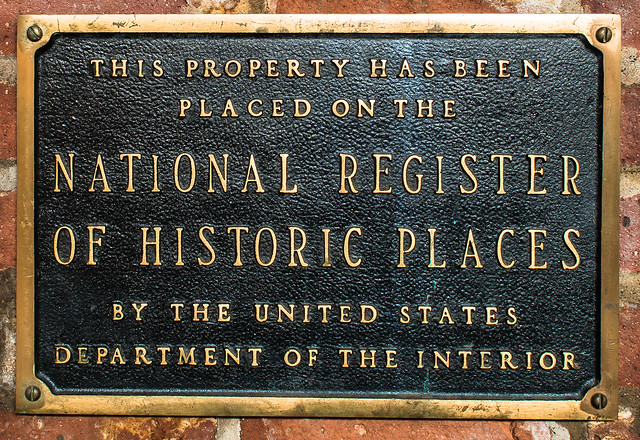
But against all odds, amazing things happened! The Greater Wilkes-Barre Jaycees took on the responsibility to get the ball rolling. They organized a “Save Our Station” committee and embarked on a quest to secure “historical landmark” status for the structure. They didn’t have the resources or knowledge required to do the restoration job themselves, but they were successful in having that little train station placed on the National Register of Historic Properties and the Pennsylvania Register of Historic Sites and Landmarks. Now all that the story needed was a hero to save the day! And that’s when a man named Marvin Roth came to the rescue.

Marvin Roth & His Restored Train Station

Marvin Roth & His Restored Train Station

Mr. Roth was a novelty and toy wholesaler who grew up a block from the train station, watching the trains come and go. He decided to re-create the hustle and bustle of the busy rail terminal, without involving actual train travel and the end result was a unique motel, restaurant and bar experience.

“I didn’t want the railroad to disappear entirely from Wilkes-Barre, and this is my way of keeping it alive,” he said in a 1987 Los Angeles Times interview about his project to convert the abandoned station into a useful parcel of real estate once again, as a gift to his economically struggling hometown.

Before Mr. Roth stepped up, the elegant brick station had been last used by the Central Railroad of New Jersey, successor to the old Lehigh, Lackawanna, Delaware & Hudson, and Pennsylvania railroads that served the area into the early 1960s after Wilkes-Barre’s coal mines, flooded by the Susquehanna River, stopped operating.

Passenger rail service, which started there in 1843, ended July 1, 1963. Next the station was subjected to the ravages of time and weather, in addition to the day-to-day destruction inflicted by vandals who shattered glass, destroyed moldings, and pilfered valuable and difficult–to-replace originals. The structure was so devastated in the 1972 flood caused by tropical storm Agnes that the local Redevelopment Authority planned to raze it.

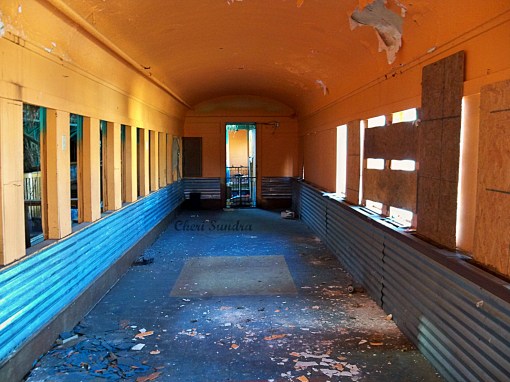
Marvin Roth purchased the train station in late 1977 and embarked upon the kind of successful redevelopment project that everyone hopes to achieve as an end result. He filled the tracks with dining, parlor and sleeping cars, cabooses and freights, using them as a means to add extra commercial space to the tiny train station. Finding the old railroad cars was easy, but getting them into Wilkes-Barre, where track had been torn up, proved to be quite difficult.

Roth Restored Railroad Car

Marvin Roth Restored Railroad Car

Railroad Car Post-Roth- Restoration

Railroad Car Post-Roth- Restoration

“We had to lay track from the site to some freight lines still operating,” Mr. Roth told the LA Times. “That’s how we were able to move a private coach once used by Henry Flagler, the owner of the old Florida East Coast Railway and a partner of John D. Rockefeller.”

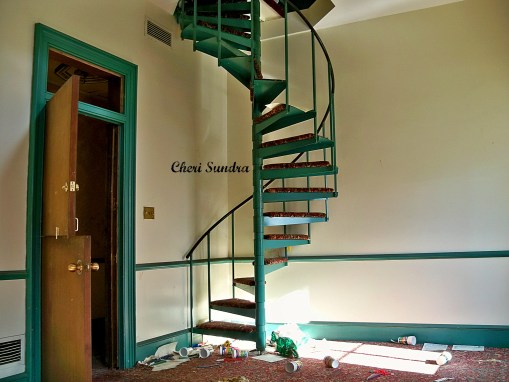
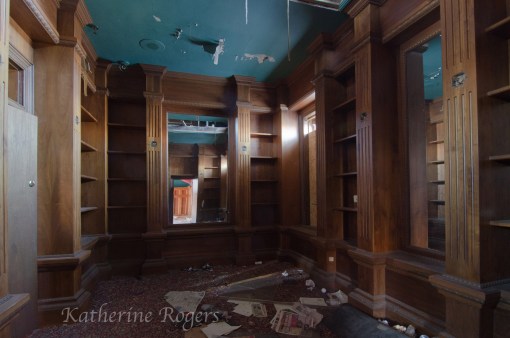
In local newspaper interviews, Marvin Roth was hailed for his “restless search for historically significant artifacts” to place throughout the complex, which included the acquisition of an enormous hand carved sideboard from the Vanderbilt home to be used as the focal point of the lobby. And there was detailed work underway on the train station’s second floor where a cabinet maker from Israel—Nissim Rabbe—labored for months in a room named the “Library Room” , creating walls made out of fine, hand carved walnut.

Marvin Roth Library Room
Marvin Roth Library Room

Library Room Post-Roth- Restoration

Library Room Post-Roth- Restoration

Photo courtesy of Katherine Rogers

The adjacent room, named the “Billiard Room” because of its large billiard table, was another dining area decorated with stately oak. Newspaper articles went to great lengths to describe how “little expense was spared in selecting appointments, furnishings and decorations to be consistent with the Victorian era in this non-rolling railroad complex.”
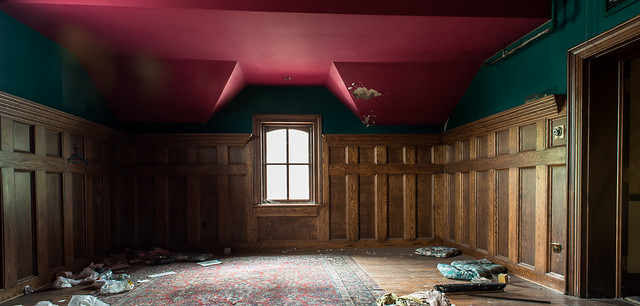
The Once Grand Room.

“Billiard Room” Post-Roth-Restoration

Photo courtesy of George Foster

In an interview about his restoration project for the Revel R.R. Resister, Roth “dwelled on his commitment to authenticity in the restoration—even to the tin and copper roof being replaced with all copper.”

In 1979, the local paper declared:

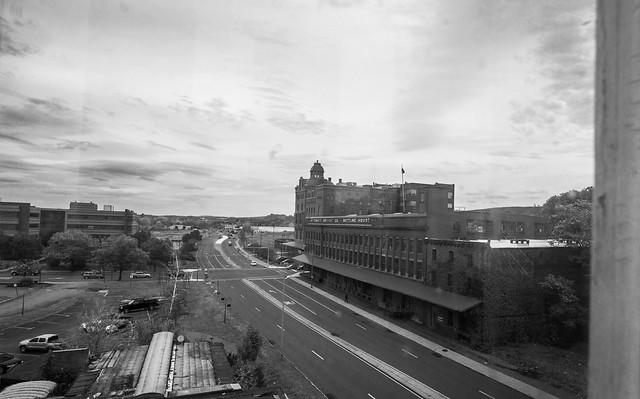
“Perhaps the grandest part of the station is the cupola; Roth said before restoration, the cupola had no access. “When we got up here for the first time we found that the only others ever up here were the pigeons”, mused Roth. From the cupola, one is afforded a grand view of the city.”
DSC_2827

The View–Photo courtesy of George Foster

Mr. Roth continued, “Also, when standing at the top of the grand structure, the new clean slate and copper roofing on the station is eye-catching. “–Citizens’ Voice, April 27, 1979

Sign For Potential Copper Thieves, Post-Roth- Restoration

Sign For Potential Copper Thieves, Post-Roth- Restoration

(Note to readers: Early in 2013, thieves successfully removed the copper roofing material.)

Roth described the cupola as “pure gingerbread” because it served no purpose, but anyone entering it would be unlikely to forget it because it was completely lined with cedar wood.
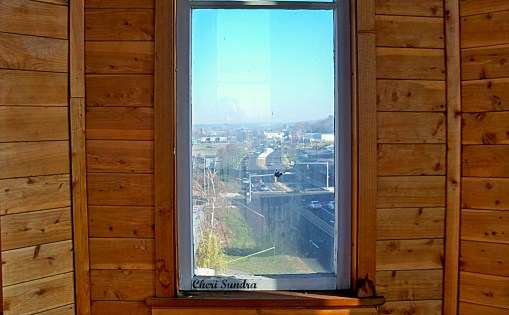
Cedar Lined Cupola

Cedar Lined Cupola

Marvin Roth did considerable research to find out what he needed to restore the former New Jersey Central Railroad Station. He enjoyed spending the time, money and effort that he put into the project. In a 1979 interview, Mr. Roth said that when he completed his restoration project, that the station would be the showplace of Northeast Pennsylvania. “The bottom line of this project is that it’s not profit oriented. And I look upon this project as being owned by the people of Wilkes-Barre.” OWNED by THE PEOPLE of Wilkes-Barre….

Scan0003Marvin Roth checking details

Post-Roth-Restoration

The Station: Post-Roth-Restoration

Roth’s efforts paid off tremendously and the site quickly became a hot-spot enjoyed by community members of all ages. In January of 1981, The Citizens’ Voice, in a recurring section called “Up with Teens” declared, “The Station is Alive”!

The article went on to describe The Gandy Dancer Room, which featured both live bands and DJs. The venue was fully equipped with lights, sirens and a moving iron horse where, “teenagers danced disco to the latest tunes.” And as Generation X-ers may recall today, “There was a cover charge for the disco when a band played, and you had to be 18 to enter.”

The Station: Post-Roth- Restoration

The Station: Post-Roth- Restoration

There were pinball machines and Space Invaders if you didn’t like to dance. Or you could have a nice quite meal in one of the box cars, which were neatly designed like they were during the Golden Era of Railroad travel. Each car had a dining table, mirror sink and some even had a pull-out bed.

Station Railroad Car: Post-Roth-Restoration

Station Railroad Car: Post-Roth-Restoration

Or patrons could choose one of the dining areas upstairs. The most popular room was the “Bullet Hole Room” which was rumored to have the actual mirror Jesse James was standing in front of when he was gunned down by the Ford brothers because of the $10,000 reward that was on his head. The crack in the mirror is said to be from the bullet that killed him.

The Marvin Roth Bullet Hole Room

The Marvin Roth “Bullet Hole Room”

The Marvin Roth Station

The Marvin Roth Station

The Station Post-Roth- Restoration

The Station: Post-Roth- Restoration
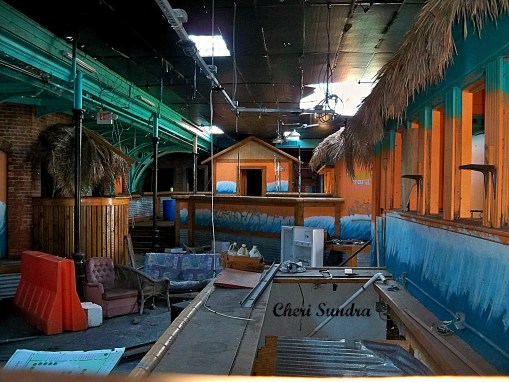
The Station: Post-Roth- Restoration

The Station: Post-Roth- Restoration

By the time renovations were complete, there were more than 60 railroad cars on the site that Mr. Roth named the “Choo-Choo Inn”. It provided 90 private rooms for overnight accommodations. Inside were brass beds, Victorian-style furniture and overhead fans. In 1987, the tab for a night in a restored rail car was less than $50. In an interview from the same year, Mr. Roth said “people love the overnight stay in the ambiance of our sleeping cars. It’s an experience they like to recount to their friends and relatives back home.”

To further explain the ambience, The Los Angeles Times ended the article with:

“The depot, called The Station, is used for dining and dancing. Its freight platform was converted into a tavern called “Gandy Dancer” after track workers, making it one of Wilkes-Barre’s most unusual night spots. Outside The Station entrance is an old red-and-white crossing watchman’s shanty and nearby, a signalman’s tower. A side-tracked locomotive now and then sounds its whistle to reacquaint visitors with what used to be.”
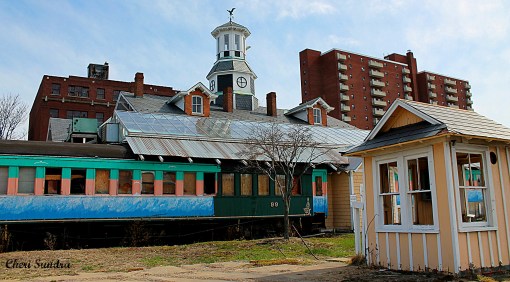
The Station: Post-Roth- Restoration

The Station: Post-Roth- Restoration

Then in December of 1987, The Playboy Steakhouse, with a licensing arrangement with Playboy for an undisclosed fee, opened at the Station Complex, employing 30 women as Playboy Bunnies.

(Admit it, if you are from Wilkes-Barre and part of Generation X or later, you are thinking “We had freakin’ Beer, Peanuts, the Golden Era of Train Travel AND an internationally known concept like Playboy Bunnies, which still enjoys tremendous popularity today?!….how did we NOT become a tourism hot-spot?” Mr. Peanut Guevara  is still waiting for The Revolution to begin…..)

During the 1960s and 1970s, Playboy Clubs were considered the height of citified elegance – or at least opulence. In a 1988 interview, Station manager Jack Cantor said, “We were looking for a new concept to liven up the place. Wilkes-Barre had only read and heard about Playboy clubs. Now we have the concept here.”

“We just want to be brand-new in every way,” said Robert Habeeb, the Steak House’s director of food and beverages, in that same interview. “It’s a revival of the Playboy idea, in a popularly priced restaurant, for the general public. Look, like Philadelphia, Wilkes-Barre has the image of being a little prudish,” said Habeeb. “When Playboy clubs were at their height, it never would have flown here. We’re ready for this kind of thing now. The Playboy standard of service is something this town has never seen.”

Apparently, not everyone in the small town was ready to embrace the Playboy Bunny-themed affordable restaurant. “We had a local minister writing lots of letters to the newspapers when we started hiring bunnies in November and we got a little flak when we opened because it was in the middle of the Jessica Hahn deal,” admitted Habeeb in that interview. Ironically, newspaper accounts mentioned the local desire to attract other “themed” restaurants, such as Bennigan’s, to act as “tourist magnets” instead of the Playboy franchise.

The Playboy Steakhouse days in Wilkes-Barre were short lived. Just six months later, in June of 1988, Thom Greco, Rick Kornfeld and Mitch Kornfeld entered into a lease-purchase agreement with Marvin Roth’s Revel Railroad Company, which operated the Station Complex. (Two years later, Marvin Roth suffered a heart attack and died) Shortly afterward it became very apparent that they did not support Roth’s vision for the facility at all. First they banished the Bunnies.
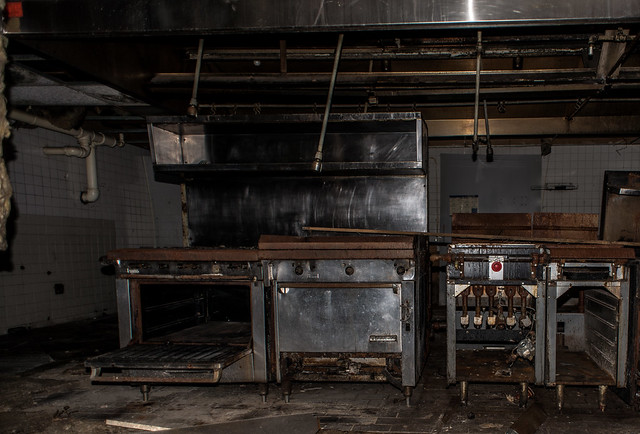
Grimy Kitchen The Station Kitchen: Post-Roth-Restoration

Photo courtesy of George Foster

The new owners said the image change would not only recognize the emergence of feminism but would also broaden the establishment’s clientele. “A lot of times, husbands would stay in the rooms,” Mitch Kornfeld said, “and wives would call up and say, ‘You’re staying in the Playboy club?”
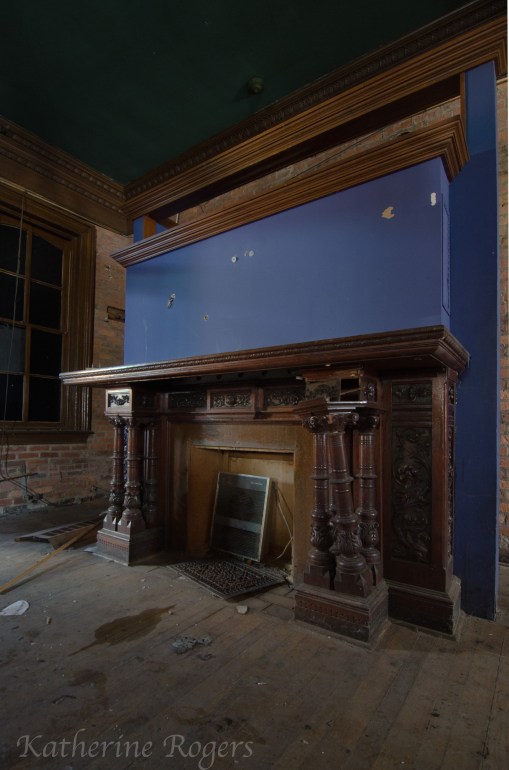
The Station: Post-Roth- Restoration

The Station: Post-Roth- Restoration

Photo courtesy of Katherine Rogers

In June of 1988 Mitch Kornfeld told the Inquirer, “It didn’t work in New York or Chicago, why would it work in Wilkes- Barre? It’s a little passé. If we were in the late ’70s it would work, but we’re in the ’80s. Women are just different. People are different.”
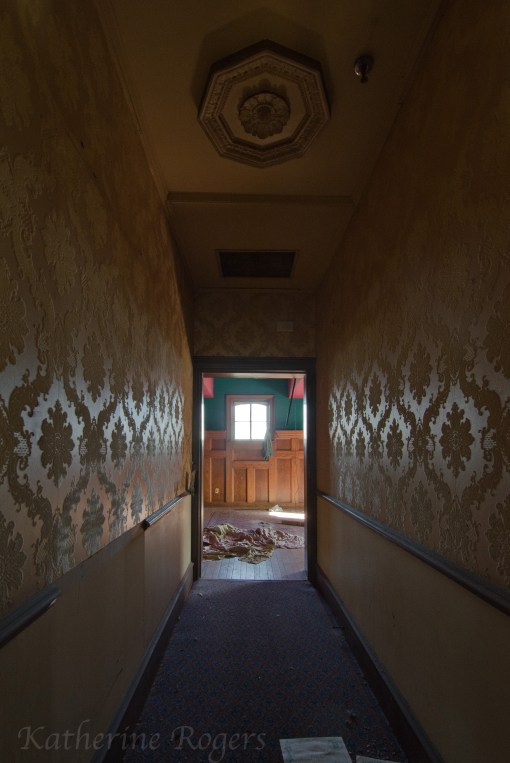
The Station: Post-Roth- Restoration

The Station: Post-Roth- Restoration

Photo courtesy of Katherine Rogers

The new owners decided to get rid of the Playboy franchise in order to open a new restaurant and nightclub called Norma Jeane’s. They renamed the entire facility Market Street Square. The complex remained open through the 1990s, touting a succession of different nightclub and restaurants names, with none of them ever really becoming successful ventures. At least not successful enough to keep the place open for very long.
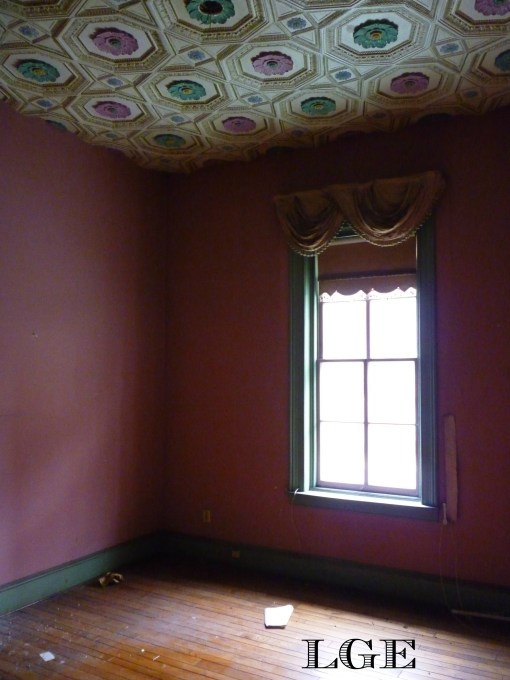
The Station: Post-Roth- Restoration

The Station: Post-Roth- Restoration

Photo courtesy of the League of Gentlemen Explorers

In 1991, The Morning Call reported that the new owners were experiencing some drawbacks attributed to having 90 guest rooms in train cars. “The cars are narrow, require a great deal of maintenance because they are exposed to weather, and are expensive to heat and cool. Also, guests have to go outdoors to get from their rooms to the restaurants, nightclubs or lobby. Some older people don’t like having to use steps to get to their rooms.”

Recently Removed Railroad Dining Car: Post-Roth-Restoration

Recently Removed Railroad Dining Car: Post-Roth-Restoration

The Kornfelds walked away from the business arrangement in 1992, while “entertainment magnate” Thom Greco remained involved. By 1994, the “Choo-Choo Inn” was closed for good. The entire complex shut down completely in 2001, just 24 years after Marvin Roth rescued the train station from demolition by purchasing the property it sits on for $80,000, and investing more than $3 million dollars of his own money into restoration.

The Station: Post-Roth- Restoration

The Station: Post-Roth- Restoration

Photo courtesy of the League of Gentlemen Explorers

In 1999 it was reported by the Times Leader that within that past year, city firefighters were often called to put out fires at the abandoned “Choo-Choo Inn” because homeless squatters were igniting items to keep warm, or vandals were setting fires inside the cars. In an interview at that time, Fire Chief Bruce Reilly said that he’s afraid one of his firefighters will get hurt responding to those train car fires. “Some have Plexiglas windows,” he said. “You can’t bust them. Every time they get boarded up, somebody breaks into them.”

Recently Removed Railroad Car: Post-Roth- Restoration

Recently Removed Railroad Car: Post-Roth- Restoration

The mayor at that time, Tom McGroarty, who seemed ambivalent about the history of the property in newspaper interviews, just wanted the cars removed. A youngster when the motel first opened, the mayor stated in 1999 that he only “kind of” remembers the inn and described the area as nothing but a mess. He gave Greco until October of 2002 to remove the train cars from the property.

On March 30, 2002, according to the Citizens’ Voice, Greco was still looking for new owners for the splendid rail-cars that Mr. Roth so carefully restored as a gift to the citizens of Wilkes-Barre. He had to clear the property and pay off back-taxes. The cars were now “eyesores, attractions for the homeless and fire hazards”, according to the newspaper.

Greco noted that a great deal of money had gone into renovating the railcars to bring them back to their historical nature. “When we closed the hotel”, he said in that interview, “they were in perfect shape. We didn’t put the graffiti on them, set fires or steal from the rooms. We once had a historic area”, he added, “Unfortunately, the railcars ended up in this condition because the people here destroyed them. They were redone and the community destroyed them.” It should also be noted that Greco obviously did very little himself, as the owner, to protect these treasures in his possession from vandals, thieves and homeless people, who don’t exactly view themselves as part of “the community”.

Today, for the second time in history, the fate of the little train station (which again sits abandoned, in ruins, unsecured, plagued by vandals and quickly deteriorating) is back in the hands of the Luzerne County Redevelopment Authority— just like it was, pre-Marvin Roth Rescue.

The Station: Post-Roth- Restoration

The Station: Post-Roth- Restoration

Photo courtesy of Katherine Rogers

In 2006, the Luzerne County Redevelopment Authority purchased the property from Thom Greco, becoming its owner for the second time using $5.8 million in taxpayer funded federal community development money. Since this is Northeastern Pennsylvania, where nothing seems to occur in local government without a scandal, the deal also included $10,000 in the form of television sets that were allegedly a “reward” from Greco to a county commissioner for his influence in making the sale happen. The TVs were to be used in a family owned sports bar and led to all kinds of legal implications for the people involved.

The Station:  Post-Roth- Restoration

The Station: Post-Roth- Restoration

Photo courtesy of the League of Gentlemen Explorers

A recent appraisal of the property estimated that it is now only worth about $1.88 million, which is significantly less than what the county paid to acquire it.

The Station:  Post-Roth- Restoration

The Station: Post-Roth- Restoration

Photo courtesy of the League of Gentlemen Explorers

Current plans for the train station include seeking a commercial real estate firm to market the historic property. In 2012, county manager Robert Lawton said he did not support a prior county decision to spend $2 million renovating the station. He asked the redevelopment authority to consider selling the train station and adjoining properties to a private owner (again). The Authority opened a competitive bidding period on the property. They received absolutely no offers from anyone.

Last July, Wilkes-Barre demolished another landmark structure, the Hotel Sterling, after a failed, government-funded attempt to preserve and market the structure.

Time is quickly running out (again) for the little train station in Wilkes-Barre. The current owner obviously cannot afford to even secure the property from further vandalism since the extent of their security measures begins and ends with a maintenance worker checking the property, along with other rail properties on “most days”, according to reports in the Times Leader.  It is speculated that homeless people currently use the building for shelter during inclement weather. There are also an awful lot of feral cats living there.

Cat Pan at The Station:  Post-Marvin-Roth-Restoration

Cat Pan at The Station: Post-Marvin-Roth-Restoration

Photo courtesy of the League of Gentlemen Explorers

Post-Marvin Roth Restoration, we live in a different age now, when historic preservation projects are often viewed as “money grabs” by developers nationwide just seeking to exhaust government grants before the buildings are ultimately demolished, just like the Hotel Sterling, simply because there rarely seems to be enough funding available to complete these kinds of projects in their entirety, without additional funding from private sources.

Zombie Ballroom at the Hotel Sterling

Zombie Ballroom at the Hotel Sterling

Cheri Sundra–Guerrilla Historian

When Marvin Roth purchased the train station while it was endangered the first time, he said, “I bought it because I was infatuated with the building, and I made it my hobby. I never went into it as a money maker. It’s not a business.” Unfortunately, for the train station, it ultimately ended up in the care of community members who were ONLY interested in the bottom line and nothing else.

Marvin Roth Wilkes-Barre Historical Train Station Restoration Project

Marvin Roth Wilkes-Barre Historical Train Station Restoration Project

Sadly, there just aren’t many people in the world like Marvin Roth. I wish my hometown had better managed his efforts to save our history when we had the chance.

Historical structures are lucky to get saved once, what are the chances that it can happen twice?
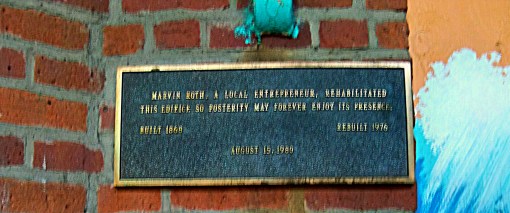
Sign 2

The sign reads:

MARVIN ROTH, A LOCAL ENTREPRENEUR, REHABILITATED THIS EDIFICE

SO POSTERITY MAY FOREVER ENJOY ITS PRESENCE.  AUGUST 15, 1980

The Station:  Post-Roth-Restoration

The Station: Post-Roth-Restoration

Photo courtesy of Katherine Rogers

~*~*~

The Station:  Post-Roth-Restoration

The Station: Post-Roth-Restoration

Photo courtesy of the League of Gentlemen Explorers

~*~*~
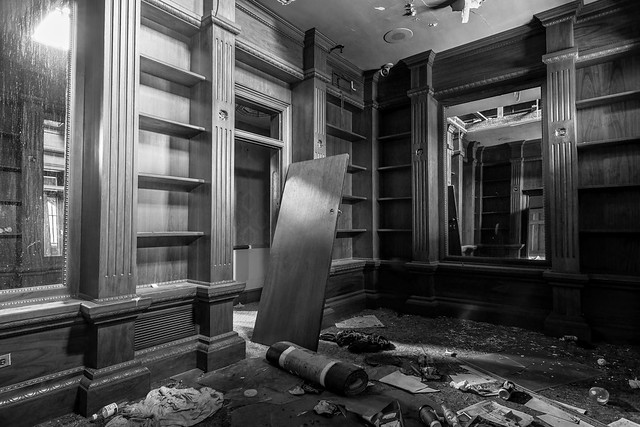
The Library

The Station “Library Room” :  Post-Roth-Restoration

Photo courtesy of George Foster

~*~*~

The Station:  Post-Roth-Restoration

The Station: Post-Roth-Restoration

 ~*~*~
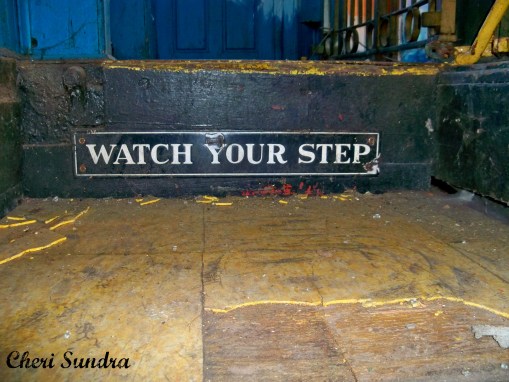
The Station:  Post-Roth-Restoration

The Station: Post-Roth-Restoration

 ~*~*~

The Station:  Post-Roth-Restoration

The Station: Post-Roth-Restoration

 Photo courtesy of Katherine Rogers

~*~*~
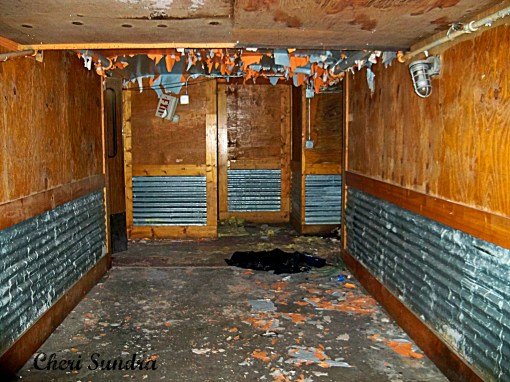
The Station:  Post-Roth-Restoration

The Station: Post-Roth-Restoration

 ~*~*~

The Station:  Post-Roth-Restoration

The Station: Post-Roth-Restoration

 ~*~*~

The Station:  Post-Roth-Restoration

The Station: Post-Roth-Restoration

~*~*~*~

The Station:  Post-Roth-Restoration

The Station: Post-Roth-Restoration

 ~*~*~

The Station:  Post-Roth-Restoration

The Station: Post-Roth-Restoration

~*~*~

The Station:  Post-Roth-Restoration

The Station: Post-Roth-Restoration

~*~*~

The Station:  Post-Roth-Restoration

The Station: Post-Roth-Restoration

~*~*~

The Station:  Post-Roth-Restoration

The Station: Post-Roth-Restoration

~*~*~
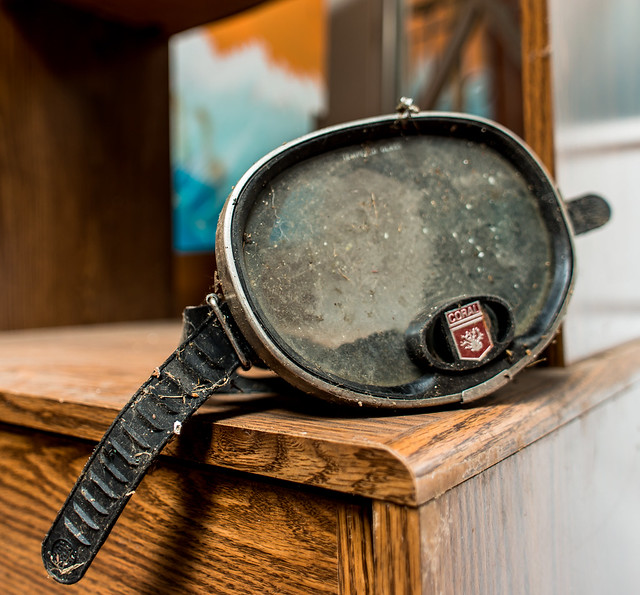
Scuba

The Station:  Post-Roth-Restoration

Photo courtesy of George Foster

~*~*~

The Station:  Post-Roth-Restoration

The Station: Post-Roth-Restoration

 ~*~*~

The Station:  Post-Roth-Restoration

The Station: Post-Roth-Restoration

~*~*~
DSC_1345

The Station:  Post-Roth-Restoration

Photo courtesy of George Foster

~*~*~*~
The Station:  Post-Roth-Restoration

The Station: Post-Roth-Restoration

~*~*~

The Station:  Post-Roth-Restoration

The Station: Post-Roth-Restoration

~*~*~*~
The Station:  Post-Roth-Restoration

The Station: Post-Roth-Restoration

~*~*~

The Station:  Post-Roth-Restoration

The Station: Post-Roth-Restoration

~*~*~*~
The Station:  Post-Roth-Restoration

The Station: Post-Roth-Restoration

~*~*~
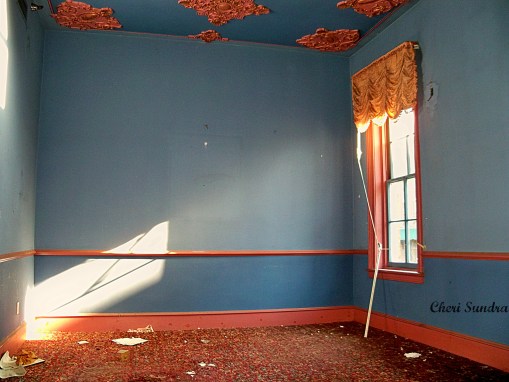
The Station:  Post-Roth-Restoration

The Station: Post-Roth-Restoration

~*~*~

The Station:  Post-Roth-Restoration

The Station: Post-Roth-Restoration

~*~*~*~

The Station:  Post-Roth-Restoration

The Station: Post-Roth-Restoration

~*~*~*~
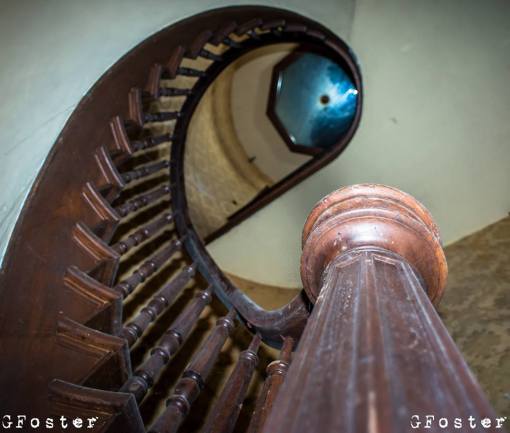
The Station:  Post-Roth-Restoration

The Station: Post-Roth-Restoration

Photo courtesy of George Foster

 ~*~*~*~

facebook

RETURN TO

GUERRILLA HISTORY TABLE OF CONENTS

Cheri Sundra © 2014
All Rights Reserved
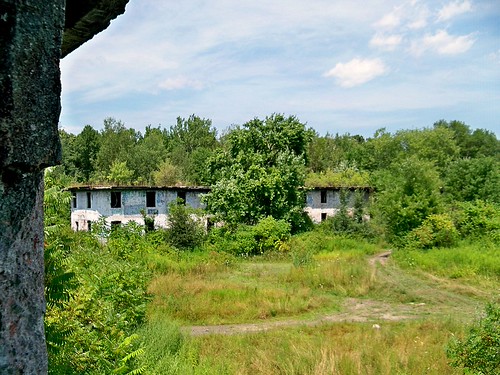
Of Concrete City, Mermaids and Ghosts (both Past & Present) Part 2

CCCCHeader 2011

Concrete City 2011

Don’t ever believe the hype about anything.   Almost seventy-six  years ago, on September 13, 1938, Luzerne County’s well-respected news authority, The Sunday Independent, reported about a Ghost Town, called Concrete City, which had been, “left to the ravages of time and scurrying rats”, after a 15 year span  in limbo as an abandonment.

CCCGhosts 1 2013

Concrete City Still Standing in the New Millennium

What was the implied fear in 1938?  Concrete City had become a contradiction!  You see, historians seemed to be claiming that the city had become “only a memory”, yet, there it was, all up in your face. Concrete City had morphed into an apparition for all to witness!

These abandoned homes, once considered a model of modern efficiency, have even survived the dawn of a new millennium, remaining nestled in their wooded area on the boundary between Hanover Township and the city of Nanticoke, Pennsylvania, with their industrial-strength existence still generating a lot of interest, which is nothing new.  When these homes were first built, the local headlines exclaimed “Good-Bye To That Landscape Eyesore—The Mine Patch! Workmen’s Homes At Concrete City Are Virtual Villas” in the September 26, 1914 issue of the Times Leader.

Historical View of Concrete City

Historical View of Concrete City

And just in case anyone thinks that hanging out in the abandoned city is some new phenomenon, I’d like to share a blurb I found in the The Sunday Independent from November 18, 1945:

“A Nanticoke resident who had put his heating stove on the back porch last spring found it missing when he went out there to bring it into the house for the coming cold weather.  The cover was still up; however, giving the impression the stove had been there all the time.  He remembered that some youngsters have a “bunk” in one of the abandoned Concrete City houses and upon investigation found his heater there. “

CCCGhosts7

I’ve blogged about NEPA’s infamous Ghost Town, and constantly evolving street art gallery, several times. In fact, Concrete City was my first Guerrilla History post (and how I cringe when I look back at those pictures)!    I still love finding new information to share, not that it is necessarily “new” information– just new to faux historians, like me!  As mentioned in Part 1 of this blog entry, I recently visited the Luzerne County Historical Society to read a Wilkes College Archaeological Field Methods study from 1982.

Concrete City was opened in 1914 and was lived in by 40 families until it was abandoned in 1923.  Everyone living there had a male family member working at the Truesdale Colliery, just a ¼ mile walk away.  It was considered to be ahead of its time, despite the lack of indoor plumbing or heat and electricity.  So what was life really like in this community with homes described as “virtual villas”?

CCCGhosts6

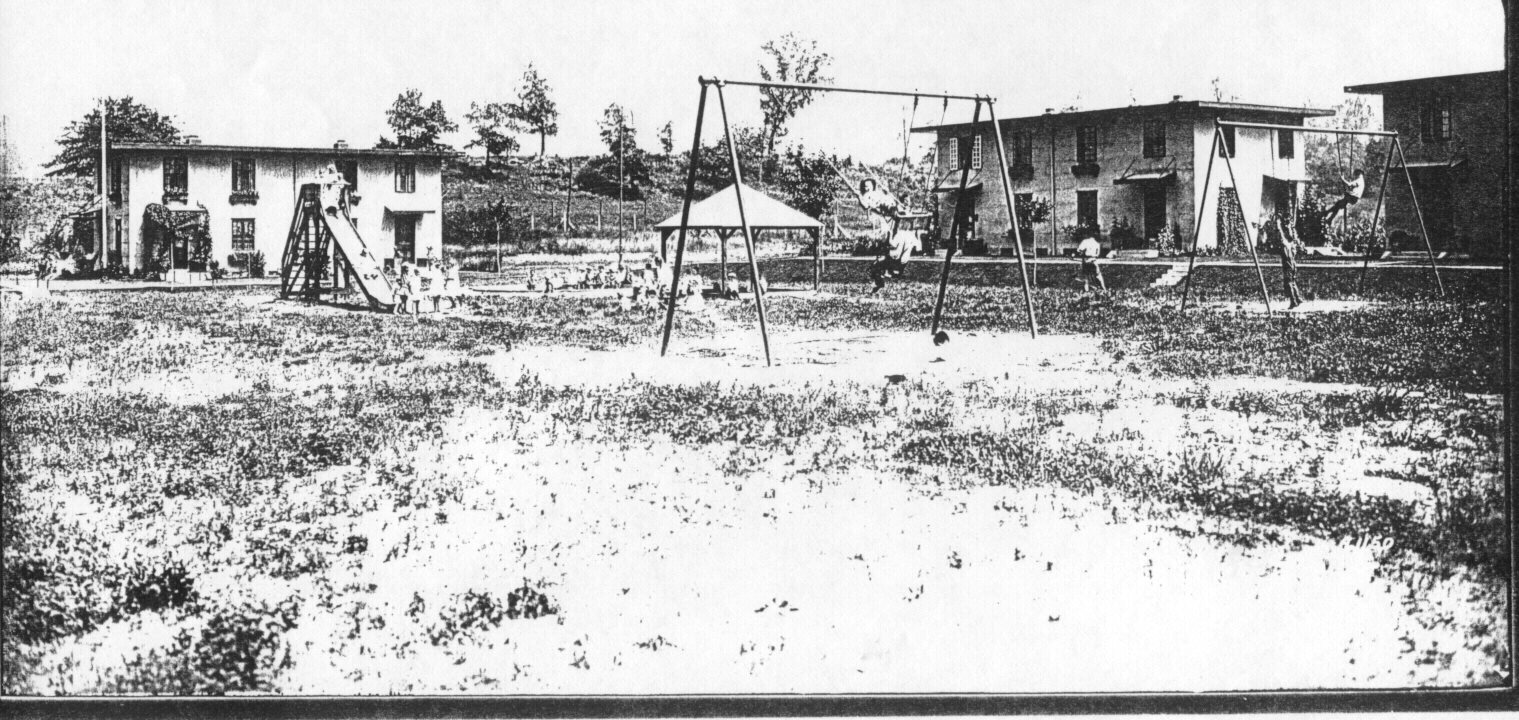
According to that archaeological report, the city was built in the form of a rectangle with all of the houses facing inwards.  Four double block homes are located in the front, which mirrors the units at the back of the property, with eight units on each side.

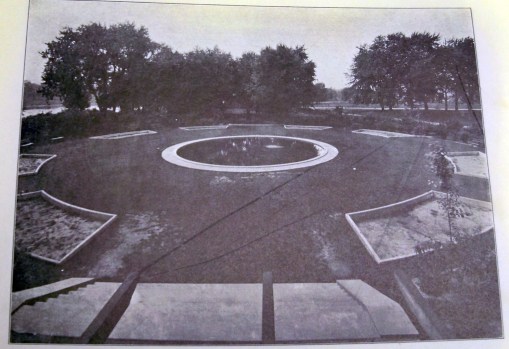
There used to be a road of crushed shale rock circling the inside of the complex and a single tree was planted in front of each unit, creating a uniform line.  A lawn area was planted in front of the houses and each family was required to have a lawn mower.  Large community trash bins were located near the front of the complex.

Concrete City Historical View

Concrete City Historical View

The homes had dark green trimming and red chimneys.  Concrete walks led to the front and side doors.  Each building had French windows with flower boxes attached.  Hung above every front door by chains was a marquis roof.   A wooden coal shanty and outhouse were built at the rear of each unit, leaving ample space for flower or vegetable gardens.

CCCGhosts2

There was a central well located in the middle of the complex since there was no indoor plumbing.  Water was heated on kitchen stoves so the family members could bathe in a concrete tub located in the kitchen, which was also used to wash clothing.  The garments were then either hung outside when it was warm and dry, or put up “on lines in the enclosed, upstairs back porch during cold weather”.

ccc876

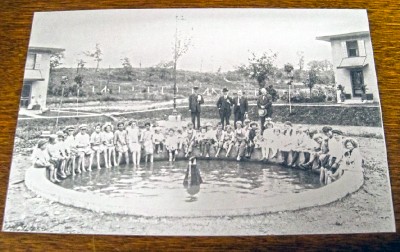
Also in the center of the complex was a baseball diamond, a tennis court and a playground with teeter totters, swings and gymnastic rings.  There was a concrete wading pool for kids and a waist deep, concrete swimming pool for adults.  These were the first in-ground pools built in Wyoming Valley.  The Times Leader described the scene in 1914:

“A circular swimming pool with constantly flowing water was installed in one corner of the big central square and on hot afternoons many of the children, some in improvised swimming costumes  and some with the alarming lack of them that characterizes the swimmin’ hole boy, disported themselves in its safety shallow waters. For there are between eighty and ninety children in Concrete City, and evidences of their presence abound.  Behind this house there is a child’s double seated swing.  In front of that, a benignant collie prowls and smiles upon the tumbling infants.  Even all the rag dolls are not taken in every night.”

ccc pool

Sadly, some accounts say that the adult pool was filled in after a young boy drowned in it.

The city was occupied for nine years before closing.   The archaeological report says, “It was closed, because cracks had developed in a few of the buildings and there were many water and sewage draining problems that could not be resolved.  The Glen Alden Coal Company considered the installation of a sewage system much too costly and decided to shut down the village in 1923.”

The report also says that no evidence is left of the outhouses, coal shanties, playgrounds, a tennis court or baseball diamond.  But apparently in 1982 you could still see the pool.  I can’t say that I’ve personally seen any evidence of it these days and I think I know what may have eventually led to its demise.  According to an article in the Citizens’ Voice on April 19, 1979, “Beautiful Village Now Fire Training School”, the pool was cleaned out and filled with oil and various types of debris to teach firemen how to extinguish oil fires.  What an ironic after-life experience for the drowning victim, that is, if you follow (& believe in) shows about hunting for ghosts in abandoned places. Someone should call Zak Bagans about this!

I’m often contacted by amateur ghost hunters asking if I have knowledge of anyone passing away at abandoned places.  Thanks to the research efforts of genealogist, Plymouth Historical Society Board Member, historical preservationist and living historian, Amy Cargill Kirkpatrick, I have an actual obituary connected to Concrete City.

2-20-1922

Henry Slusser—Heart trouble caused the death Saturday afternoon of Henry Slusser at his home in Concrete City.  He was a former resident of Black Creek Township and is survived by his wife and two step children.  Harold Copeland, at home and Mrs. Walter Sherman of Wanamie; also two brothers, Roger and Rueben Slusser.  The funeral will be hold from the family home Wednesday afternoon at 2 o’clock.  Services will be held at the residence and interment and interment and Edge Hill Cemetery.

In terms of the little boy who drowned, the only newspaper information I was able to locate so far was a quote from a former resident in the Citizens’ Voice article mentioned above.  Another tidbit of information I gleaned from that article was that the homes were originally built for mining officials, but “as more imposing homes were built later for the officials, the concrete structures were rented to the better class of miners.”

CCCGhosts3

According to The Sunday Independent, July 23, 1939, “When the word went out to abandon the settlement, doors, windows and shelves were removed.  The concrete structures themselves have withstood the wear of the elements and still stand erect for the most part.  Only one has crumbled. “

CCCGhosts4

CCCGhosts5

Not a whole lot of rapid change has occurred at Concrete City within the last 76 years.  You have to wonder if the space will ever get the opportunity to develop into something else.  While taking photos of mermaid inspired leggings for the creator of Skinny Jeans and Sippy Cups, Adrienne  Shellenberger (featured in Part 1), I said that I wished I could make a better connection between Concrete City and mermaids for my blog post.  Adrienne said, “That’s ok.  I like things that are random.  Besides, everything evolves from the sea.”  Maybe the fact that mermaids and artists have made their way to Concrete City is a sign that evolution is finally underway.

5 ccc
Snow Mermaid at Concrete City–Don’t Miss Part 1

*~*

Return to

Guerrilla History

TABLE OF CONTENTS

Cheri Sundra © 2014
All Rights Reserved

A Monkey in the Colliery, The Bear From Vaudeville & Politics of An Eagle: The Rise and Fall of the Kirby Park Zoo

What do we really know about the Kirby Park Zoo? 

 The Kirby Park Zoo, once located in Kirby Park somewhere along the river, completely vanished into history during the World War II era.  Still, the zoo is one of Wilkes-Barre’s legends.  And rightly so, it is captivating to imagine a simpler time when communities nationwide not only had amusement parks right in their own back yards, but municipal zoos were also popular local attractions.  And the Kirby Park Zoo was popular!  It had somewhere between 2,000 to 3,000 visitors during the weekends in the summer months, according to newspaper coverage from the days when the zoo was in operation.
Third Structure (6)

“Zoo” Grafitti

I don’t quite understand why, but there is a tendency for locals to “spin” these regional venues in such a way that they become shrouded in controversy and mystery over time.  It must be a function of the human mind to weave our childhood fantasies into our memories about events and locations. 

When I was doing research about the Kirby Park Zoo, on more than one occasion, people told me that their deceased relatives told them stories about the elephants of the Kirby Park Zoo.  Which is just bizarre, there is no way that the city of Wilkes-Barre housed elephants right next to the Susquehanna River!   I wrote these instances off as just a miscommunication created as a result of being a generation or two removed from actual historical events.

Abandoned Nay Aug Park Zoo 1 HD

Abandoned Giraffe Sculpture at Nay Aug Park Zoo


But I recently became aware of the fact that this phenomenon also happens within the generation of people with first-hand experience, while photographing the remains of the now defunct Nay Aug Park Zoo in Scranton.  A couple stopped by the remaining zoo cages with their adult children, and proceeded to tell them about their “memories” of the giraffes that lived right there–in the elephant house!  Apparently, when you DO have elephants in your local zoo, people remember giraffes instead!    

An Abandoned Zoo Christmas:  the remains of the Elephant House, Nay Aug Park Zoo, Scranton Pennsylvania

Nay Aug Park Elephant House At Christmas

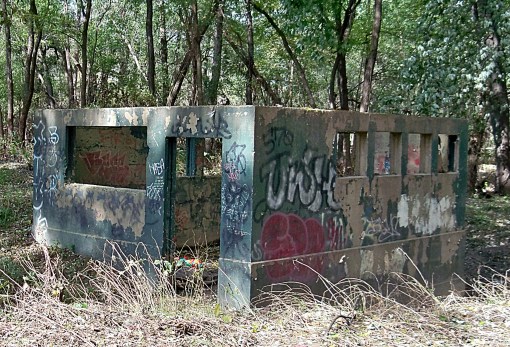
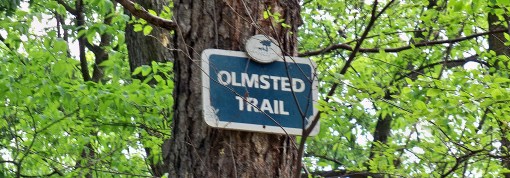
The mystery surrounding the Kirby Park Zoo is magnified by the fact that the location itself was cut off from Kirby Park more than 70 years ago when the levee was constructed to protect the area from flooding.    While the park on one side of the levee remained a neatly manicured public area, the other side became overgrown and even served as an illegal dumping ground for unwanted debris for several decades.   During the 1990s, preservationists started clearing the long-forgotten area between the levee and the Susquehanna River, uncovering a handful of lost ruins. That’s when the urban legends about the long forgotten Kirby Park Zoo began to grow as more people began to frequent the area while walking or fishing along the Olmsted Trail and would come across these structures. 

Third Structure (4) Side
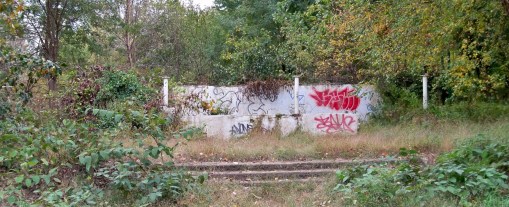
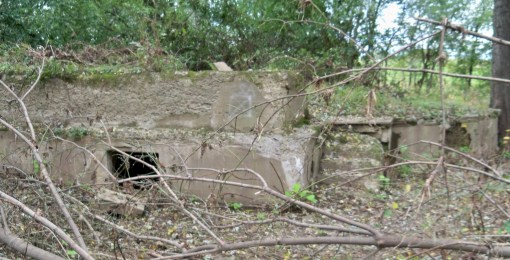
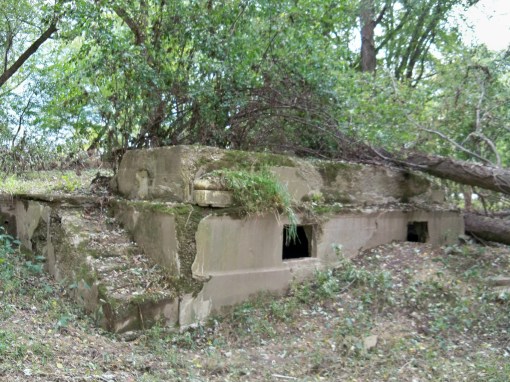
Kirby Park Zoo “Ruins”

Through research, I’ve learned that the Kirby Park Zoo was mentioned in the original Olmsted Brother’s plans for Kirby Park, but as far as I can tell (please, someone prove me wrong!), the world renowned firm did not design plans for the Kirby Park Zoo per say, although the Olmsted’s did (obviously) design the Olmsted Trail where the zoo most likely would have been located.
Olmsted Sign
We know the zoo was definitely in place by 1932, because Wilkes-Barre architect Clark Wright Evans (architect of the Westmoreland Club) designed an improved  “zoological building” for Kirby Park in that same year. His plans were advertised for bid in the November, 9 1932, edition of the Philadelphia Real Estate Record and Builders Guide. The index for those plans says that the building was “destroyed by flooding in 1936”, but local newspaper articles about the zoo make it impossible to believe that it was ever built in the first place!  (Hmmm….Typical “Luzerne County Style” politics at work even back then? –-Of course we lost our un-built zoo building in the flood, can we get some federal compensation for it?!) 

Based on contemporary newspaper descriptions of the zoo, it’s hard to conclude that any of the “ruins” in today’s Kirby Park Natural Area were ever used to house zoo animals, which was a popular belief perpetrated by local news coverage.  (You can read all about my research concerning the remaining structures here.)  Because of all of the mystery, some people have suggested to me that maybe the zoo never existed at all!   On the contrary, our local newspaper coverage shows that not only did the zoo exist; the community loved these animals so much that they were personified and their actions were often part of local news coverage.  The zoo also became embroiled in controversy as community members became more aware of the potential for unintended animal cruelty because of the limitations experienced when cultivating a small community zoo, much in the same manner as other comparable zoos nationwide, like Nay Aug Park.

While the Kirby Park Zoo did not have a happy ending, which is most likely the main reason its history has been “lost” and its actual location forgotten, I still think that it is an important part of our local history, indicating a lot about the character of our community.  The story speaks of values and politics, and tells us about what we were like as a culture during that snapshot in time through our relationship with animals.  And for that reason alone, the rise and fall of the Kirby Park Zoo is a tale that needs to be told!

News Coverage: Kirby Park Zoo Animals From Start to Finish

(As if sorting out the information about this vanished landmark isn’t difficult enough, a 1994 article in the Times Leader says that the zoo opened in 1932, “with great fanfare” (“Monkeys Made Kirby Park Swinging Place”, July 13, 1994).  BUT, as you can see, news accounts about the zoo predate the “opening date”.  AND the architect mentioned above was just advertising his zoo plans for bid in November of 1932. )

April 10, 1926

“Bear Given to City—Gift Will Mark Start of Zoo in Kirby Park Maurer Announces”~~Wilkes-Barre Record

“An eight month old black bear was presented to the city yesterday.  The bear was turned over to Councilman Maurer, commissioner of parks, who had it sent to Kirby Park, where according to Councilman Maurer it is the intention to establish a zoo in keeping with the wishes of F. M. Kirby, donor of the park. 

“The bear romped around in the windows of Decker-MacLean store for several weeks prior to the fire.  But at the time of the conflagration, it was in a garage below South Main Street.” (I don’t know what that means…..but it sounds awfully suspicious!)

“According to Councilman Maurer the bear is as tame as a kitten and was the playmate of children while in the store.” (Yikes!)

“Yesterday afternoon the bear was taken to Kirby Park in a street department truck and placed in a temporary home in the rear of the residence of Thomas Phillips, supervisor of parks. (Who was this bear?  Winnie-the Pooh?!  Why are they playing with this bear and taking the bear home with them?)  It is the plan to erect a wire fence in the wooded section of Kirby Park south of the residence overlooking the river and which was erected by Thomas Podmore (Caretaker Cottage).  A dug-out is to be built for the bear and the environment will be made as natural for him as possible.”

Kirby Park old post card of cottageCaretaker Cottage then

Caretaker cottage TODAY 1Caretaker Cottage Ruins Today

July 29, 1930

“Monkey Percher Back in Zoo, Thanks to Cat”~~Wilkes-Barre Record

“It’s not a case of “and the cat came back”, not this time.  It’s the monkey, for the gay young female of Kirby Park Zoo was returned to her habitat yesterday after a week’s perching in and about various trees in Nesbitt and Kirby Parks.  However, it was a cat that was responsible for her return.” 

“Miss Simian, or whatever her name is, after tiring of her tree perching and wandering about aimlessly in the park, decided that being in the Anthracite region she should explore a colliery.”

The article goes on to describe how the monkey was cornered by the cat owned by the watchman at the Glen Alden Coal Company and returned to her cage at the Kirby Park Zoo.

October 18, 1930

Wilkes-Barre Record

It is mentioned that an opossum that was captured by a PP&L employee and presented to Councilman John Noble to place in the Kirby Park Zoo.  (Also interesting to note: a second one was brought to him on October 21!)

March 19, 1936

“Bears Moan As They Cling To The Top of Their Park Cages” (During the flood of 1936)~~Wilkes-Barre Record

Kirby Park Zoo Bears 1936 Flood

“Human life comes first, but the plight of the three black bears left in their high wire cage in Kirby Park when the river rose for a second time within a week, yesterday afternoon touched hearts of officials and others who had the right to be on the western end of Market Street Bridge.”

“As the waters rose, the bears climbed onto the top of their curved roof home.  They had been forced from other high spots in their cage during Thursday night and were compelled to seek refuge on the roof.”

“Although efforts are said to have been made to reach the animals, they were not removed.  As the river steadily rose, the three moved around precariously on their small roof and at dusk appeared to have about three or four feet before the water would hit the apex of the curved roof, which is about six feet long.”

“Pitiful moans rent the air during the afternoon as motorboats and row boats took refugees from their homes to the western approach of the new bridge to be transported to central city ambulances.”

“The deep toned cries, and occasional high pitched screech, cast a weird spell over those who were on the western edge of the bridge and although within seeing distance, were separated from the bear den by a stretch of water several hundred feet wide and as deep as 10 feet, according to what could be seen of the light standards in the section of the park.”

“It sends shivers up and down my back every time I hear the poor things cry or moan”, said Chief County Detective Richard Powell.  It’s too bad they were not removed.  They are like humans and they sense and see the danger and they are panicky.” 

“The bears appear to be hanging for dear life by their claws.  Every once in a while two of the animals would rub their necks and noses together as if one was attempting to console the other.  One, said to be the oldest, and said to be suffering from rheumatism spent most of his time on one side of the curves roof away from the other two.”

“Dr. Emory Lutes, city veterinarian, was asked last night about the plight of the bears.  He said the animals were on the roof of their home and that if the water reached the apex of the structure, most of the city of Wilkes-Barre would be under water.”  

 March 28, 1936

“Flood Damage Vast in Park” ~~Wilkes-Barre Record

“Pictures of Kirby Park after the flood were obtained by council yesterday and reveal an enormous damage.” 

March 29, 1936

“Zoo at Kirby Park Regains Occupants”~~Sunday Independent

 “Tranquility once again prevails at Kirby Park zoo.  Turmoil, provoked by high water of the Susquehanna, routed all animals, the rescue work being carried out by city employees under direction of Park Supervisor Tom Phillips.  Last night the “refugees” were back home. Only one casualty, the male buffalo, was listed. Poisoned food hastened the end of the quadruped, according to Councilman John Nobel. A female buffalo, all fox, rabbits, groundhog, honey bears, monkeys and the eagle were quartered in the 109th armory during the flood.  Three bears, cynosure of all juveniles visiting Kirby Park, withstood ravages of the disaster. The water came up so rapidly they could not be rescued and were forced to perch atop a stone house inside a cage. The animals were foodless for five days and did virtually no sleeping during the flood period. Over four feet of water swept through the bears’ habitat.  Alas and alack – Pete, the pet gose [sic], joined his colleagues yesterday. Pete laughed at “Old Man River” when it began to swell. The winged pet watched the water flow over the west shore and continued to smile. On the third day Pete was hungry. He emulated Johnny Weismuller and swam all the way to Edwardsville, where he was picked up by two youths. The boys, fearful of prosecution, returned Pete yesterday to the park and they were told arrests would not follow.  So all again is peaceful with the speechless population of Kirby Park.” 

May 12, 1936

“Shoes Needed For Kirby Park”~~Wilkes-Barre Record

“Barefooted children will be barred from Kirby Park because of the presence of small pieces of glass and nails.”

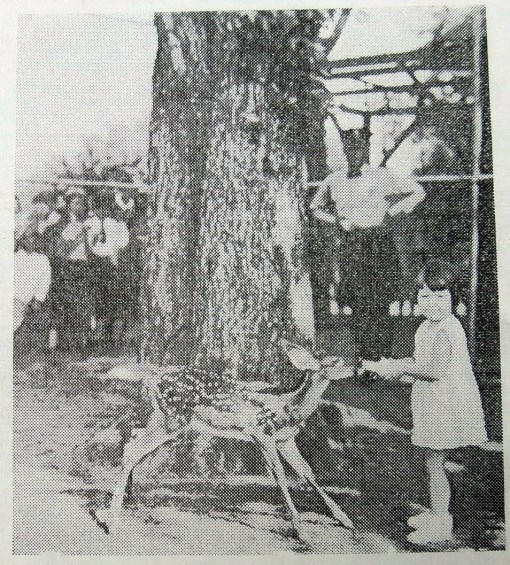
“With the announcement by Councilman Houser yesterday that Alex the Bear , of Harvey’s Lake and Noxen fame, had been lent to the city zoo it was reported that some deer were forthcoming from the state.”   

May 12, 1936

“Alex Takes More Than Fall Out of Wrestling Mate, So He’s in Cooler”~~Wilkes-Barre Record

“Alex, the bear is behind bars—at Kirby Park Zoo—all because of a bad attack of stage fright. Emery Newell of Noxen, enterprising butcher, won Alex in a contest in January, wooed him with tidbits and tenderness and trained him to wrestle with some of his Noxen neighbors.”

The article goes on to explain how Emery took Alex to “some kind of carnival” in Phoenixville with his neighbor and Alex’s wrestling partner, Sam Dymond, also of Noxen.  Alex became too aggressive during the “performance” and injured Sam.  During the return trip Emery decides to drop Alex off at the Kirby Park Zoo to “cool off” while he hangs out with the other bears for the rest of the summer. 

The article continues to describe the more past dangerous exploits experienced by the entire Newell Family as well as another neighbor because Emery insists upon keeping Alex around as a vaudeville money-maker.  Emery tells the Kirby Park Zoo foreman William Law that he will return to pick up Alex for his next vaudeville tour.

 August 7, 1936

“Kirby Park Eagle Freed—Bird Liberated Near Wyalusing Where Others of Its Kind Are Seen”~~Wilkes-Barre Record

 “Wilkes-Barre’s eagle over whose head a lusty debate once raged has been liberated.” 

“It was finally decided that perhaps Dr. H. M. Beck, local dentist and sportsman, has been right all along, and the eagle did not have enough room in its gilded cage.  Dr. Beck and others have held that it was verging on criminal to coop up a bird like an eagle when it should be soaring over mountaintops and ledges.”

“So the decision was reached this week, following a renewed protest by the dentist to liberate the bird.   Councilman Houser, who inherited the eagle together with a lot of goats, buffaloes, bears, etc., in Kirby Park as commissioner, was not adverse to letting the eagle go as much as he said he would like to have the youngsters see it in the park.”


November 17, 1936

“Park Eagle Pete is Dead and Stuffed , Nobel Says—Former Park Commissioner Says He is Prepared to Show Liberation of Bird Was Mistake”~~Wilkes-Barre Record

“Is old Pete, the caged eagle in the Kirby Park Zoo for five years dead or alive?  Councilman John Nobel, former park commissioner and strong advocate of keeping the eagle in the zoo for the growing generation to see, says the American liberty token has been dead since five days after he was freed on Wyalusing Mountain, last June.”

Now, as if you don’t already think this story is weird, it’s about to get a lot weirder! 

“Dead by the hand of a relative of Mr. Nobel, a coincidence not discovered until last week when the councilman visited near Towanda and was informed an eagle had been shot.  He was told the bird was mounted and on display in the window of a Towanda main street merchant.  Recognizing it at once, Nobel said yesterday he will bring the bird to this city and display him in a Public Square window for all to see.”

“Let him bring it, say the advocates of the bird’s liberation.  They held that the bird’s cage was so located in the zoo that it was not possible to watch it, and the boys threw stones and poked sticks at it and teased it and annoyed it continually.  The Humane Society, Dr H S Beck and others pleaded for its freedom.  But Nobel, as park commissioner was adamant.” 

“Then election came along last year and Mr. Nobel was replaced by William B. Houser as park commissioner.  Houser promised that the bird would be freed and so it was in June.”

“Later, stories from St. Stephen’s Boys Camp at Vosburg related how the eagle had been seen on ‘them thar’ mountains.  The story even got out that Pete had mated and started to prorogate the species.  Whether this is true or not has not been thoroughly proven.  If Mr. Nobel is right, than the other story cannot be right.”

“However, Mr. Nobel’s threat to bring the eagle back for the citizens to see as a really dead one brought forth hope that he would do so by the Humane Society officers last night.  Nobel says the eagle’s beak is marked from the bars.  The others say it was not.  It’s marked in other ways though and that will be the proof, they say.  William Law, park foreman, who fed the bird for five years is considered the mainspring in the debate, for if he cannot identify the bird, no one can.”

 March 28, 1937

Sunday Independent

Page A-13

“There are seven monkeys, one baboon, two parrots, three macaws from South America, two raccoons, three foxes, about two dozen pigeons, three horned owls, four sheep, five bear, two wild goats from South America, one North American goat, one buffalo and two geese.”

In the same article, Ernest Vivian, the zookeeper, noted that the Kirby Park zoo could not accommodate additional animals:

“’If we had a larger and more substantial set of buildings than we have now, we could handle more of the gifts people are continually offering us but right now it’s impossible to take care of them.’ What were some of the animals offered as gifts? ‘Well, for example, pheasants and peacocks. We had to turn them down. We hadn’t any room and nothing could be done right now.’

‘The snakes and alligators the zoo had were given up. The snakes dug out of their pit one day and there wasn’t any way of keeping them safe unless we had a concrete base and a glass cage. But we have a lot of other animals here and the children and their parents will find that in a few weeks, when we open up, the collection will be as fine if not better than ever.”’

The article went on to note that:

“When summer is in full swing, between 2,000 and 3,000 people visit on Sunday and about the same number come in during the six week days.

Wilkes-Barre has a fine zoo for the amount of money expended on it. However, if the straitened financial conditions of the city ever are arranged so that a permanent structure can be built, the improvement would improve the zoo many fold.”

 April 14, 1940

Sunday Independent

Page A-4  

“Announcement that the Kirby Park zoo probably will be reduced to a monkey house – and nothing more – shows the change of the years. It’s not so long ago that most ambitious plans were in the air for the Kirby Park zoo. The park department still has some pretty pictures of the plans that were made. It was hoped to have a splendid building, big runways and everything to permit the animals to live as nearly as they do in natural surroundings. There were hopes of expansion so that a great variety of animals would be on display, for the amusement and education of the entire valley. That is a far cry from latest plans to have a monkey house – and nothing more. And it’s all a matter of money. In the old days the trust fund provided by Fred M. Kirby for the upkeep of the park brought in from $25,000 to $28,000 every year . . . Then came the depression. Now the amount the fund gives the city – after a couple of years of nothing at all – is about half what it used to be . . . Blame the depression.”

How NOT To Take Notes!

**I didn’t write down the date for this, but given the chain of events, it seems to go here…

 “Alex and Bear Pal, Sold for $25, May Be Turned Loose in Mountain—Houser Says City Will Be Rid of Costly Zoo Animals”

“Purchaser of Alex and his pal in the big cage that is to be turned into a monkey house, Dr Emory Lutes presented the check to the Park Department head yesterday.” 

The article goes on to say that Dr. Lutes along with the president of the Humane Society would announce the final decision about the bears at a meeting, but in all probability, they would be released back into the wild. 

“Councilman Houser was well pleased with the deal, particularly at the prospect of getting rid of Alex.  “He was a mighty bad boy when we had him in Kirby Park and last year killed another bear in the cage”, Houser explained. “The flood caused us so much trouble and expense and brought so many rats that we all decided to eliminate all the animals at the zoo except monkeys.  We plan to build a good house for the eight to 10 monkeys remaining and will use the bear cage this summer so the youngsters who visit the park can enjoy them.”

“Three other bears were in the cage at Kirby Park in recent years but all died or were killed.   The city’s decision to eliminate the zoo meets with the approval of the Humane Society.  Dr. Lutes recalled that at least 10 deer and several buffalo have died in their cages in recent years and the goats and a fox drowned.  Since rats infested the cages, the Human Association officials said the decision to tear down the wooden structures is wise.”

Deer Cage at Kirby Park Zoo

 May 5, 1940

“Filth at Kirby Park Zoo Forced Humane Society to Act”~~Sunday Independent

“The Kirby Park Zoo, for which the city of Wilkes-Barre spent thousands of dollars to establish and many more thousands to maintain, has turned out to be a filth-infested, highly unsanitary “haven” for wild birds and animals. Because health conditions are deplorable, reaching the point where the majority of the animal populace has either died or been killed off, the zoo now must be abandoned.”

“Survey of the situation yesterday revealed the fact that there are but two bears, one silver fox and a horned owl, outside of a flock of monkeys, remaining in the penned areas. The Luzerne County Humane Society has interested itself in the situation, as a step in clearing up matters, paid $25 to take over everything but the monkeys. The city will maintain cages for these.”

“In addition to filth brought by high river water, and given only western exposure and wooden houses when eastern exposure and concrete shelters are needed, it is reported thousands of rats have infested the pens at Kirby Park to aggravate a bad situation. These rats made life miserable for other animals by stealing food and, it is believed, spread disease among the inmates.”

In addition to the drowning of a silver fox and two goats in the recent flood, three bears recently “murdered” each other and killed a cub, the two buffalo and a calf have passed away, while none of the ten deer survived. It is believed the zoo was improperly located from the start, situated in soggy ground, and another matter that enters into the picture is the fact that feeding and care of the animals in recent years was but a sideline of caretakers at the West Side Park.”

The coverage concluded by describing how the Humane Society planned to release the two bears into the woods of Noxen Mountain.”

May 12, 1940

Sunday Independent

“To all intents and purposes the Kirby Park Zoo – the Wilkes-Barre City Zoo – has gone and the fact that it had to go, plus the manner of its passing, is not exactly a boost for the town.”

“The zoo was situated in a park, the upkeep of which along with that of the animals was provided for by the philanthropy of Fred M. Kirby.”

“Naturally, the income from the bonds Mr. Kirby provided has shrunk, but hardly is it likely that it has shrunk as much as the park of which the city once was so proud.”

“Conceived as a place of beauty for the city, the main expanse of the park has been taken over to a great extent by the dike leaving, with the zoo gone, several baseball fields on the flat stretch next to the armory and, nearby, the tennis courts.”

“Worst of all, however, was the action of the Humane Society in “buying” the animals. This, they said, they felt was necessary in order to live up to the creed of their organization. They did not consider the animals were being treated in a humane manner at the zoo.”

“Life will go on in Wyoming Valley, of course, as it did before. Many other little niceties also could go and some people seem intent on removing them too, getting the general population down to the elementary necessities of eating, drinking, sleeping and working. (Interesting statement!)

But the zoo was enjoyed by many – including the children. It added just a bit to their pleasure and helped make the park and the city of which we boast more complete. It also is to be noted that many other cities, unaided by the gift of a philanthropist, consider it worthwhile to spend their own money on such things. Furthermore, they do a good job of it.

So it is not exactly something to be proud of when it is proved that Wilkes-Barre lacks even the ability to keep a zoo – after the money is provided.”

 August 29, 1942

“Kirby Park Monkeys Feed on Dehydrated Bananas”~~Wilkes-Barre Record

The article references the war and a submarine menace interfering with ocean travel to the extent that even banana boats can’t get through on schedule.

“This shortage of the fruit so much liked by monkeys and apes has been a serious matter for keepers of zoos, and while Wilkes-Barre does not boast a zoo, it nevertheless has 13 monkeys at Kirby Park which it houses and feeds.” 


February 10, 1946

“Once Proud Kirby Park Zoo is Just About Finished—Monkeys’ Departure Recalls Days of Many Animals, Big Crowds and Plans for Enlargement and Improvement”~~Sunday Independent

“The city’s monkeys, those at the Kirby Park Zoo and not those in City Hall—are soon with us, but soon to depart.  When they go, gone will be the last remnant of what was once a rather colorful and highly interesting assortment of animal life which added considerable to the pleasure of thousands who made their trips to the park to see them. But even that which we did enjoy at the peak of Wilkes-Barre’s zoological effort did not come up to the hopes. “

“If they dig deep enough in the archives of the park department office in City Hall, they probably will find plans for even more still better things.  While those plans could not be called over-ambitious or too pretentious, they did show a studied effort to have a display of animals in a manner as close as possible to the natural habitat of the beasts and birds which were here then and the others they hoped to get. “

“Those were the days when we had not only monkeys, but a few bears, a buffalo, some varied goats, deer, sheep, raccoons, parrots and perhaps some more.  It was not a bad display for a small town and was enjoyed by a rather large section of the population.” 

“And the peculiar part of it is that all of this was kept up and added throughout the darkest days of the depression.  The Kirby Park Zoo began to fade just when prosperity started to return. Several reasons are given.  One of these has to do with costs since right up to date it has been costing about $80 a year, plus much of the time of a man to keep the monkeys. “

“Also, the amount of the money received from the generous endowment of the late F. M. Kirby, began to shrink. Another thing was the rapid decline of interest—at least in City Hall.  Whether the interest of the public did the same has not been announced, although as the once active display shrank to near nothingness, it was but natural that fewer people would stop and look.”

“Just what kind of new era will be needed to recreate the old enthusiasm is not known.  But, no doubt, it will come back again and the city will start all over again.  It would help to be sure, if the monkeys and things could only vote.”     

You can be a History Detective too!

I cannot figure out where the zoo would have been specifically located.  So I need your help…..These are the clues that history provides (that I know of so far!)


Zoo Location Clues:


1.  “given only western exposure and wooden houses when eastern exposure and concrete shelters are needed”

2.  Notes: “Zoological garden. 1 Bear, 2 owls, 2 pheasants, 1 coon. Have it in the northwest corner.” – Kirby Park Zoo Plans, REPORT OF VISIT BY H. J. Koehler, September 16, 1926  (and granted “plans” doesn’t mean it happened that way!)

3.  A 1931 article  (Thank You Tom Mooney) about a howitzer (cannon?) being given to the city, saying that it was to be placed “on a platform to the rear of the present site of the Kirby Park Zoo”.  Anyone remember cannon in the Kirby Park Zoo?!  Ask your elderly relatives!     

Howitzer

Bear Cage Location Clues

1. “It is the plan to erect a wire fence in the wooded section of Kirby Park south of the residence overlooking the river and which was erected by Thomas Podmore. (Caretaker Cottage) (From article above)

2.  “those who were on the western edge of the bridge and although within seeing distance, were separated from the bear den by a stretch of water.” (From article above)

3.  We have a picture!


If you think you know where the zoo was, or if you find any zoo information while doing other research, please contact me! I’d love to hear from you….


Return to

GUERRILLA HISTORY Table of Contents

 Cheri Sundra © 2012
All Rights Reserved

The Kirby Park Zoo–An Unrealized Vision

The Clark Wright Evans plans for a “zoological building for Kirby Park—Courtesy of The Hoyt Library, Kingston, Pennsylvania

In 2009, archaeologists discovered strange animal burials in the Egyptian capital of Hierakonpolis that suggests the existence of a large animal menagerie around 3500 B.C. that included baboons, wildcats and two elephants.  These animals were buried in the city’s elite cemetery, where rulers and their family members were also interred, along with evidence indicating that these powerful rulers kept the animals in captivity, almost like a zoo. These animals were given special treatment in death, buried in human fashion and even sometimes accompanied by a human figurine.

This was an important archaeological discovery because for the longest time the first zoo that we knew about was started around 1150 B.C. by a Chinese emperor that contained many kinds of deer, birds and fish.  This 1,500 acre zoo was called the “Garden of Intelligence” and was kind of like our modern zoos with one huge exception; it was kept for the amusement of the Emperor and his Court and was not open to the public.

A bronze statue of a mother lion with her cub at the Philadelphia Zoo

It is widely believed that the first public zoo was established by Queen Hatshepsut in 1500 B.C., in ancient Egypt, by collecting animals from all over Africa.  Throughout history, zoos have been built to show a leader’s wealth & power.  The oldest zoo still in existence today is located in Vienna on the grounds of the Schönbrunn Palace and was initially founded as an imperial menagerie in 1752.   The first public zoological garden in the world, the Jardin des Plantes in Paris, was opened in 1793.

Like most things that man builds, zoos are a reflection of our values—-throughout history, our relationship with animals can give us insight about where we were as a society.

Philadelphia Zoo closed their Elephant House in 2009 due to the need for renovation & budget constraints.

 During the Age of Enlightenment, when Darwin was like a science rock star, zoos represented science as a mission.  This is when some of the earliest official zoos began, like the London Zoo in 1828 and America’s first zoo, the Philadelphia Zoo, in 1874.   This was also the Romantic Age, when beauty had the utmost value and zoos were also becoming a place for socializing.  The architectural style was ornate & dramatic while “Houses” were in vogue—Cat House, Bird House, etc.  But, sadly for the inhabitants, appearance was more important than function, and animals were seen as beautiful objects, rather than living beings, so the cages were inadequate and as a result, life expectancy was short.

The next incarnation of the zoo reflected the fact that the world was in the midst of several wars, and as a result, the study of nature seemed much less important than it did during the height of Darwin’s celebrity, but the Age of Romanticism still existed and zoos were treated as living art galleries where exhibits were turned into mini-paintings or real-life sculptures with visually designed “proper” landscapes.  This style’s popularity was short-live at first, because everyone seemed to be adopting the modernist movement in zoo design, including the architects who designed the now defunct Nay Aug Park Zoo in Scranton, Pennsylvania.

Nay Aug Park Zoo Elephant House

Nay Aug Park Zoo

Modernism was all about function and reflected man’s advances in medicine.  At that time, zoos were designed for quick sterilization and exhibits were created so they could easily be hosed down on a regular basis.  This usually meant concrete structures with clean lines, and a simplified modern style that was influenced by the Modernist Art movement, creating zoo exhibits that looked more like the setting for a sculpture rather than an animal habitat.  This movement in zoo design did actually help to extend the life expectancy for zoo animals, but did little to address their mental well-being.

Nay Aug Park Zoo Habitat

Since that time, we have evolved to develop a strong sense of animal rights and environmental awareness so our modern zoo exhibits reflect not only a sense of beauty, recalling once again the Age of Romanticism, but also strive to achieve a higher standard of physical and mental health accommodations for the inhabitants.   Exhibits are now designed to recreate the animal’s natural habitat while also attempting to incorporate the visitor into the surroundings as if they are immersed in the landscape.

The Houston Zoo

Luzerne County attempted to become a contender in the world of community zoos with mixed results during the 1930s thru the early 1940s.  On one hand, the Kirby Park Zoo was able to boast about accommodating somewhere between 2,000 to 3,000 visitors during the weekend in the summer months (Wow!  If only we could find something that could do that now, huh?! ) according to local newspaper reports and on the other hand, it was dogged by claims of animal cruelty and flooding. 

I became intrigued with the notion that a zoo used to exist in Kirby Park when the grandmother of a friend told us about it when we were young.  I was so fascinated by the structures that still stand in Kirby Park today that have been identified by the local papers as “zoo ruins” that I attempted to research what the structures were used for with surprising results!  (Follow the link to learn more!)  Since my last post, The Hoyt Library has generously made the plans for the Clark Wright Evans “zoological building” available for viewing by the public (They remind me of The Nay Aug Park Zoo in Scranton):

The Clark Wright Evans Zoological Building Design for the Kirby Park Zoo

Cheri,  I am a reference librarian at the Hoyt. We were not able to contact you on your MSN email account but found this page and wanted to let you know the Kirby Zoo blueprints are here on the second floor of the library! Stop in at the desk and we can help you further your research efforts! ~~ Kathleen Bednarek

 The following information about the Kirby Park Zoo was provided via email by Larry Newman, past president of the Wyoming Valley Historical Society (now the Luzerne County Historical Society).

 While the zoo may not have been part of the original plans for the park, it was definitely in place by 1932, because we know that Wilkes-Barre architect Clark Wright Evans (architect of the Westmoreland Club and what is now King’s College’s Luksik Hall) designed a “zoological building” for Kirby Park in that year. The plans were advertised for bid in the 11/9/1932 edition of the Philadelphia Real Estate Record and Builders Guide, and at least some of Evans’ drawings for the zoological building, dated Sept. 1932, are included in the inventory of Evans’ remaining architectural plans, which are housed at the Hoyt Library in Kingston. The index to those plans notes that the building was “destroyed by flooding in 1936” – but the articles quoted below make me wonder whether it was ever built in the first place. As a matter of fact, based on contemporary newspaper descriptions of the zoo (copied below), it’s hard to conclude that any of the “ruins” in today’s Kirby Park Natural Area were ever part of the zoo.~~ Larry Newman 

Mr. Newman cited the following information from newspaper articles showing that the zoo did not close because of the 1936 flood:

An article on Page A-3 of the March 29, 1936 Sunday Independent, titled “Zoo at Kirby Park Regains Occupants,” read:

“Tranquility once again prevails at Kirby Park zoo. Turmoil, provoked by high water of the Susquehanna, routed all animals, the rescue work being carried out by city employees under direction of Park Supervisor Tom Phillips. Last night the “refugees” were back home. Only one casualty, the male buffalo, was listed. Poisoned food hastened the end of the quadruped, according to Councilman John Nobelt.  A female buffalo, all fox, rabbits, groundhog, honey bears, monkeys and the eagle were quartered in the 109th armory during the flood.

Three bears, cynosure of all juveniles visiting Kirby Park, withstood ravages of the disaster. The water came up so rapidly they could not be rescued and were forced to perch atop a stone house inside a cage. The animals were foodless for five days and did virtually no sleeping during the flood period. Over four feet of water swept through the bears’ habitat.

Kirby Park Zoo Bears during the 1936 Flood, “Lest We Forget: Wyoming Valley Flood of 1936”–Luzerne County Historical Society Collection

Alas and alack – Pete, the pet gose [sic], joined his colleagues yesterday. Pete laughed at “Old Man River” when it began to swell. The winged pet watched the water flow over the west shore and continued to smile. On the third day Pete was hungry. He emulated Johnny Weismuller and swam all the way to Edwardsville, where he was picked up by two youths. The boys, fearful of prosecution, returned Pete yesterday to the park and they were told arrests would not follow. So all again is peaceful with the speechless population of Kirby Park.”

One year later, an article about the Kirby Park zoo on Page A-13 of the March 28, 1937 Sunday Independent listed the Kirby Park zoo’s inhabitants:

“There are seven monkeys, one baboon, two parrots, three macaws from South America, two raccoons, three foxes, about two dozen pigeons, three horned owls, four sheep, five bear, two wild goats from South America, one North American goat, one buffalo and two geese.”

In the same 1937 article, Ernest Vivian, the zookeeper, noted that the Kirby Park zoo could not accommodate additional animals:

“’If we had a larger and more substantial set of buildings than we have now, we could handle more of the gifts people are continually offering us but right now it’s impossible to take care of them.’ What were some of the animals offered as gifts? ‘Well, for example, pheasants and peacocks. We had to turn them down. We hadn’t any room and nothing could be done right now.

An Unrealized Vision for The Kirby Park Zoo

Full View

Also from the same article, ‘The snakes and alligators the zoo had were given up. The snakes dug out of their pit one day and there wasn’t any way of keeping them safe unless we had a concrete base and a glass cage. But we have a lot of other animals here and the children and their parents will find that in a few weeks, when we open up, the collection will be as fine if not better than ever.”’ 

 “When summer is in full swing, between 2,000 and 3,000 people visit on Sunday and about the same number come in during the six week days.

Wilkes-Barre has a fine zoo for the amount of money expended on it. However, if the straitened financial conditions of the city ever are arranged so that a permanent structure can be built, the improvement would improve the zoo many fold.”

Building Details

 However, improvements never came. An article on Page A-4 of the April 14, 1940 Sunday Independent stated:

“Announcement that the Kirby Park zoo probably will be reduced to a monkey house – and nothing more – shows the change of the years. It’s not so long ago that most ambitious plans were in the air for the Kirby Park zoo. The park department still has some pretty pictures of the plans that were made. It was hoped to have a splendid building, big runways and everything to permit the animals to live as nearly as they do in natural surroundings. There were hopes of expansion so that a great variety of animals would be on display, for the amusement and education of the entire valley. That is a far cry from latest plans to have a monkey house – and nothing more. And it’s all a matter of money. In the old days the trust fund provided by Fred M. Kirby for the upkeep of the park brought in from $25,000 to $28,000 every year . . . Then came the depression. Now the amount the fund gives the city – after a couple of years of nothing at all – is about half what it used to be . . . Blame the depression.”

Less than one month later, however, a grim story on Page A-11 of the May 5, 1940 Sunday Independent, titled “Filth at Kirby Park Zoo Forced Humane Society to Act,” painted a different picture and pointed the blame at people (as opposed to money):

“The Kirby Park Zoo, for which the city of Wilkes-Barre spent thousands of dollars to establish (sounds a little Sterling-esque, huh?!)  and many more thousands to maintain, has turned out to be a filth-infested, highly unsanitary “haven” for wild birds and animals (also fits the current description of the Hotel Sterling, am I right?!) . Because health conditions are deplorable, reaching the point where the majority of the animal populace has either died or been killed off, the zoo now must be abandoned.

Survey of the situation yesterday revealed the fact that there are but two bears, one silver fox and a horned owl, outside of a flock of monkeys, remaining in the penned areas. The Luzerne County Humane Society has interested itself in the situation, as a step in clearing up matters, paid $25 to take over everything but the monkeys. The city will maintain cages for these. . . .

In addition to filth brought by high river water, and given only western exposure and wooden houses when eastern exposure and concrete shelters are needed, it is reported thousands of rats have infested the pens at Kirby Park to aggravate a bad situation. These rats made life miserable for other animals by stealing food and, it is believed, spread disease among the inmates.

In addition to the drowning of a silver fox and two goats in the recent flood, three bears recently “murdered” each other and killed a cub, the two buffalo and a calf have passed away, while none of the ten deer survived. It is believed the zoo was improperly located from the start, situated in soggy ground, and another matter that enters into the picture is the fact that feeding and care of the animals in recent years was but a sideline of caretakers at the West Side park.”

“HELP YOURSELF MY DEAR DEER–Such was the invitation extended Kirby Park’s spotted fawn by 3-year-old Florence Victoria Krick, daughter of Attorney and Mrs. Charles P. Krick of West River Street. And as the photo plainly shows, a second invitation was not needed.”—Luzerne County Historical Society archives

The May 5, 1940 story concluded by describing how the Humane Society planned to release the two bears into the woods of Noxen Mountain.

Less than one month later, a column on Page A-9 of the May 12, 1940 Sunday Independent mourned the Kirby Park Zoo’s demise:

“To all intents and purposes the Kirby Park Zoo – the Wilkes-Barre City Zoo – has gone and the fact that it had to go, plus the manner of its passing, is not exactly a boost for the town.

The zoo was situated in a park, the upkeep of which along with that of the animals, was provided for by the philanthropy of Fred M. Kirby.

Naturally, the income from the bonds Mr. Kirby provided has shrunk, but hardly is it likely that it has shrunk as much as the park of which the city once was so proud.

Conceived as a place of beauty for the city, the main expanse of the park has been taken over to a great extent by the dike leaving, with the zoo gone, several baseball fields on the flat stretch next to the armory and, nearby, the tennis courts.

Worst of all, however, was the action of the Humane Society in “buying” the animals. This, they said, they felt was necessary in order to live up to the creed of their organization. They did not consider the animals were being treated in a humane manner at the zoo.

Life will go on in Wyoming Valley, of course, as it did before. Many other little niceties also could go and some people seem intent on removing them too, getting the general population down to the elementary necessities of eating, drinking, sleeping and working.

But the zoo was enjoyed by many – including the children. It added just a bit to their pleasure and helped make the park and the city of which we boast more complete. It also is to be noted that many other cities, unaided by the gift of a philanthropist, consider it worthwhile to spend their own money on such things. Furthermore, they do a good job of it.

So it is not exactly something to be proud of when it is proved that Wilkes-Barre lacks even the ability to keep a zoo – after the money is provided.”

Thanks again to Larry Newman for sharing the above information and to the Hoyt Library for making the Zoo Plans available to the public (There are several pages not pictured here).   The part that I STILL find puzzling is the fact that I cannot locate any pictures from the zoo when it was open.  2,000 to 3,000 people visited on Sundays during the summer and no one thought to take any pictures? I can only find the two posted above of the bears & the deer! If you have any relatives in their 70s, 80s 0r 90s,  ask them if you can take a peek at any old family pictures they have lying around!

 Even today, the Letterman Top 10 on January 20, 2012 listed the monkey as the #1 animal…..imagine how exotic it would have been to have monkeys in Kirby Park during the 1930s!  Where are the pictures?! ….. THAT to me is the real mystery of the Kirby Park Zoo!  🙂 

 @@@@@@

Return To

GUERRILLA HISTORY

Table of Content


Cheri Sundra © 2012
All Rights Reserved

KIRBY PARK ZOO RUINS ? !—Ooops! Maybe not……

If you are reading this, it is probably because you saw the title and thought one of two things:

“There was a zoo in Kirby Park?”  Yes, there was! But the Flood of 1936 led to the eventual demise of the Kirby Park Zoo.   You can read about the Kirby Park Zoo here .

Or

“I know where those zoo ruins are in Kirby Park”.  No, you don’t.  You know where ruins are, but they most likely are not zoo ruins, at least not the structures that you think are zoo ruins. 

But I do kind of hope that someone out there has the information needed to prove me wrong.  The idea of zoo ruins is far more romantic than the theory that I’m about to blog about in this post…..

Zoo graffiti from May 2010 which has vanished with the flood of September 2011

“It is sadder to find the past again and find it inadequate to the present than it is to have it elude you and remain forever a harmonious conception of memory.”— F. Scott Fitzgerald

I am not a historian and I am bringing this up to prove a point.  Despite the fact that I am NOT a historian, there is information out there that could lead someone to believe that I am legitimately a historian if they were to run across a Letter to the Editor that I wrote which ran on August 5, 2010, with the misleading title “Historian seeks info, stories about old Kirby Park zoo.”  Yes, I am a member of the Luzerne County Historical Society, but that does not make me a historian unless belonging to the Philadelphia Museum of Art also makes me an artist!

This is how historical misinformation can spread.  Unintentional misunderstandings, misquotes or a misprint in a publication can be used as a reference over and over again by other writers and researchers until it becomes part of the “facts”.  

We’ve all been told with certainty at some point that Betsy Ross made the first flag, it was even printed right there in our grade school text books!  Yet many historians (the real ones!) dispute that “fact” and Betsy’s house is not part of the U.S. National Park Service–which is a huge indication that the story is not true. 

During my short time as a faux-historian, I’ve come to the realization that historical research is hard, time-consuming and not exactly always….well….EXACT.  It’s more like trying to fit together a puzzle with missing pieces, filling in the blanks using a combination of critical thinking and speculation to try to create a complete picture. 

The very first article that I ever read about the zoo was pulled out of the Kirby Park file at the Luzerne County Historical Society.  This article ran on May 13, 2001, in the Times Leader, and was titled “Kirby Park: About 4 score years ago, a green place bloomed along the river.”  In the article, it states, when referring to the famous Olmsted Brothers landscape architectural firm who were commissioned to design Kirby Park, that “they did the entire original design for Kirby Park, including a zoo, a band shell and a wading pool.”  The statement was attributed to a quote by a man named Larry Neuman, president of the Wyoming Valley Historical Society (now the Luzerne County Historical Society). 

Unfortunately, Larry Neuman was never the president of that organization,  but Larry NEWMAN was!  Still, I did spend time searching for Larry Neuman.  I’ve also spent a decent amount of time searching for information about the Kirby Park Zoo plans and repeatedly came up with nothing.  Again, I’m not a historian, and I would hardly say that my search was completely thorough, but I tried every avenue that I could think of—the courthouse, city hall, different local historical organizations, the library—and couldn’t find any plans for the Kirby Park Zoo or any indications that the structures left standing were zoo buildings.

When I did finally contact Larry Newman, he shared a whole bunch of information that he had about the zoo, but said that he did not know if the zoo was part of the original plans for the park (he mentioned plans designed by someone else—I’ll get to those plans later).

Further in this article from May 2001, it states “John Mayday, president of the River Front Parks Association, said a walk down the Olmsted Trail—which follows the old drive through the natural area—will take you past the wading pool, as well as the foundations for the old gardener’s cottage, the band shell, a riverside observation deck and a couple of old zoo buildings.”

I had the opportunity to have a very entertaining conversation with Mr. Mayday earlier this year, and he told me all about the cottage, wading pool, band shell and observation deck, but was unsure about the remaining structures.  He also gave me a booklet produced by the Riverfront Parks Committee about the Kirby Park natural area that mentions nothing about zoo buildings either.

So I am unsure about how or where this idea about the few ruins left in Kirby Park being part of the zoo actually came from–and I cannot find any proof that a zoo designed by the Olmsted Brothers was part of the original park plans, but my guess would  be that the writer of  that article misunderstood or misheard that information.  Or maybe he pulled it from another source himself, but that particular article contains the earliest mention that I can find about “zoo plans/ruins” in a local newspaper.  And then every article that I have been able to find after that point, contains that same information, probably using that same article as a reference, just as I did when I wrote an article about the zoo myself. 

I eventually just gave up on finding any more information about these structures, until one day I decided to look through the resources at the Luzerne County Historical Society again to learn more about the children’s playground that was designed as part of the original plans for the park, but was lost when the levee was constructed that cut that area off from the rest of Kirby Park. 

As I looked for playground information, instead of zoo information, through the double binder titled Kirby Park Wilkes-Barre Olmsted Frederick Law Plans 1921 and the Kirby Day Book (June 4, 1924 ,“To Fred M Kirby from his son Allan P Kirby”) at the Luzerne County Historical Society, in addition to other information provided by Riverfront Parks booklets,  the mystery surrounding the remaining structures seemed to be solved, at least in my mind anyway. 

References to the Children’s Playground

“The Children’s Playground –Looking Toward Wilkes-Barre”—Picture from Kirby Day 1924, Luzerne County Historical Society Collection

“Nor have the kiddies been overlooked.  The little concrete block cottage almost on the west bank of the river, at a point below the Market Street Bridge, is to be used as a rest room for mothers and children.  The large section of the lawn surrounding the house will be utilized as a playground for the youngsters.  Between the rest house and the grove south of it there will be swings, sand courts, a bathing pool and many other interesting features for the amusement of the youngsters.” —-Kirby Day Book

“Cottage at Children’s Playground—Looking West”–Picture from Kirby Day 1924, Luzerne County Historical Society Collection

“The grounds around the bungalow near the river, formerly belonging to Thomas Podmore, were laid out as a playground for children.  The intention was to use the large front room of the house and the front porch and as much more of the house as may seem desirable in the future as a rest room for women and children.  If only the front room of the house is required for that purpose the balance of the house is available as an apartment for the caretaker, with entrance at the rear.  The cost of all improvements in and around the bungalow and children’s playground was $10,477.56.”–Kirby Day Book 

“The pool was part of the original Olmsted design and was used by children for wading.”— Riverfront Parks of Wilkes-Barre, Riparian Trail Guide, Kirby Park Natural Area, Yours to Discover & Enjoy   **Note:  In some articles the pool is called a “Reflecting Pool”

The Wading Pool & Sand Pits—Looking South from the Cottage—Kirby Day 1924, Luzerne County Historical Society Collection

“A children’s playground immediately south of the Market Street Bridge in such a location that if the new bridge is erected the arches will afford shelter and also access to the present playground and park north of the bridge.  This playground would be in its permanent location and should be equipped with apparatus which is readily removable during the winter when the area is not in use and at other times when it may be threatened by floods. The present bungalow on the knoll near the river could be used for a caretaker’s home until such a time as this area may need to be graded to increase the channel cross-section…..”  —Plan Book, Kirby Park, Page 569

Wading Pool Ruins October 2011

Cottage Ruins October 2011

“As you walk along the Olmsted Trail, you will see remnants of structures from the original park area, including an animal cage from the zoo, remnants of the Caretaker’s Cottage, and the Reflecting Pool.”– Riverfront Parks Olmsted Trail “Remnants of a Time Past” (project for the Leadership Wilkes-Barre Class of 2000) **NOTE: I wish I could figure out where they got this information at!  I also wonder how or if this influenced the 2001 Times Leader article referring to zoo ruins.

Unidentified Structure

Located Near Station 6

I have no basis for making this statement, other than lack of information, BUT if there is a zoo remnant still left in Kirby Park, this is most likely it.  I didn’t come across anything in the plans for the park that indicates what this structure may have been, and it is the one ruin that no one that I spoke with offered any insight about. 

Given the lack of pictures available of the zoo while it was open, all that I can offer on this subject is the following information in the hopes that someone can either help to prove or disprove that this structure could possibly be the remains of the bear habitat—the only zoo structure that I was actually able to locate a picture of so far. 

(And I do apologize because I have to go back to the Luzerne County Historical Society to look up the title of the booklet that contains the following pictures from the 1936 flood.  My notes are incomplete–all that I have is that editors & publishers of the book are Edward J. Donohoe and Hugh J. Brislin.)

Kirby Park Zoo Bears during the 1936 flood, Luzerne County Historical Society Collection–“Lest We Forget:  Wyoming Valley Flood of 1936”

This is a closer crop of the background behind the bears.  Keep in mind that the levee had not been built yet.

In the picture above, if you walk from the unidentified ruins to the top of the current levee system and snap a picture, which is of the Kingston Armory (built in the early 1920s), this is what you get if you crop that building.  Is it possible that it is the same view?  I’m not really sure myself….But apparently this is what the real historians would do to try to figure out this kind of stuff!  😉

Zoo Area During 1936 Flood—Luzerne County Historical Society Collection

References to the Band Shell

This is a picture of a slide with the caption: “The most recently completed of Mr. Fred M. Kirby’s magnificent gifts to Wyoming Valley. The bandstand is fifty-five feet wide by twenty-seven feet long and accommodates one hundred musicians. It was designed by a New York firm of architects which specializes in such structures. See Page 63 (Note: I don’t know of what) Photo by Ace Hoffman.” —-Luzerne County Historical Society Archives.

“The foundation has already been laid for a band stand to be located in the midst of the beautiful shade trees forming the grove near the bend of the river. “—Kirby Day Book

The next structure on the Olmsted Trail is what I believe to have been the band shell, which was part of the original Olmsted Brothers design.

In conversations with other people who I have run into while walking along the trail here, this is the remaining structure that seems to capture the imagination the most.  Several people have told me that they thought it was the remains of the bear habitat or the monkey house because of the little tunnel system/walk way that runs underneath the structure.

Underneath band shell October 2011

Other people thought it was the band shell with bathrooms below the stage with layer upon layer of mud deposited underneath from all of the flooding throughout the years.

Another view underneath the band shell remains October 2011

“A Bandstand with concrete foundation and with storeroom beneath was built in the wooded area near the river at a cost of $3,001.19”—Kirby Day Book

Rear View (levee side) band shell ruins

Yellowish paint on band shell remains

What appears to be concrete beams and a center support underneath the band shell. Picture use compliments of Ed Mountjoy.

References to the Pavilion

As you are walking along the path in the natural area of Kirby Park along the Olmsted Trail, you will find this structure on the left hand side.

Pavilion Ruins May 2010

While some people like to speculate that it was part of a structure once used to house monkeys, I now believe it was a Pavilion that was part of the original plans for the park.

Pavilion Ruins May 2010 facing the river

“The Pavilion and Grove Looking South”—Kirby Day Book 1924, Luzerne County Historical Society Collection

The Kirby Park Wilkes-Barre Olmsted Frederick Law Plans 1921 mentions placing a small pavilion in the picnic grove.

The Woodsy Owl Deck “The deck you’re standing on is what’s left of the gazebo from the original Olmstead Brothers’ park.”–Riverfront Parks of Wilkes-Barre, Riparian Trail Guide, Kirby Park Natural Area, Yours to Discover & Enjoy Page 29 

Zoo Structure or Toilet Building?  That’s the question……

“Located about half way down the river bank in the wooded section are small separate concrete toilet buildings for men and for women”—Kirby Day Book 

Located near the pavilion ruins, on the right hand side of the trail, you will find this structure (there is another similar structure a little further down the path, deeper into the wooded area).  This is the one that has been pictured in local newspaper articles the most often and is always identified as a “zoo structure”, usually in the form of a picture looking out of the window.

I believe that these structures may have actually been bathrooms.

Second structure October 2011–Several cracks have formed throughout the structure because a tree fell on it, most likely due to the flooding in September

In notes to Olmsted a toilet building for men and boys in circular grove of trees near children’s playground are mentioned.  Also included are notes to place a small pavilion in picnic grove, toilets to be either included in or near the building. —Kirby Park Plan Book pages 394 and 395

“Located about half way down the river bank, in the wooded section are small separate concrete toilet buildings for men and women.”–Kirby Park Plan Book Page 592

“A comfort station for men and one for women have been erected in the grove.”—Kirby Day Book

Water was supplied to that area of Kirby Park

Water pipe underneath band shell—Picture courtesy of Ed Mountjoy

“The balance of the supply to the park is supplied by a two-inch and smaller pipes extending from the manhole at the junction of the drive to the children’s playground and along the river to the toilet buildings near the bandstand. The total cost of the three toilet buildings, including sewage disposal, was $15, 985.74.—Kirby Day Book  **Note: unsure where the third toilet building may have been.  Maybe that could be the unidentified structure if it isn’t part of a zoo cage?

Another water pipe underneath band shell—Picture courtesy of Ed Mountjoy

In Conclusion 

The Kirby Park Zoo did not officially open until 1932, although there were zoo animals housed in Kirby Park prior to the official opening. The zoo was mentioned in the original plans for the park, but I never did find any actual plans for the zoo designed by the Olmsted Brothers.

REPORT OF VISIT BY H. J. Koehler, September 16, 1926, Notes:  “Zoological garden. 1 Bear, 2 owls, 2 pheasants, 1 coon.  Have it in the northwest corner.”  —Kirby Park Plan Book

This is the only other picture that I have been able to locate of the Kirby Park Zoo:

“HELP YOURSELF MY DEAR DEER–Such was the invitation extended Kirby Park’s spotted fawn by 3-year-old Florence Victoria Krick, daughter of Attorney and Mrs. Charles P. Krick of West River Street. And as the photo plainly shows, a second invitation was not needed.”—Luzerne County Historical Society archives

“The modest beginning of a zoo has been made.  Restrict it to its present area and in its present condition.  There can hardly be an objection to it.  Should an enlargement be considered, this ought to be carefully planned for in advance, and probably in some other location of the park.” — Kirby Park Plan Book, page 616, From Mr. Gilbert S. McClintock, October 6, 1926.

I find it hard to believe that I have been unable to locate any more pictures from the park, especially of the monkey house which would have been considered to be quite an exotic creature to have hanging around Luzerne County, especially during the 1930s!

There is one other piece of the puzzle out there that I am aware of that may help to shed some light on the mystery of the Kirby Park Zoo.  Unfortunately, I have been unable to obtain any access to it.

As a result of my Letter to the Editor, I received the following information in an email from Carl J. Handman of Eyerman,Csala & Handman, located on Public Square :

“The “ZoologicalBuilding” (project #228) was the last project I know of designed by W-B architect, Clark Wright Evans, AIA (1857-1940). My firm’s archives (Evans sold his firm to Robert Eyerman c.1935) contained 13 tracings, including a perspective rendering, dated September 1932. In 2002 I donated all of the Clark Wright Evans drawings in our archives (31 projects from 1898 to 1932) to the Hoyt Library in Kingston. They are stored there in acid free paper in flat files.

You can probably view them there by making an appointment with the new Library Director. She was not there when I made the donation, & if she is not familiar with them, let me know & I can fill her in on the details of my donation.”

I contacted the Hoyt Library via email and received this response:

On Wed, Aug 18, 2010 at 12:37 PM, Hoyt Library <hoytlib@ptd.net> wrote:

Cheri,

The material is in a restricted area of the library. Due to budget cuts we do not have anyone who could be with while you are researching your topic. We have reduced our hours and staff. When funding is resumed we will be happy to accommodate you.

Diane Rebar

Reference Librarian

I did send another email to the Hoyt Library on October 26th of this year requesting access to these materials again, but I have yet to receive any response.  Maybe one of the real historians out there can take up the cause and gain access to this information!  😉  

“Central Section Looking Toward Wilkes-Barre” (with Cottage)—Kirby Day 1924, Luzerne County Historical Society Collection

“River Bank Walk–Looking East”—Kirby Day 1924, Luzerne County Historical Society Collection

“River Bank Walk–Looking South”—Kirby Day 1924, Luzerne County Historical Society Collection

Kirby Park Olmsted Trail October 2011

To learn about the zoo animals, visit:

The Animals Of The “Lost” Kirby Park Zoo

~*~*~

Return To

GUERRILLA HISTORY Table of Contents

Cheri Sundra © 2011
All Rights Reserved


***NEW UPDATES for: “Lost History Found : Croop’s Glen Amusement Park, Hunlock Creek, Pennsylvania”

Since my last post about “Lost History” at Croop’s Glen, an abandoned amusement park located on Route 11 right outside of Nanticoke Pennsylvania, two more people have contacted me to share information about this long abandoned amusement park!

Photo memorabilia donated by Frank Regulski, courtesy of Sheila M. Brandon

Sheila M. Brandon of Sweet Valley, Pennsylvania, used to maintain a history website that contained information about Croop’s Glen and pictures of the Hunlock Creek Train Station.  She very graciously sent me pictures and information from her now defunct web site, which covered topics from Lower Luzerne County, to use for this blog.

From Sheila’s information, I’ve learned that the structure that you first encounter when you look over the guard rail and into the park, used to be a ticket booth.  It’s interesting to view the changes that have occurred over a relatively short period of time to this structure, thanks to the ravages of time and Mother Nature.

“Ticket Booth” courtesy of Sheila M. Brandon

Again After Recent Flood on September 17, 2011–My own photo

Part of Croop’s Glen’s success was the fact that it was located across the street from the Hunlock Creek Train Station.   From the copy used for Sheila’s webpage:

 “The rolling thunder of the approaching train was heard as it neared the station at Hunlock Creek, bringing visitors from all over, coming to enjoy a warm summer day at the glen…the sounds of children’s laughter could be heard echoing through the trees.. the warm babbling brook sang ever so sweetly, inviting the visitor to come take a swim.. the smell of popcorn and cotton candy filled the air.. beautiful melodies played under the dance pavilion as the adults danced the night away.”

“Hunlock Creek Train Station” courtesy of Sheila M. Brandon

Hunlock Creek Train Station ruins today courtesy of Ed Mountjoy

“The glen opened in 1908 or 1909, adjacent to the Delaware, Lackawanna & Western Railroad Station. During its earliest years, the park was primarily used for church outings, family reunions and school picnics. In a deed filed at the Luzerne County Courthouse, the parcel of land is described as follows; briefly, a parcel of land containing a two-story frame hotel building (a\k\a- Hunlock Creek Hotel), containing 16 rooms, barn, stone icehouse, dancing pavilion and two refreshment stands. The icehouse, which was located next to the hotel, has been described as the following; it was two stories high, the bottom floor had 3 to 4 feet of sawdust on the floor. Ice was cut from the river and kept all summer in the icehouse. It was still used in the 1920’s.”

Photo of Joseph Virtue in front of Icehouse courtesy of Sheila M. Brandon

Photo of Croop’s Glen postcard donated by Frank Regulski, courtesy of Sheila M. Brandon

Croop’s Glen Amusement Park Map courtesy of Sheila M. Brandon

In addition to the rides, the park had a swimming pool, bathhouses, a penny arcade, two refreshment stands, pony rides and two dance pavilions.  The dance pavilion located near the park entrance was elevated so that cars could park underneath it. 

Croop’s Victrola Sign courtesy of Sheila M. Brandon

From Sheila’s webpage copy:

“The First of its kind in Northeastern Pennsylvania, afternoon & evening,” would greet visitors as they entered the glen. Famous orchestras from the big band era, including the Dorsey brothers, Fred Waring, and Hugo Winterhalter played there on a regular basis. The park boasted having the first nickelodeon during its first few years of operation. After the glen had closed, in later years the dance pavilion was used as a skating rink until it was destroyed in a devastating fire. All of the modern and expensive equipment was lost in the fire. It was stated that two children sparked the fire one winter after the park had closed.”

The smaller dance pavilion was also used for picnics and contained a coin-operated piano and coin amusement devices.  The structure also served as the entrance to the roller coaster. 

“Croop’s Coaster View” courtesy of Sheila M. Brandon

The Hunlock Creek Hotel was purchased from the Croop’s by the Hartman family.  The website quoted Mary Hartman recalling the following memories of the glen:

“The Hunlock Creek Hotel catered picnics at the glen, including some for the power plant and the Retreat employee picnics. My brother and I took the supplies to the park with our ponies and spring wagon. If I remember correctly, Bess Croop’s family operated the concession stand for several seasons. My best memory of the glen, was one day after school, we discovered the electricity had been left on in the Merry-Go-Round pavilion at the park, and we got the rides running full blast. We had a ball until someone on Falls Hill heard the music.”

The park had something called a “wiggle pole” for the young visitors which was essentially a horizontal, telephone pole sized wooden shaft with one loose end that would wiggle when walked upon. 

Croop’s Glen postcard photo donated by Frank Regulski, courtesy of Sheila M. Brandon

The webpage cited gas rationing, which was imposed nationally after the bombing of Peal Harbor in 1941, as the reason for visitors no longer visiting the park in the same way that they could in the past.  After the park was closed, according to the site, Stanley Croop used the property as a saw mill. 

Croop’s Sawmill courtesy of Sheila M. Brandon

Sawmill Remains courtesy of Sheila M. Brandon

Sheila also sent pictures of the park’s rollercoaster.  I’m waiting for permission from the Philadelphia Toboggan Company to post the pictures. 

Thank you so much for sharing your pictures and information, Sheila!

I’ve forwarded the information from Sheila to The Luzerne County Historical Society and The Plymouth Historical Society.  I did not include all of the information or photos about the park in this post.  If you want to learn more about Croop’s Glen, you’ll just have to visit one of the historical societies!  Sheila also sent information pertaining to the Hunlock Township World War II Veteran’s Memorial.

Miniature replica of Croop’s Glen sign created for a fundraiser to replace World War II Memorial courtesy of Sheila M. Brandon

Croop’s Sign ruins on September 17, 2011–my own photo

A person who graciously wanted to share a first-hand account of her time spent at Croop’s Glen is Lucille Weaver from West Nanticoke.  Lucille’s daughter contacted me with the following recollections that her mother has about visiting the amusement park:  

“Croop’s Glen was the place to go ‘back then.’ School and/or class picnics were held there, that’s where her class went. There was the Maypole, merry go round, the whip, dance hall, a carousel and others.  The Maypole seems to stand out in her memory the most and ‘The Whip” came in second 🙂 The dance hall was alongside of the merry go round or she said, maybe ‘a part’ of it somehow. The carousel had a ‘music box’ that began playing when the carousel started turning…Apparently the ‘Maypole’ was somewhere near the entrance…Since we were talking on the phone, she could not see the ‘now photosof Croop’s Glen, but I described, a long room that reminded me of the inside of a covered bridge and she said that was the dance hall !!! In another photo there was a picnic table and next to that was a long green table (I said to her, I would love to have THAT table!” and mom said it sounded to her like that might have been where they sat & played Bingo. According to mom, when Croop’s Glen was open for business, it was the biggest thing at the time and that is where everyone went. If you grew up there during that time, you KNEW of Croop’s Glen!!!!  I really enjoyed listening to my mom talk about Croop’s Glen because it was obvious that was one of her very happy memories when she was growing up.  I didn’t know that until today. Instead of our average 45 minute morning phone call, we talked for almost 2 hours! LOL”

Thanks to Lucille and her daughter for sharing such fond memories!

If anyone else has more information that can help to complete the picture about the time spent by one of Luzerne County’s fading generations at Croop’s Glen, please contact me!

Miniature replica of Hunlock Creek Train Station created for a fundraiser to replace World War II Memorial courtesy of Sheila M. Brandon

Hunlock Creek Train Station courtesy of Sheila M. Brandon

Hunlock Creek Train Station ruins (ticket window) today courtesy of Ed Mountjoy

@@@@@@@@

It was Jennifer O’Malia who introduced me to the concept of Urban Exploration

Style Photography in 2010.  Jenn, who has the unique vision of a

social documentarian, is now offering her services as a freelance photographer.

 Photo by Jennifer O’Malia 

Jenn Wedding

Return To

GUERRILLA HISTORY Table of Contents

for more articles about Croop’s Glen

Lost History Found : Croop’s Glen Amusement Park, Hunlock Creek, Pennsylvania


Croop's Glen, Route 11, Just outside of Nanticoke

Croop’s Glen, Route 11, just outside of Nanticoke, PA

Sometimes, history gets lost.  And I don’t mean long ago, far away history like those places or events that are ancient, but the history of less than a hundred years ago, right outside your own front door.   History, like the generation of people who share an experience or memory, begins to fade away if people don’t document and share it.

I first became aware of this fact while looking for information about an abandoned zoo  in my own hometown in Wilkes-Barre, Pennsylvania.  The Kirby Park Zoo  (1932-1936)  was wiped out by the flood of 1936.  Now a little less than 80 years later, all that I can find about this local attraction are little bits and pieces of conflicting and incomplete information.

The generation of people who would have visited the Kirby Park  Zoo as children is quickly dwindling in numbers, and unless someone happens to come across photos while cleaning out a deceased relative’s house and decides to donate them to one of the local Historical Societies, I fear that the Kirby Park Zoo and its Olmsted Brother designed bridal/walking path that wound through that area of the park just a few decades ago, will fade away as part of Luzerne County’s lost history.

Luckily for another Luzerne County attraction, Ellen Geisel of Honey Brook, Pennsylvania, has generously come forward to share pictures that will save Croop’s Glen, a long abandoned amusement park along Route 11 in Hunlock Creek, from the threat of fading into oblivion.

Abandoned Pennsylvania: Croop's Glen (24), Luzerne County, Route 11
I first became aware of Croop’s Glen  last spring.   I was amazed to look down into the little valley where the park is situated to see remains of buildings being swallowed up by time and Mother Nature.  In a quest discover more about the park, I first went to Defunct Parks.com and found a few lines of information along with three pictures of a rollercoaster.

Next, I visited both the Plymouth Historical Society and the Luzerne County Historical Society and found very little additional information in their collections—a newspaper article about the collapse of a pavilion on the property during a picnic and some pictures of members of the Croop family standing next to a car.  Neither organization had ever received any pictures of the park to add to their resources.

I know it seems hard to believe that an amusement park that closed during the ‘40s because of WWII, but was used for the picnic grounds (possibly, and dance hall until early 1950’s), didn’t seem to have one image available less than 70 years later.

All of that changed when I found the following comment on my blog post about abandoned
Croop’s Glen:

“Would you like some pictures from the park from 1912 to about 1930? A relative of mine just passed away at the age of 99. Her father owned the the rides at Croop’s Glen while B. Frank Croop owned the park. My relative used to sell tickets at the park as a teenager. I also have
photos of her as a baby in 1912 sitting on a carousel horse. Please let me know how I can post them for you.”

The following information and pictures were sent to me from Ellen Geisel:

“I was so excited to find these pictures. I have all the originals and all but one is an old original. The one looks like it was a photo of a photo and I do not know where it came from. I also found out that Charles Shelley built the roller coaster and the Shoot-the-Chute at Harvey’s Lake. see http://harveyslake.org/stories/amusements/story_picnicgrounds_02.htm. Enjoy! ”–Ellen

Croop 1 – My cousin Jean (2nd from left) and some friends in front of the Pop Corn stand (Croop’s Glen)

Croop 2 – carousel – photo by Croop’s Glen Art Studio (Croop’s Glen)

Croop 3 – My cousin Jean selling tickets (Croop’s Glen)

Croop 4 – My cousin Jean as a baby on a carousel horse

A little history. Charles Shelley apparently worked at Harvey’s Lake and built the roller coaster and Shoot-the-Chute. They opened in 1910. He then married Luella Britton (not sure of the exact date). My cousin, Jean was born in March 1912. In 1913, Luella died giving birth to Jean’s little brother (the baby also died). Charles, not knowing how to raise a toddler daughter, hired a live in housekeeper/nanny to help raise Jean. Charles then hooked up with B. Frank Croop and they opened Croop’s Glen and stayed there until it closed in 1940?. Charles Shelley died in 1941 and I think B. Frank Croop died in the next year or two. I know Jean told me she used to sell tickets at the park and worked there as a teenager. Several years ago, we took
her to Knoebel’s and she rode the merry-go-round. She died this past July at the age of 99”–Ellen

Croop 6 – Charles Shelley (Croop’s Glen)

Croop 7 – Jean and Charles Shelley at Harvey’s Lake

Croop 8 – Jean and Charles

Croop 9 – The Whip (Note:  Ellen does not know if this is Croop’s Glen or Harvey’s Lake)

Croop 10 – Jean and unknown man at Harvey’s Lake

Croop 12 – Charles Shelley (Croop’s Glen)


Croop 13- dance hall? Not sure (Croop’s Glen)

Croop 15 – 4 men working on mechanics of a ride. I think Charles Shelley may be the one
kneeling on the left. This is the photo of a photo and I do not know where it came from. (Could be Croop’s Glen or Harvey’s Lake)

Croop16 – roller coaster. I believe Charles Shelley is pictured in the center looking up (Croop’s Glen)

Croop 50- carousel – Again Charles is in the center looking at the camera.

@@@@@

Thank you Ellen for making our history a little more complete!

@@@@@

More Recent Pictures From Croop’s Glen

&

Baby Contest Pavilion Collapse at Croop’s Glen

facebook

It was Jennifer O’Malia who introduced me to the concept of Urban Exploration

Style Photography in 2010.  Jenn, who has the unique vision of a

social documentarian, is now offering her services as a freelance photographer.

 Photo by Jennifer O’Malia 

Jenn Wedding

Return To

GUERRILLA HISTORY Table of Contents

or

click right HERE for more Croops Glen Updates!


Kirby Park Zoo : Take A Walk With History

My article about the Kirby Park Zoo is now available at Independent NEPA Magazine at:

Take A Walk With History

Return To

GUERRILLA HISTORY Table of Contents

Cheri Sundra © 2010
All Rights Reserved

~*~*~*~*~*~*THE KIRBY PARK ZOO RUINS:

Looking for my article about the Kirby Park Zoo?  You’ll have to look for it in the September issue of IndependentNEPA!

Abandoned Zoo Graffiti

Visit my Flickr page for a more detailed look at all of the abandoned zoo ruins at:

http://www.flickr.com/photos/cheri_sundra/sets/72157624116662929/

Back To

GUERRILLA HISTORY Table of Contents

Cheri Sundra © 2010
All Rights Reserved

Post-Apocalyptic Chic Ghost Town: Concrete City, Nanticoke PA


By Cheri Sundra


Abandoned: 1924

Pictures from June 1 and June 7, 2010

Nanticoke has its own post-apocalyptic-esque ghost town—the only thing missing is the roving band of marauders.  Referred to by some as one of the failed technological experiments in Pennsylvania railroad and coal mining history,  and by others as the first example of modern-day cookie-cutter or tract housing, the Concrete City ruins still stand as a monument to the “company housing” living arrangements experienced by some area workers during the late 1800’s and the early 1900’s.  Described as “virtual villas” by the upper class of coal mining families, these houses were regarded as a futuristic marvel when first constructed.

“Company Housing” in Pennsylvania usually referred to villages comprised of frame-built wooden houses, commonly called “shanties” by county assessors, that were hastily built by industrialist owners for their low-paid employees.  By controlling their housing arrangements, employers maintained more control over the lives of their employees and had more opportunity to exploit workers and their families.  A great example of this “traditional” company town can be seen at Eckley Miner’s Village, located just 9 miles east of Hazleton, Pennsylvania.

Concrete City is “company housing” with an architectural twist.  The “city” is a very early example of International Style Architecture which is characterized by buildings with rectilinear forms, unadorned of ornamentation or decoration and constructed with steel, glass and reinforced concrete.  This architecture style is a minimalist concept that stresses functionalism.

Pennsylvania railroads were using concrete, a novel building material at the start of the 20th Century, on a wide variety of projects.  Concrete City was built by the Coal Division of D L and W Railroad for employees of the Truesdale Colliery. The homes, which were built in 1911 and opened in 1913, were rented out to a hand-full of their current employees for $8.00 per month. Called the “Garden City of the Anthracite Region” by its designers, the requirements to be met by employees for residency consideration in this cutting-edge, model worker housing community included English as a first language and employment with the company in a position of “high value” such as mine supervisor, foreman or technician.

Concrete City consists of 20 buildings.  Each one was a duplex that housed two families.  Each half of every single standing structure contained a kitchen, living room and dining room downstairs and four bedrooms on the second floor.  Concrete outhouses were constructed behind each house.

All of the houses were arranged around a central plaza that was about the size of a football field which contained a pavilion, baseball field and a tennis court.

There was a wading pool for children and a waist deep, circular swimming pool with constantly flowing water for adults which are said to be the first in-ground pools built in the Wyoming Valley.  The pool was emptied in 1914 after a boy drowned.  Concrete sidewalks illuminated by electric lights and landscaped yards completed the futuristic community.  Concrete City residents were said to be plagued by dampness because moisture constantly seeped thru the porous concrete which led to condensation on the walls.

This is a picture of an item from the archives of the Luzerne County Historical Society.

Eleven years after it’s construction, Concrete City was abandoned because the owners did not want to install an expensive sewer system as required by

Concret City Now

the township in 1924. Ironically, demolition of the modern “Garden City of the Anthracite Region” was halted when it was discovered that the implosion of 100 sticks of dynamite in one of the houses had very little impact.  The concept of demolishing the city made of concrete was deemed too expensive, despite the fact that coal was discovered under the site after it was abandoned.

Currently, many of the structures exhibit fire damage because the Luzerne County Volunteer Fireman’s Association has used Concrete City as a training center.

Despite the fact that it has been designated as an historical site in 1998 by the Pennsylvania Historical and Museum Commission, locals frequently use Concrete City for paint ball games or parties as evidenced by the numerous paint balls and beer cans scattered about the grounds. Graffiti covers all of the buildings throughout the entire abandoned community.

Concrete City ruins photographed on June 1 & June7, 2010

NEED MORE CONCRETE CITY IN YOUR LIFE?

***To see how Concrete City seems to be experiencing new life as a frequently changing urban art gallery, go to Spontaneous Acts of Art–Concrete City Ruins

***Want more in-depth history of Concrete City, with a twist?  Check out   Of Concrete City, Mermaids and the Ghost Town Stairs to Nowhere (Part 1) and  Of Concrete City, Mermaids and Ghosts (both Past & Present) Part 2

***And visit Vimeo to watch my Concrete City mini-Movie!

*****Back to GUERRILLA HISTORY Table of Contents

Cheri Sundra © 2010              
All Rights Reserved


Ghost Town Graffiti


Back To

GUERRILLA HISTORY TABLE of CONTENTS


Cheri Sundra © 2010
All Rights Reserved