Posts Tagged ‘ Cheryl Sundra ’

The House Of Fans

Wrong Turn

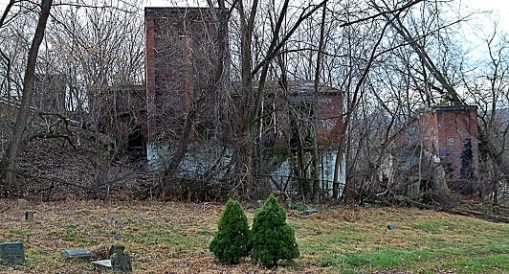
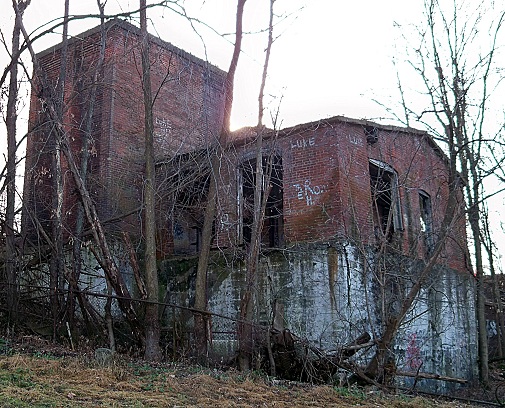
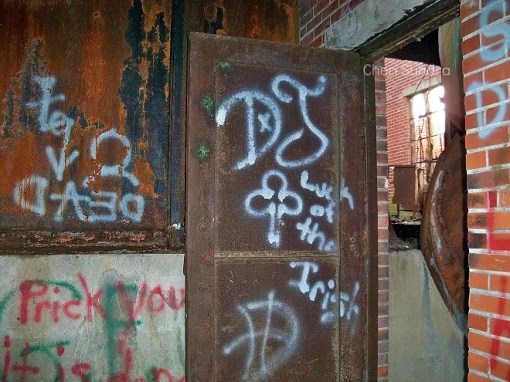
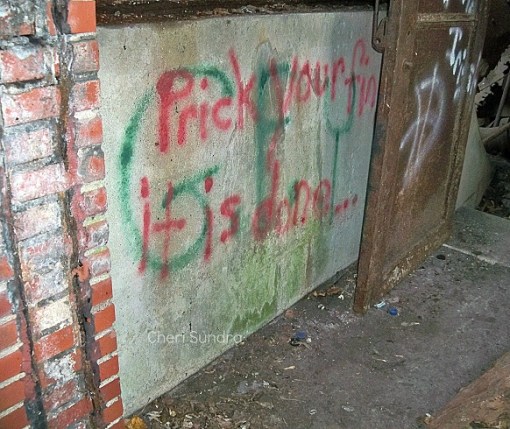
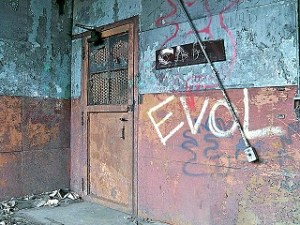
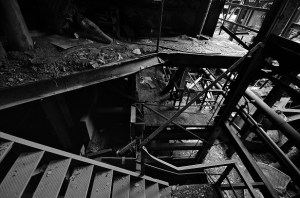
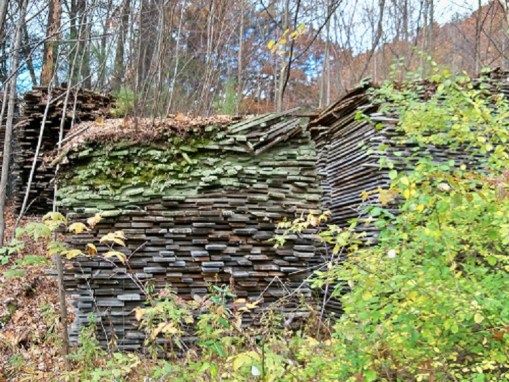
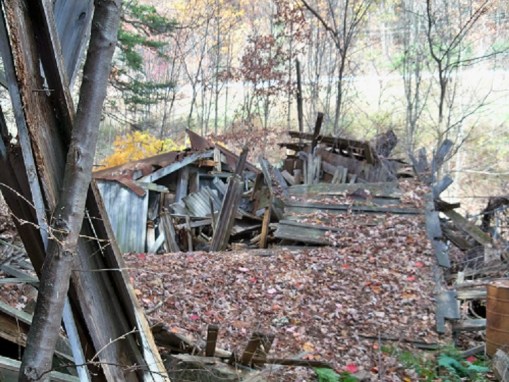
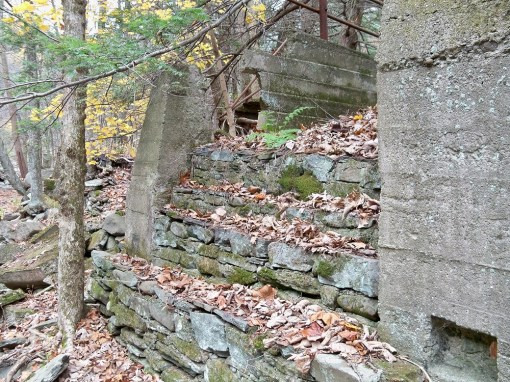
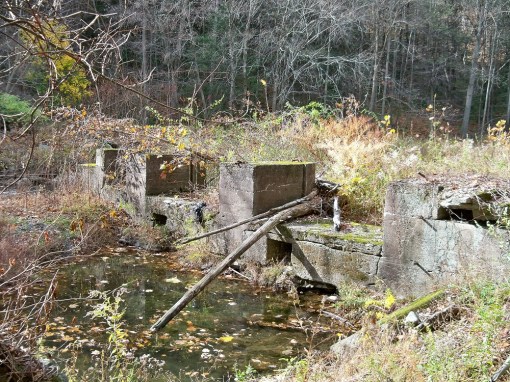
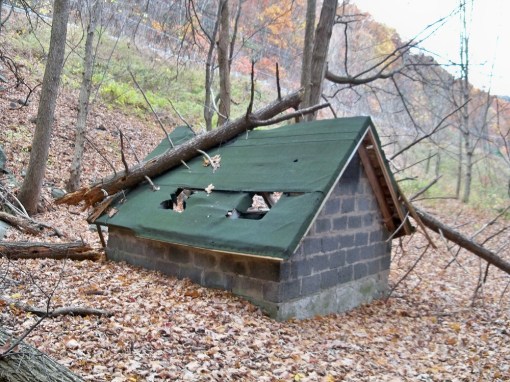
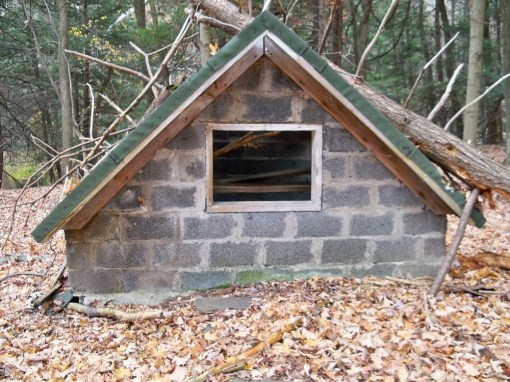
If you spend any time in Northeastern Pennsylvania, one thing that becomes evident is that everything and everyone here has ties to the anthracite coal mining industry.  The entire landscape has been permanently scarred by mining, and the reminders don’t look as if they will ever go away.  One such relic is the The Dorrance Colliery Fan Complex. 

Forgotten URBEX Chair at the Wilkes-Barre City Cemetery

Located on North River Street, right down the road from the long abandoned Hotel Sterling, directly behind the Wilkes-Barre City Cemetery and nestled along the Susquahanna River, remains the last portion of  the Dorrance Colliery.  For those of you outside of the NEPA region, a colliery is a coal mine and the buildings associated with it. 

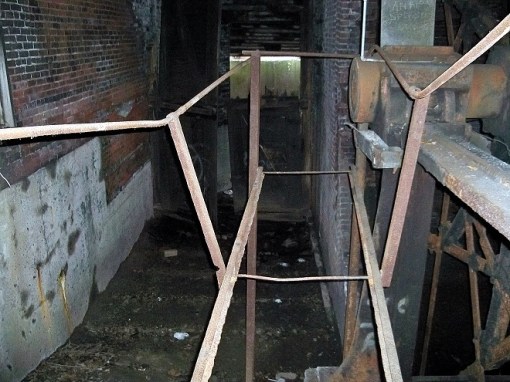
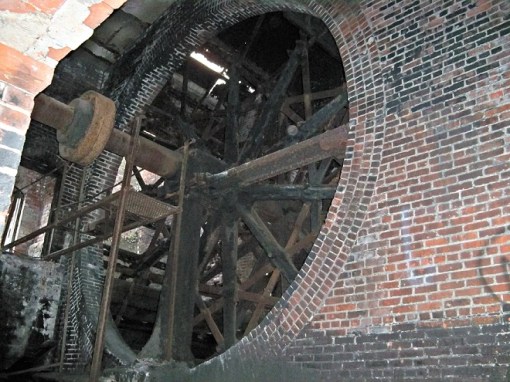
 The Lehigh Valley Coal Company operated this particular colliery from 1880 until 1959 and this fan complex was there for all of it.  Fans were required for safety reasons, such preventing gas explosions.  (Ahhh, the good old days of mining coal with open flame lamps!) 

While this veritable death-trap of a fan house still remains, the actual coal breaker and the other buildings were demolished in the 1980s to make room for a personal care home. 


Are they 100% sure that tetanus can’t become airborne?  😉 

***2016 Update: Some of these structures were recently demolished

facebook

@@@@@@@@

Return To

GUERRILLA HISTORY Table of Contents


Cheri Sundra © 2012
All Rights Reserved

(Video) Ghost Town: Post-Apocalyptic Chic “Concrete City”–another Unemployed Zombie Building Infiltration Specialist Production

To see my video featuring a fun romp thru a ghost town in Pennsylvania visit: (Video) Ghost Town: Post-Apocalyptic Chic “Concrete City”–another Unemployed Zombie Building Infiltration Specialist Production Abandoned in 1924, Concrete City is said to be the first example of modern-day cookie-cutter or tract housing.  This residential development, built in 1911, consisted of 20 buildings, each one housing two families.  Both halves of every structure contained a living room, kitchen and dining room downstairs, with four bedrooms on the second floor.  Outhouses were constructed behind the dwellings.  The homes were arranged around a central plaza that contained a pavilion, baseball field, tennis court and wading pool.  Concrete sidewalks illuminated by electric lights and landscaped yards completed this cutting-edge community, which was abandoned in 1924 because the owners did not want to install an expensive sewer system as required by the township.

 Return to

GUERRILLA HISTORY 

Table of Contents

Cheri Sundra © 2012 All Rights Reserved

As The Vultures Picked Her Bones—A Hotel Sterling Video


I’ve attempted to make a video about the Hotel Sterling that (tries) to capture my sense of chaos about the place…It was made with just a cell phone camcorder & a movie making program that came with a laptop.  Far be it from me to allow the lack of proper equipment or skill to get in my way when it comes to creative expression!  😉

For a video tour of the abandoned Hotel Sterling, check out:

 “As The Vultures Picked Her Bones”

@@@@@

Return To Guerrilla History

TABLE OF CONTENTS

Cheri Sundra © 2012
All Rights Reserved

Huber Breaker Ruins: The Art of Industrial Decay

***Every photo also serves as a link to more of each photographer’s work

Photographer Scott Frederick, Philadelphia, Pennsylvania

Existing in a state of ruin and completely stripped of all functionality, the Huber Breaker looms over the bleak landscape of Ashley, Pennsylvania, a monument of the industrial revolution reduced to a useless scar, blighting the landscape.  A detritus of a bygone way of life, it has the power to tell us things about the past, while existing very much in the present.   

Photographer Jamie Clarke (aka RiddimRyder), Ontario, Canada

The Huber Breaker, a facility created for literally breaking chunks of coal into smaller bits, is a decaying piece of infrastructure from an industry that built an entire region.  Today the deafening noises and the human element of its function have been replaced by silence and total desolation as the abandoned breaker sits brooding on the landscape, now a decaying tomb in the post-industrial world.  Amazingly, it almost resembles something from a sci-fi movie set, in defiance of the fact that the machinery became outdated decades ago.

Photographer Dawn Robinson—Baltimore, Maryland

Photographer Stacy Shannon—Alexandria, Virginia

Photographer Enrico Fiore

History tells us that the breaker’s windows were designed for maximum use of sunlight, yet today the structure remains characteristically dark and somber, creating a compelling atmosphere for the photographers stopping by to ponder the passage of time and to bear witness to the slow destruction of this forsaken structure left behind by a long defunct enterprise.   

Photographer Enrico Fiore

Photographer Stacy Shannon—Alexandria, Virginia

Photographer LUIGI ROMANO (aka Egoista_73) with model Nicholas Bishop Michael of Model Mayhem #1634905

Machines often have a steampunk quality that can fuel the artistic imagination while the setting is comprised of titanic spaces that lend themselves to appearing like majestic ruins full of twisted metal and distant vanishing points. 

Photographer Jenn O’Malia—Groton, Connecticut

Photographer Dawn Robinson—Baltimore, Maryland

Blight itself can inspire all kinds of emotions in people because it is a display of failure that gives voice to the darker aspects of our communities. It can be shocking to directly confront the kind of neglect that sets in when the bottom falls out of a region’s economy. You are forced to realize that an industry once thrived at that location, generating wealth and opportunity for a privileged few, and all that remains for the community today is a massive hulk of neglect and decay, asking why the real estate that it stands on isn’t even valuable enough to warrant redevelopment.

Photographer LUIGI ROMANO (aka Egoista_73) with model Nicholas Bishop Michael of Model Mayhem #1634905

Photographer Cheri Sundra

 The obligatory history:

The Huber Breaker opened in 1939 to meet the bustling needs of the Anthracite coal industry and was able to process 7,000 tons of coal daily.  The company dyed the coal a blue color as a branding gimmick and it was advertised as “Blue Coal”. When demand for the mining industry declined, the facility closed in 1976.   Since that time, it has been left abandoned and open to vandals and scrappers. 

Photographer Geo Romolo, Toronto, Ontario

“This coal breaker, along with many others, is very special to me. They capture “Americana” at its best. The American Heartland could not be represented without these industrial backbones of our past. They represent to me the men and women that labored here. Our cities were and still are built on coal and steel. One image cannot even begin to capture the hard labor our forefathers put into pioneering the industrialization of America as we know it.”~~ Geo Romolo  

Photographer Jim Cook, Tunkhannock, Pennsylvania

“As a child growing up in the Wyoming Valley, the heart of the northeastern coal region,  I always wondered while passing by  that gargantuan structure on the highway what it would have been like to work there, or even be inside such a massive place. It wasn’t until I was older that I had an opportunity to step inside and take a look for myself. At that point in time the breaker had seen better days; the floors were starting to cave and the windows were mostly broken. However,  I really enjoyed exploring the breaker for various reasons, the most significant being the fact that it was such an integral part of the community where I grew up and its demise left the area and its occupants depressed. It is rich in history and that is why I enjoy photographing and documenting these forgotten places.”~~Jenn O’Malia

Photographer Jenn O’Malia—Groton, Connecticut

Photographer Stacy Shannon—Alexandria, Virginia

Photographer Dawn Robinson—Baltimore, Maryland

Photographer Cheri Sundra

Photographer Katherine Rogers (aka Dilated Pupil) , Tattoo Artist, Reading, Pennsylvania

“The Huber Coal Breaker was the first stop on our adventure this week and what a beauty it was!  ….This location is a bit unsafe because of the broken stairs and hanging debris, but we made our way up through the maze of death as I like to call it! The more time we spent in the Huber the more there was to shoot.”  ~~Scott Frederick Photography Blog

A Christo-esque Breaker Moment: I can’t help but wonder if this was a leftover background embellishment from a photo shoot, just a prank or was someone trying to make an artistic statement?~~Cheri Sundra

@@@@@

I was recently interviewed for an article about the Kirby Park Zoo Ruins:

Times Leader

~*~*~*~*~*~

Return To

GUERRILLA HISTORY Table of Contents


Cheri Sundra © 2012
All Rights Reserved

Spontaneous Acts of Art: Concrete City Ruins

*(All photos are my own unless another photographer is credited.  If the photo is from another person, you can click on the photo itself to see more of their work.  All photos were shot at Concrete City) 

Old Skool: All Great Truths Begin as Great Blasphemies


Photographer: Dawn Robinson–Baltimore, Maryland

I love to explore the ruins of Concrete City, an honest to goodness ghost town  in Northeastern Pennsylvania that has morphed from a long forgotten hopeless abandonment,   into a frequently changing urban art gallery.   There is something amazing about a place that is left to disappear into history that creates a second life for itself.  At Concrete City you can feel a faint heartbeat and bear witness to the stirring of a soul thru the expression of the street art that people feel compelled to create on its decaying & crumbling walls. 

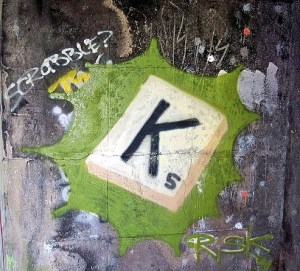
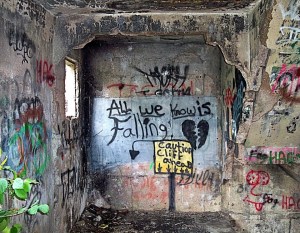
All We Know is Falling </3 Caution Cliff Ahead

By “street art”  I don’t mean misspelled racial slurs, poorly drawn genitalia, or swastikas (although you will run into plenty of that), I mean art that was clearly done by someone with talent or at least a statement with a deep thought behind it.  The purpose of this kind of art is to question the existing environment with its own language.  It is art that is unsanctioned and not sponsored by community or government initiatives.  “Street art” is art in its truest form—art for art’s sake brought to life in a public space.   

Concrete City is also a location popular with Paint Ball enthusiasts which helps to add a certain photographic ambiance to an otherwise dreary location. Photographer Katherine Rogers—Tattoo Artist, Reading Pennsylvania

Photographer Katherine Rogers—Tattoo Artist, Reading Pennsylvania

Old Skool: Imperfections Create Character

 I don’t just mean old skool graffiti in which traditional artists have primarily used free-hand aerosol paints to produce their work.  Today’s resurgence in street art encompasses many other techniques such as stencil art, sticker art, and installations.   And in a phenomenon that I find most interesting, this art renaissance that is spontaneously occurring at Concrete City has attracted the attention of photographers who are actually bringing models there to shoot on location!  At Concrete City!  😉 

Photographer: LUIGI ROMANO (aka Egoista_73)  from Wilkes-Barre, Pennsylvania

“I like to do photo shoots in this area because it’s the right amount of strange. It’s colorful, creepy and crazy, and there’s nothing better than having that combination with a mix of modern people.” —Corrine Klug

Photographer: Corrine Klug—Dallas, Pennsylvania

“I like doing out of the box fashion shoots, Concrete City is an amazing place, and pretty PRIVATE for the most part, it’s a place where you can clear your mind and just enjoy the art of it all.”– Sande Kaczkurkin

Photographer: Sande Kaczkurkin  “Pennsylvania Sande”—Springville, Pennsylvania with model Sarah Cugini of Model Mayhem–MM Number 2100887

With a little luck, maybe this creative energy can find a way to infuse itself into some other areas of Luzerne County if community leaders would allow it.  These are artists who clearly want to share their talents, why not give them some space somewhere to create community generated art?  Wilkes-Barre is a small community without a lot of money; it needs all of the free inspiration that it can get! 

Is it vandalism or Van-Dali’-ism?!

The history of graffiti/street art includes Ancient Greece and the Roman Empire.  Graffiti was found in the ruins of Pompeii, on the walls of ancient Jerusalem, and in ancient Egypt.   It has always been used by mankind to express underlying social and political messages. One of the most famous and inspiring graffiti campaigns predating the modern street art movement began during World War II with the tag “Kilroy was here”.   Kilroy was a little long-nosed character with a bald head that began popping up in unexpected places across the theaters of war visited by American troops.  American soldiers engaged in competitions to inscribe the tag in obscure locations to help keep the battle-weary soldiers inspired.  Soldiers became so engaged by the graffiti art competition, that the mysterious Kilroy character had Japanese Intelligence Officers and Hitler himself worried about the “message” being propagated by the little ubiquitous guy. 


Photographer: Stacy Shannon—Alexandria, Virginia

Today, graffiti has become a rapidly developing art form that is gaining legitimacy.  The art world of curators, dealers and collectors are helping graffiti artists expand their audience on a worldwide scale, just as Luzerne County is gearing up to start its own War on Graffiti in the name of keeping our streets free from gang influence.  Our community leaders and law enforcement officers are telling residents to protect our children and our streets from gangs by reporting all graffiti to the police departmentIncidentally, there also happens to be a stream of funding available at this time for communities who can prove that they are plagued by the infiltration of gang-related activity. 

Sadly art is historically a casualty in any community where leaders try to create solutions to avoid an impending economic apocalypse.  I’d hate to see local Banksy wannabes get silenced during a campaign against little local gangsta wannabes just as graffiti art is sweeping the nation as a means to revitalize declining and blighted communities.  Cities like Los Angeles and Chicago are publically recognizing the talent of their graffiti artists by providing the means for them to do legal graffiti, which helps to foster developing street artists while lessoning the amount of graffiti that appears in their cities as vandalism.  One criticism often heard in Luzerne County is that we knock down our historic structures and do nothing with the newly created space, or worse yet, put up a parking lot— UNUSED parking lots

Our leaders need to foster more progressive thinking in terms of turning our dying community around and breathing new life into our often empty streets.  With price tags for the historic preservation and the economic development of our blighted structures reaching into the millions, as our community sits and waits for something to happen to reinvigorate the center city area of Wilkes-Barre, local graffiti artists have been creating a message (for free!) that is calling out to other creative individuals.   Local street artists are drawing visitors and compelling them to document a broken and deserted town sitting in the middle of nowhere in Luzerne County.  What can we do to get these people to travel less than ten miles down the road to breathe a little life and tourism into Wilkes-Barre using the same inexpensive method? Can the same medium be used to draw local residents in neighboring communities into the center of Wilkes-Barre again?  Maybe, if given the opportunity, at least temporarily until the millions needed for community redevelopment and historical preservation can magically arrive……Just as the Kilroy Graffiti Campaign gave hope to American soldiers fighting a war, perhaps a Community Graffiti Campaign is what the city of Wilkes-Barre needs to give citizens a renewed sense of optimism as they prepare to fight their own war–a war against economic blight.

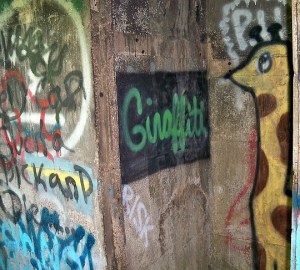
Giraffiti in The Concrete City Jungle Room


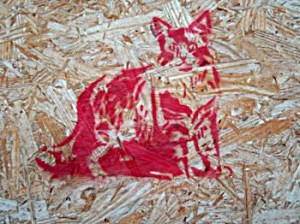
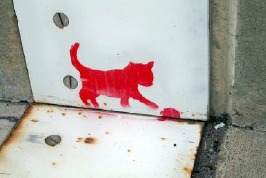
Beyond Concrete City, people in the area are currently talking about the red cat stencil tag artist.  Who is this mysterious street artist and what is their message?  Can anyone out there offer any insight?


Gruesome Intermodal Kitty

Frank Clark Jeweler Cat


South Street Bridge Stencil Art Cats

Another South Street Bridge Playful Kitty

And this keeps showing up in the most unusual places also….who is he?

Graffiti IS happening in Luzerne County and very little of it appears to be gang related…..

@@@@@@@@

Visit Vimeo to watch my Concrete City mini-movie!

~*~*~*~*~*~

Return To

GUERRILLA HISTORY Table of Contents

Cheri Sundra © 2012
All Rights Reserved

KIRBY PARK ZOO RUINS ? !—Ooops! Maybe not……

If you are reading this, it is probably because you saw the title and thought one of two things:

“There was a zoo in Kirby Park?”  Yes, there was! But the Flood of 1936 led to the eventual demise of the Kirby Park Zoo.   You can read about the Kirby Park Zoo here .

Or

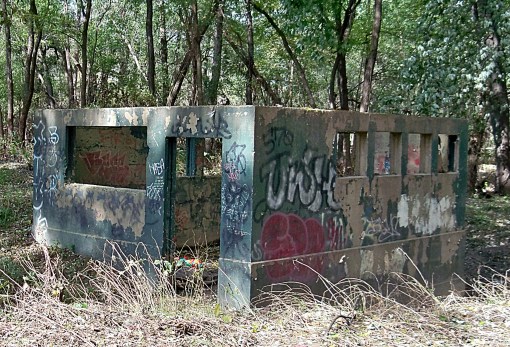
“I know where those zoo ruins are in Kirby Park”.  No, you don’t.  You know where ruins are, but they most likely are not zoo ruins, at least not the structures that you think are zoo ruins. 

But I do kind of hope that someone out there has the information needed to prove me wrong.  The idea of zoo ruins is far more romantic than the theory that I’m about to blog about in this post…..
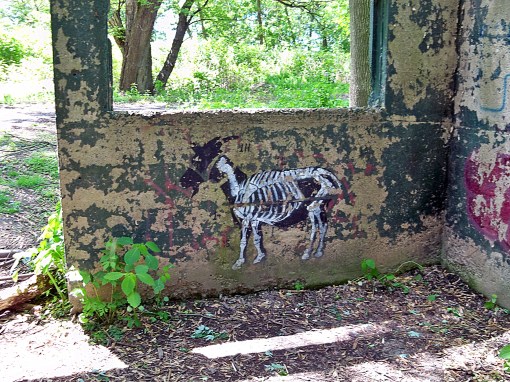
Zoo graffiti from May 2010 which has vanished with the flood of September 2011

“It is sadder to find the past again and find it inadequate to the present than it is to have it elude you and remain forever a harmonious conception of memory.”— F. Scott Fitzgerald

I am not a historian and I am bringing this up to prove a point.  Despite the fact that I am NOT a historian, there is information out there that could lead someone to believe that I am legitimately a historian if they were to run across a Letter to the Editor that I wrote which ran on August 5, 2010, with the misleading title “Historian seeks info, stories about old Kirby Park zoo.”  Yes, I am a member of the Luzerne County Historical Society, but that does not make me a historian unless belonging to the Philadelphia Museum of Art also makes me an artist!

This is how historical misinformation can spread.  Unintentional misunderstandings, misquotes or a misprint in a publication can be used as a reference over and over again by other writers and researchers until it becomes part of the “facts”.  

We’ve all been told with certainty at some point that Betsy Ross made the first flag, it was even printed right there in our grade school text books!  Yet many historians (the real ones!) dispute that “fact” and Betsy’s house is not part of the U.S. National Park Service–which is a huge indication that the story is not true. 

During my short time as a faux-historian, I’ve come to the realization that historical research is hard, time-consuming and not exactly always….well….EXACT.  It’s more like trying to fit together a puzzle with missing pieces, filling in the blanks using a combination of critical thinking and speculation to try to create a complete picture. 

The very first article that I ever read about the zoo was pulled out of the Kirby Park file at the Luzerne County Historical Society.  This article ran on May 13, 2001, in the Times Leader, and was titled “Kirby Park: About 4 score years ago, a green place bloomed along the river.”  In the article, it states, when referring to the famous Olmsted Brothers landscape architectural firm who were commissioned to design Kirby Park, that “they did the entire original design for Kirby Park, including a zoo, a band shell and a wading pool.”  The statement was attributed to a quote by a man named Larry Neuman, president of the Wyoming Valley Historical Society (now the Luzerne County Historical Society). 

Unfortunately, Larry Neuman was never the president of that organization,  but Larry NEWMAN was!  Still, I did spend time searching for Larry Neuman.  I’ve also spent a decent amount of time searching for information about the Kirby Park Zoo plans and repeatedly came up with nothing.  Again, I’m not a historian, and I would hardly say that my search was completely thorough, but I tried every avenue that I could think of—the courthouse, city hall, different local historical organizations, the library—and couldn’t find any plans for the Kirby Park Zoo or any indications that the structures left standing were zoo buildings.

When I did finally contact Larry Newman, he shared a whole bunch of information that he had about the zoo, but said that he did not know if the zoo was part of the original plans for the park (he mentioned plans designed by someone else—I’ll get to those plans later).

Further in this article from May 2001, it states “John Mayday, president of the River Front Parks Association, said a walk down the Olmsted Trail—which follows the old drive through the natural area—will take you past the wading pool, as well as the foundations for the old gardener’s cottage, the band shell, a riverside observation deck and a couple of old zoo buildings.”
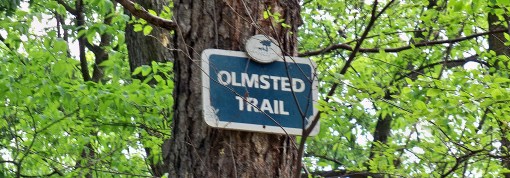
I had the opportunity to have a very entertaining conversation with Mr. Mayday earlier this year, and he told me all about the cottage, wading pool, band shell and observation deck, but was unsure about the remaining structures.  He also gave me a booklet produced by the Riverfront Parks Committee about the Kirby Park natural area that mentions nothing about zoo buildings either.

So I am unsure about how or where this idea about the few ruins left in Kirby Park being part of the zoo actually came from–and I cannot find any proof that a zoo designed by the Olmsted Brothers was part of the original park plans, but my guess would  be that the writer of  that article misunderstood or misheard that information.  Or maybe he pulled it from another source himself, but that particular article contains the earliest mention that I can find about “zoo plans/ruins” in a local newspaper.  And then every article that I have been able to find after that point, contains that same information, probably using that same article as a reference, just as I did when I wrote an article about the zoo myself. 

I eventually just gave up on finding any more information about these structures, until one day I decided to look through the resources at the Luzerne County Historical Society again to learn more about the children’s playground that was designed as part of the original plans for the park, but was lost when the levee was constructed that cut that area off from the rest of Kirby Park. 

As I looked for playground information, instead of zoo information, through the double binder titled Kirby Park Wilkes-Barre Olmsted Frederick Law Plans 1921 and the Kirby Day Book (June 4, 1924 ,“To Fred M Kirby from his son Allan P Kirby”) at the Luzerne County Historical Society, in addition to other information provided by Riverfront Parks booklets,  the mystery surrounding the remaining structures seemed to be solved, at least in my mind anyway. 

References to the Children’s Playground

“The Children’s Playground –Looking Toward Wilkes-Barre”—Picture from Kirby Day 1924, Luzerne County Historical Society Collection

“Nor have the kiddies been overlooked.  The little concrete block cottage almost on the west bank of the river, at a point below the Market Street Bridge, is to be used as a rest room for mothers and children.  The large section of the lawn surrounding the house will be utilized as a playground for the youngsters.  Between the rest house and the grove south of it there will be swings, sand courts, a bathing pool and many other interesting features for the amusement of the youngsters.” —-Kirby Day Book

“Cottage at Children’s Playground—Looking West”–Picture from Kirby Day 1924, Luzerne County Historical Society Collection

“The grounds around the bungalow near the river, formerly belonging to Thomas Podmore, were laid out as a playground for children.  The intention was to use the large front room of the house and the front porch and as much more of the house as may seem desirable in the future as a rest room for women and children.  If only the front room of the house is required for that purpose the balance of the house is available as an apartment for the caretaker, with entrance at the rear.  The cost of all improvements in and around the bungalow and children’s playground was $10,477.56.”–Kirby Day Book 

“The pool was part of the original Olmsted design and was used by children for wading.”— Riverfront Parks of Wilkes-Barre, Riparian Trail Guide, Kirby Park Natural Area, Yours to Discover & Enjoy   **Note:  In some articles the pool is called a “Reflecting Pool”
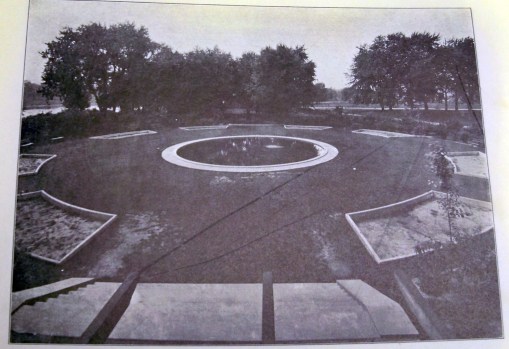
The Wading Pool & Sand Pits—Looking South from the Cottage—Kirby Day 1924, Luzerne County Historical Society Collection

“A children’s playground immediately south of the Market Street Bridge in such a location that if the new bridge is erected the arches will afford shelter and also access to the present playground and park north of the bridge.  This playground would be in its permanent location and should be equipped with apparatus which is readily removable during the winter when the area is not in use and at other times when it may be threatened by floods. The present bungalow on the knoll near the river could be used for a caretaker’s home until such a time as this area may need to be graded to increase the channel cross-section…..”  —Plan Book, Kirby Park, Page 569

Wading Pool Ruins October 2011
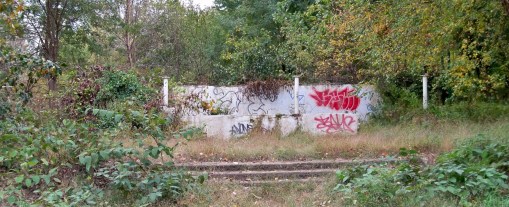
Cottage Ruins October 2011

“As you walk along the Olmsted Trail, you will see remnants of structures from the original park area, including an animal cage from the zoo, remnants of the Caretaker’s Cottage, and the Reflecting Pool.”– Riverfront Parks Olmsted Trail “Remnants of a Time Past” (project for the Leadership Wilkes-Barre Class of 2000) **NOTE: I wish I could figure out where they got this information at!  I also wonder how or if this influenced the 2001 Times Leader article referring to zoo ruins.

Unidentified Structure

Located Near Station 6

I have no basis for making this statement, other than lack of information, BUT if there is a zoo remnant still left in Kirby Park, this is most likely it.  I didn’t come across anything in the plans for the park that indicates what this structure may have been, and it is the one ruin that no one that I spoke with offered any insight about. 

Given the lack of pictures available of the zoo while it was open, all that I can offer on this subject is the following information in the hopes that someone can either help to prove or disprove that this structure could possibly be the remains of the bear habitat—the only zoo structure that I was actually able to locate a picture of so far. 

(And I do apologize because I have to go back to the Luzerne County Historical Society to look up the title of the booklet that contains the following pictures from the 1936 flood.  My notes are incomplete–all that I have is that editors & publishers of the book are Edward J. Donohoe and Hugh J. Brislin.)

Kirby Park Zoo Bears during the 1936 flood, Luzerne County Historical Society Collection–“Lest We Forget:  Wyoming Valley Flood of 1936”

This is a closer crop of the background behind the bears.  Keep in mind that the levee had not been built yet.

In the picture above, if you walk from the unidentified ruins to the top of the current levee system and snap a picture, which is of the Kingston Armory (built in the early 1920s), this is what you get if you crop that building.  Is it possible that it is the same view?  I’m not really sure myself….But apparently this is what the real historians would do to try to figure out this kind of stuff!  😉
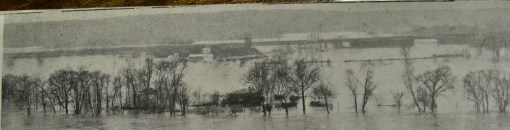
Zoo Area During 1936 Flood—Luzerne County Historical Society Collection

References to the Band Shell
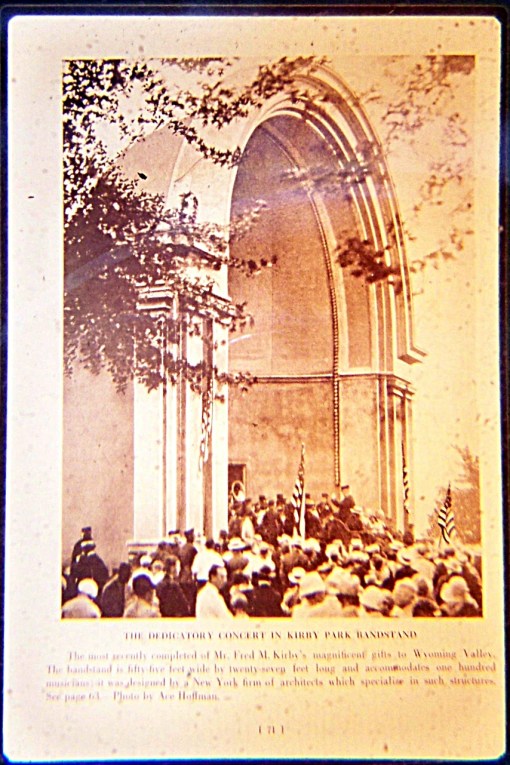
This is a picture of a slide with the caption: “The most recently completed of Mr. Fred M. Kirby’s magnificent gifts to Wyoming Valley. The bandstand is fifty-five feet wide by twenty-seven feet long and accommodates one hundred musicians. It was designed by a New York firm of architects which specializes in such structures. See Page 63 (Note: I don’t know of what) Photo by Ace Hoffman.” —-Luzerne County Historical Society Archives.

“The foundation has already been laid for a band stand to be located in the midst of the beautiful shade trees forming the grove near the bend of the river. “—Kirby Day Book

The next structure on the Olmsted Trail is what I believe to have been the band shell, which was part of the original Olmsted Brothers design.
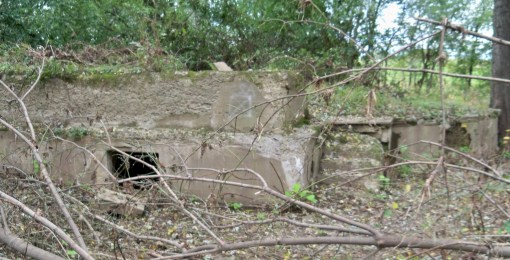
In conversations with other people who I have run into while walking along the trail here, this is the remaining structure that seems to capture the imagination the most.  Several people have told me that they thought it was the remains of the bear habitat or the monkey house because of the little tunnel system/walk way that runs underneath the structure.

Underneath band shell October 2011

Other people thought it was the band shell with bathrooms below the stage with layer upon layer of mud deposited underneath from all of the flooding throughout the years.

Another view underneath the band shell remains October 2011

“A Bandstand with concrete foundation and with storeroom beneath was built in the wooded area near the river at a cost of $3,001.19”—Kirby Day Book
Rear View (levee side) band shell ruins

Yellowish paint on band shell remains
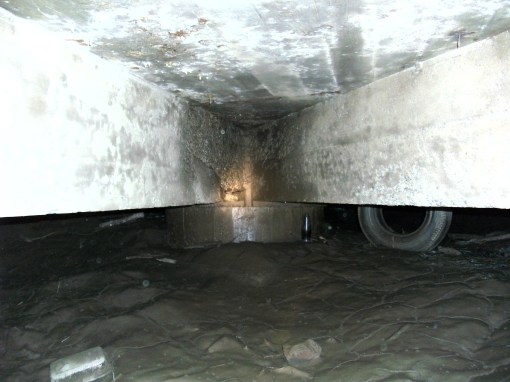
What appears to be concrete beams and a center support underneath the band shell. Picture use compliments of Ed Mountjoy.

References to the Pavilion

As you are walking along the path in the natural area of Kirby Park along the Olmsted Trail, you will find this structure on the left hand side.

Pavilion Ruins May 2010

While some people like to speculate that it was part of a structure once used to house monkeys, I now believe it was a Pavilion that was part of the original plans for the park.

Pavilion Ruins May 2010 facing the river

“The Pavilion and Grove Looking South”—Kirby Day Book 1924, Luzerne County Historical Society Collection

The Kirby Park Wilkes-Barre Olmsted Frederick Law Plans 1921 mentions placing a small pavilion in the picnic grove.

The Woodsy Owl Deck “The deck you’re standing on is what’s left of the gazebo from the original Olmstead Brothers’ park.”–Riverfront Parks of Wilkes-Barre, Riparian Trail Guide, Kirby Park Natural Area, Yours to Discover & Enjoy Page 29 

Zoo Structure or Toilet Building?  That’s the question……

“Located about half way down the river bank in the wooded section are small separate concrete toilet buildings for men and for women”—Kirby Day Book 

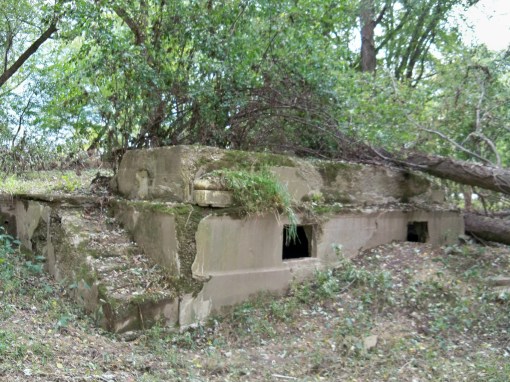
Located near the pavilion ruins, on the right hand side of the trail, you will find this structure (there is another similar structure a little further down the path, deeper into the wooded area).  This is the one that has been pictured in local newspaper articles the most often and is always identified as a “zoo structure”, usually in the form of a picture looking out of the window.

I believe that these structures may have actually been bathrooms.

Second structure October 2011–Several cracks have formed throughout the structure because a tree fell on it, most likely due to the flooding in September

In notes to Olmsted a toilet building for men and boys in circular grove of trees near children’s playground are mentioned.  Also included are notes to place a small pavilion in picnic grove, toilets to be either included in or near the building. —Kirby Park Plan Book pages 394 and 395

“Located about half way down the river bank, in the wooded section are small separate concrete toilet buildings for men and women.”–Kirby Park Plan Book Page 592

“A comfort station for men and one for women have been erected in the grove.”—Kirby Day Book

Water was supplied to that area of Kirby Park

Water pipe underneath band shell—Picture courtesy of Ed Mountjoy

“The balance of the supply to the park is supplied by a two-inch and smaller pipes extending from the manhole at the junction of the drive to the children’s playground and along the river to the toilet buildings near the bandstand. The total cost of the three toilet buildings, including sewage disposal, was $15, 985.74.—Kirby Day Book  **Note: unsure where the third toilet building may have been.  Maybe that could be the unidentified structure if it isn’t part of a zoo cage?

Another water pipe underneath band shell—Picture courtesy of Ed Mountjoy

In Conclusion 

The Kirby Park Zoo did not officially open until 1932, although there were zoo animals housed in Kirby Park prior to the official opening. The zoo was mentioned in the original plans for the park, but I never did find any actual plans for the zoo designed by the Olmsted Brothers.

REPORT OF VISIT BY H. J. Koehler, September 16, 1926, Notes:  “Zoological garden. 1 Bear, 2 owls, 2 pheasants, 1 coon.  Have it in the northwest corner.”  —Kirby Park Plan Book

This is the only other picture that I have been able to locate of the Kirby Park Zoo:
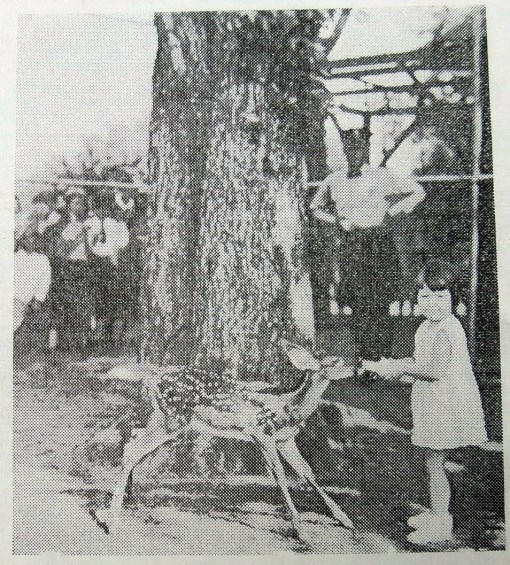
“HELP YOURSELF MY DEAR DEER–Such was the invitation extended Kirby Park’s spotted fawn by 3-year-old Florence Victoria Krick, daughter of Attorney and Mrs. Charles P. Krick of West River Street. And as the photo plainly shows, a second invitation was not needed.”—Luzerne County Historical Society archives

“The modest beginning of a zoo has been made.  Restrict it to its present area and in its present condition.  There can hardly be an objection to it.  Should an enlargement be considered, this ought to be carefully planned for in advance, and probably in some other location of the park.” — Kirby Park Plan Book, page 616, From Mr. Gilbert S. McClintock, October 6, 1926.

I find it hard to believe that I have been unable to locate any more pictures from the park, especially of the monkey house which would have been considered to be quite an exotic creature to have hanging around Luzerne County, especially during the 1930s!

There is one other piece of the puzzle out there that I am aware of that may help to shed some light on the mystery of the Kirby Park Zoo.  Unfortunately, I have been unable to obtain any access to it.

As a result of my Letter to the Editor, I received the following information in an email from Carl J. Handman of Eyerman,Csala & Handman, located on Public Square :

“The “ZoologicalBuilding” (project #228) was the last project I know of designed by W-B architect, Clark Wright Evans, AIA (1857-1940). My firm’s archives (Evans sold his firm to Robert Eyerman c.1935) contained 13 tracings, including a perspective rendering, dated September 1932. In 2002 I donated all of the Clark Wright Evans drawings in our archives (31 projects from 1898 to 1932) to the Hoyt Library in Kingston. They are stored there in acid free paper in flat files.

You can probably view them there by making an appointment with the new Library Director. She was not there when I made the donation, & if she is not familiar with them, let me know & I can fill her in on the details of my donation.”

I contacted the Hoyt Library via email and received this response:

On Wed, Aug 18, 2010 at 12:37 PM, Hoyt Library <hoytlib@ptd.net> wrote:

Cheri,

The material is in a restricted area of the library. Due to budget cuts we do not have anyone who could be with while you are researching your topic. We have reduced our hours and staff. When funding is resumed we will be happy to accommodate you.

Diane Rebar

Reference Librarian

I did send another email to the Hoyt Library on October 26th of this year requesting access to these materials again, but I have yet to receive any response.  Maybe one of the real historians out there can take up the cause and gain access to this information!  😉  

“Central Section Looking Toward Wilkes-Barre” (with Cottage)—Kirby Day 1924, Luzerne County Historical Society Collection
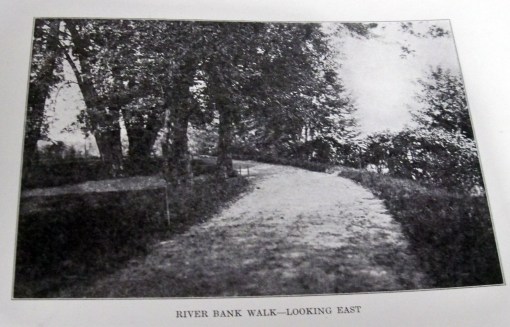
“River Bank Walk–Looking East”—Kirby Day 1924, Luzerne County Historical Society Collection

“River Bank Walk–Looking South”—Kirby Day 1924, Luzerne County Historical Society Collection

Kirby Park Olmsted Trail October 2011

To learn about the zoo animals, visit:

The Animals Of The “Lost” Kirby Park Zoo

~*~*~

Return To

GUERRILLA HISTORY Table of Contents

Cheri Sundra © 2011
All Rights Reserved


***NEW UPDATES for: “Lost History Found : Croop’s Glen Amusement Park, Hunlock Creek, Pennsylvania”

Since my last post about “Lost History” at Croop’s Glen, an abandoned amusement park located on Route 11 right outside of Nanticoke Pennsylvania, two more people have contacted me to share information about this long abandoned amusement park!

Photo memorabilia donated by Frank Regulski, courtesy of Sheila M. Brandon

Sheila M. Brandon of Sweet Valley, Pennsylvania, used to maintain a history website that contained information about Croop’s Glen and pictures of the Hunlock Creek Train Station.  She very graciously sent me pictures and information from her now defunct web site, which covered topics from Lower Luzerne County, to use for this blog.

From Sheila’s information, I’ve learned that the structure that you first encounter when you look over the guard rail and into the park, used to be a ticket booth.  It’s interesting to view the changes that have occurred over a relatively short period of time to this structure, thanks to the ravages of time and Mother Nature.

“Ticket Booth” courtesy of Sheila M. Brandon

Again After Recent Flood on September 17, 2011–My own photo

Part of Croop’s Glen’s success was the fact that it was located across the street from the Hunlock Creek Train Station.   From the copy used for Sheila’s webpage:

 “The rolling thunder of the approaching train was heard as it neared the station at Hunlock Creek, bringing visitors from all over, coming to enjoy a warm summer day at the glen…the sounds of children’s laughter could be heard echoing through the trees.. the warm babbling brook sang ever so sweetly, inviting the visitor to come take a swim.. the smell of popcorn and cotton candy filled the air.. beautiful melodies played under the dance pavilion as the adults danced the night away.”

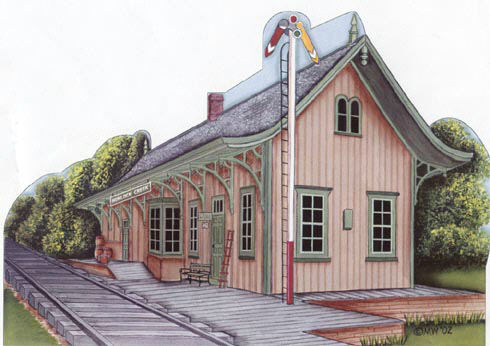
“Hunlock Creek Train Station” courtesy of Sheila M. Brandon

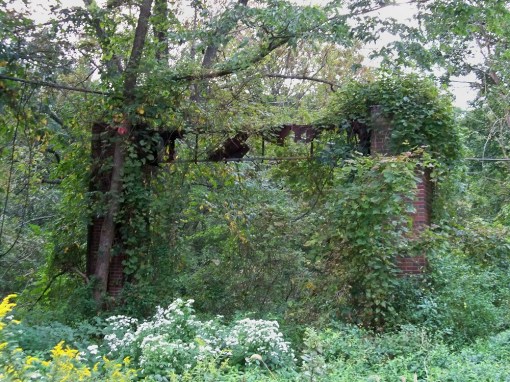
Hunlock Creek Train Station ruins today courtesy of Ed Mountjoy

“The glen opened in 1908 or 1909, adjacent to the Delaware, Lackawanna & Western Railroad Station. During its earliest years, the park was primarily used for church outings, family reunions and school picnics. In a deed filed at the Luzerne County Courthouse, the parcel of land is described as follows; briefly, a parcel of land containing a two-story frame hotel building (a\k\a- Hunlock Creek Hotel), containing 16 rooms, barn, stone icehouse, dancing pavilion and two refreshment stands. The icehouse, which was located next to the hotel, has been described as the following; it was two stories high, the bottom floor had 3 to 4 feet of sawdust on the floor. Ice was cut from the river and kept all summer in the icehouse. It was still used in the 1920’s.”

Photo of Joseph Virtue in front of Icehouse courtesy of Sheila M. Brandon

Photo of Croop’s Glen postcard donated by Frank Regulski, courtesy of Sheila M. Brandon

Croop’s Glen Amusement Park Map courtesy of Sheila M. Brandon

In addition to the rides, the park had a swimming pool, bathhouses, a penny arcade, two refreshment stands, pony rides and two dance pavilions.  The dance pavilion located near the park entrance was elevated so that cars could park underneath it. 

Croop’s Victrola Sign courtesy of Sheila M. Brandon

From Sheila’s webpage copy:

“The First of its kind in Northeastern Pennsylvania, afternoon & evening,” would greet visitors as they entered the glen. Famous orchestras from the big band era, including the Dorsey brothers, Fred Waring, and Hugo Winterhalter played there on a regular basis. The park boasted having the first nickelodeon during its first few years of operation. After the glen had closed, in later years the dance pavilion was used as a skating rink until it was destroyed in a devastating fire. All of the modern and expensive equipment was lost in the fire. It was stated that two children sparked the fire one winter after the park had closed.”

The smaller dance pavilion was also used for picnics and contained a coin-operated piano and coin amusement devices.  The structure also served as the entrance to the roller coaster. 

“Croop’s Coaster View” courtesy of Sheila M. Brandon

The Hunlock Creek Hotel was purchased from the Croop’s by the Hartman family.  The website quoted Mary Hartman recalling the following memories of the glen:

“The Hunlock Creek Hotel catered picnics at the glen, including some for the power plant and the Retreat employee picnics. My brother and I took the supplies to the park with our ponies and spring wagon. If I remember correctly, Bess Croop’s family operated the concession stand for several seasons. My best memory of the glen, was one day after school, we discovered the electricity had been left on in the Merry-Go-Round pavilion at the park, and we got the rides running full blast. We had a ball until someone on Falls Hill heard the music.”

The park had something called a “wiggle pole” for the young visitors which was essentially a horizontal, telephone pole sized wooden shaft with one loose end that would wiggle when walked upon. 

Croop’s Glen postcard photo donated by Frank Regulski, courtesy of Sheila M. Brandon

The webpage cited gas rationing, which was imposed nationally after the bombing of Peal Harbor in 1941, as the reason for visitors no longer visiting the park in the same way that they could in the past.  After the park was closed, according to the site, Stanley Croop used the property as a saw mill. 

Croop’s Sawmill courtesy of Sheila M. Brandon

Sawmill Remains courtesy of Sheila M. Brandon

Sheila also sent pictures of the park’s rollercoaster.  I’m waiting for permission from the Philadelphia Toboggan Company to post the pictures. 

Thank you so much for sharing your pictures and information, Sheila!

I’ve forwarded the information from Sheila to The Luzerne County Historical Society and The Plymouth Historical Society.  I did not include all of the information or photos about the park in this post.  If you want to learn more about Croop’s Glen, you’ll just have to visit one of the historical societies!  Sheila also sent information pertaining to the Hunlock Township World War II Veteran’s Memorial.

Miniature replica of Croop’s Glen sign created for a fundraiser to replace World War II Memorial courtesy of Sheila M. Brandon

Croop’s Sign ruins on September 17, 2011–my own photo

A person who graciously wanted to share a first-hand account of her time spent at Croop’s Glen is Lucille Weaver from West Nanticoke.  Lucille’s daughter contacted me with the following recollections that her mother has about visiting the amusement park:  

“Croop’s Glen was the place to go ‘back then.’ School and/or class picnics were held there, that’s where her class went. There was the Maypole, merry go round, the whip, dance hall, a carousel and others.  The Maypole seems to stand out in her memory the most and ‘The Whip” came in second 🙂 The dance hall was alongside of the merry go round or she said, maybe ‘a part’ of it somehow. The carousel had a ‘music box’ that began playing when the carousel started turning…Apparently the ‘Maypole’ was somewhere near the entrance…Since we were talking on the phone, she could not see the ‘now photosof Croop’s Glen, but I described, a long room that reminded me of the inside of a covered bridge and she said that was the dance hall !!! In another photo there was a picnic table and next to that was a long green table (I said to her, I would love to have THAT table!” and mom said it sounded to her like that might have been where they sat & played Bingo. According to mom, when Croop’s Glen was open for business, it was the biggest thing at the time and that is where everyone went. If you grew up there during that time, you KNEW of Croop’s Glen!!!!  I really enjoyed listening to my mom talk about Croop’s Glen because it was obvious that was one of her very happy memories when she was growing up.  I didn’t know that until today. Instead of our average 45 minute morning phone call, we talked for almost 2 hours! LOL”

Thanks to Lucille and her daughter for sharing such fond memories!

If anyone else has more information that can help to complete the picture about the time spent by one of Luzerne County’s fading generations at Croop’s Glen, please contact me!

Miniature replica of Hunlock Creek Train Station created for a fundraiser to replace World War II Memorial courtesy of Sheila M. Brandon

Hunlock Creek Train Station courtesy of Sheila M. Brandon

Hunlock Creek Train Station ruins (ticket window) today courtesy of Ed Mountjoy

@@@@@@@@

It was Jennifer O’Malia who introduced me to the concept of Urban Exploration

Style Photography in 2010.  Jenn, who has the unique vision of a

social documentarian, is now offering her services as a freelance photographer.

 Photo by Jennifer O’Malia 

Jenn Wedding

Return To

GUERRILLA HISTORY Table of Contents

for more articles about Croop’s Glen

Croop’s Glen: “Lost” Amusement Park

Abandoned Pennsylvania: Croop's Glen (24), Luzerne County, Route 11

You could drive right past the ruins of Croop’s Glen Park daily without even realizing that an amusement park once thrived right on Route 11, near Nanticoke, in Hunlock Creek.  The ravages of time and nature, along with the valley where the remains are situated, help to keep the location protected from prying human eyes, unless those eyes are already aware of the park’s existence.

TURN HERE AND LOOK TO THE LEFT

(Luzerne County) Abandoned Amusement Park Entrance Sign: Croop's Glen  {EXPLORED}
The park was opened in 1908 by B. Frank Croop when it was primarily used as a  picnic area with the stream and waterfall as the park’s main attraction.

Abandoned Pennsylvania: Croop's Glen (19), Luzerne County
Between 1926 and 1927, two wooden roller coasters were added.  There was a full size coaster named Twister, and one Kiddie Coaster.  Other attractions added to Croop’s Glenn were a whip, carrousel, bumper cars, a dance pavilion plus a swimming pool.  During the 1928 season, Croop’s Glen advertised parking for 2000 cars.  The park was closed in 1943 because of the conservation efforts for World War II and rising insurance costs.  The dance pavilion was converted into a skating rink which was commercially successful until it burned down in the early 1950’s.
Abandoned Pennsylvania: Croop's Glen Amusement Park (68)  Route 11
There are just a few remnants left of Croop’s Glen Park– a rusted sign at the entrance and a few tattered buildings—and once they disappear,  Croop’s Glen will become another lost chapter in the history of  Luzerne County.


Abandoned Pennsylvania: Croop's Glen Amusement Park (outhouse)  Route 11 poster-style HDR {EXPLORED}

Since posting this article, I’ve had some people contact me with some new information about Croop’s Glen. 

Baby Contest Pavilion Collapse at Croop’s Glen 

&

Lost History Found: Pictures of the Park when Open

@@@

Return to Guerrilla History

Table of Contents

Cheri Sundra © 2010
All Rights Reserved
Kirby Park Zoo : Take A Walk With History

My article about the Kirby Park Zoo is now available at Independent NEPA Magazine at:

Take A Walk With History

Return To

GUERRILLA HISTORY Table of Contents

Cheri Sundra © 2010
All Rights Reserved

Hanson’s Amusement Park: Abandoned but Not Forgotten Ruins

All photos are from June 15, 2010

Located on Harvey’s Lake, in Luzerne County Pennsylvania, this site opened in 1891 as the old Lehigh Valley Railroad Picnic Grounds. Early attractions at this location included a carousel, bowling alley, dance hall, a small roller coaster and an arcade.

Roller Coaster Skeleton

The Hanson family purchased the park in the mid 1930s after the addition of a Pretzel dark ride, which was later renamed Pirate’s Cove. The family continued to add numerous attractions to the park such as a skating ring, Ferris Wheel, Whip, and a kiddie land with boats, pony carts and fire engines.

Interest in the park started to decline during the 1970s. In 1980, when the “Speed Hound” roller coaster shut down because of structural damage, the park lost the ability to draw much of a crowd. The park closed after the 1984 season and its contents were auctioned off. In local newspapers, Don Hanson attributes the decision to close the park to the fact the liability insurance skyrocketed in 1984. For a few years after the park closed, a Bud Light Amphitheater operated on the picnic grounds.

To see more abandoned places in NEPA, visit my collection at:
http://www.flickr.com/photos/cheri_sundra/sets/72157625528264284/

Cheri Sundra © 2010
All Rights Reserved

Bud Light Amphitheater Remains
Return To

GUERRILLA HISTORY Table of Contents