Abandoned Zoo–Nay Aug Park
All pictures by Cheri Sundra
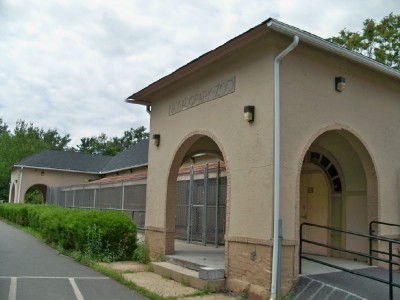
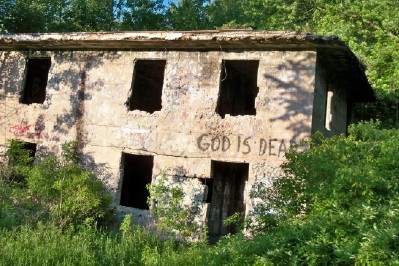
In Scranton, Pennsylvania, this structure has been a symbol of community debate about animal cruelty for decades, first as the failed Nay Aug Park Zoo and most recently as the Genesis Wildlife Center.
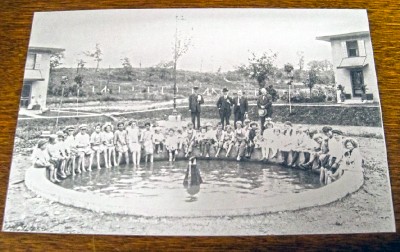
The original Zoo opened in 1920 and was a source of civic pride. In 1924 and 1935, schoolchildren raised money to purchase new elephants, one penny at a time.
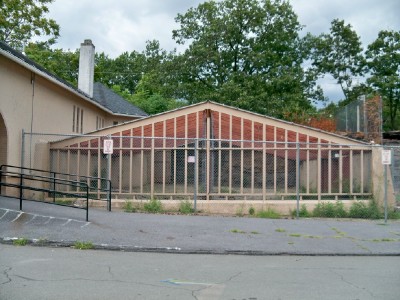
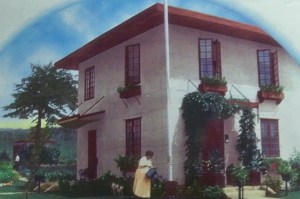
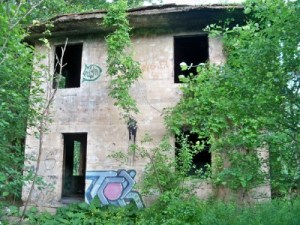
Empty Elephant House
During its heyday, the Nay Aug Park Zoo was visited on average by 500 people per day during the mid-1950s.
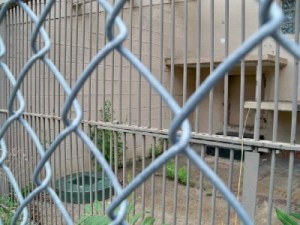 People began questioning the conditions at the zoo in the early 1960s. In 1963, the Humane Society of Lackawanna County blasted the Zoological society for its approach to renovating the heating system at the zoo, in addition to the leaky roof and a drafty tiger and lion cage. That was a bad year for the zoo because an elk gored a baby elk to death, a monkey escaped and bit a zoo attendant and four monkeys died from exposure because of insufficient heat, in addition a to a female lion killing two cubs because a faulty door allowed her to enter their cage.
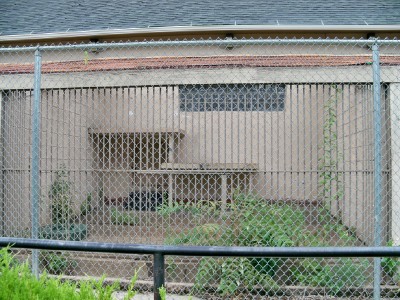
Abandoned Zoo Cage
The history of animal tragedies at Nay Aug Park Zoo just goes on from there, with stories about animal escapes and abuse by visitors, in addition to other animal mishaps resulting in injury or death.
 In 1983, the Humane Society of the United States named the zoo as one of the nation’s 10 most substandard zoos noting “the exhibits at the Scranton Zoo are so outdated and sterile that there can be no understanding of the animals’ natural behaviors.” Even the zoo’s newest exhibits were deemed “archaic” by the standards of modern zoology at that time.
While the Nay Aug Park Zoo was home to more than 200 animals during the 1960s, by the end of 1989 the only animals that remained were two bears and an elephant because the zoo was in debt and struggling financially.
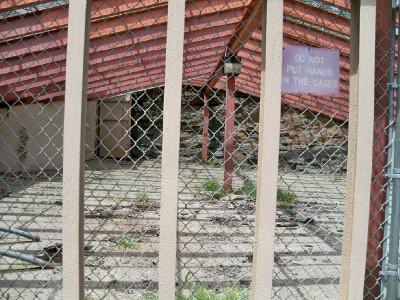
Abandoned Elephant House
When the last animal, Toni the elephant, was finally relocated to the National Zoo in Washington, D.C., it was acknowledged that it had been unsuitable for an elephant to be kept without any peers and that the animal had developed arthritis in the lower joint of her left leg because she was forced to stand in a concrete pen all day. The elephant was eventually euthanized because of this condition.
Learn more about Toni the elephant here:
nationalzoo.si.edu/Publications/PressMat erials/PressRelea…
The zoo structure remained closed until the summer of 2003, reopening as a wildlife rehabilitation center. In 2009, the zoo closed again due to public outcry after Time Magazine ranked the Genesis Wildlife Center as the 4th most abusive zoo in the United States in 2008.
The city of Scranton recently announced plans to convert this structure for public use:
thetimes-tribune.com/news/plans-call-for -opening-former-n…
 I’m sure that in the 1920’s the zoo was a fine example of a zoo during that time period. But it could never be anything but a 1920s-style zoo. While I was taking these pictures, a group a students on a field trip walked by. I heard a little boy, probably in about second grade, ask his teacher what I was doing. “Taking pictures of the elephant house”, she responded. “They made an elephant live in there?” he asked. When she answered “yes”, he shook his head and said, “That’s just wrong.” No one disagreed with him.
Have Yourself A Merry Little Abandoned Zoo Christmas



Return To
GUERRILLA HISTORY Table of Contents
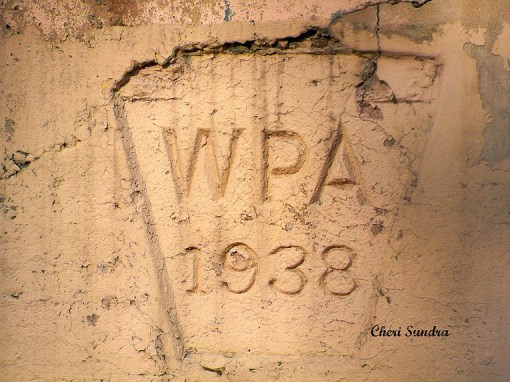
Imprint from wall of Nay Aug Park Elephant House
Cheri Sundra © 2010
All Rights Reserved

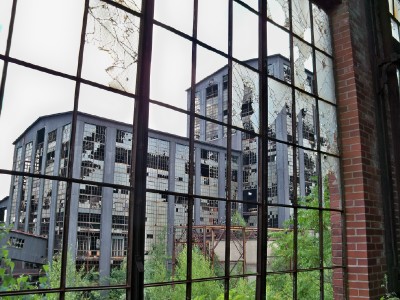
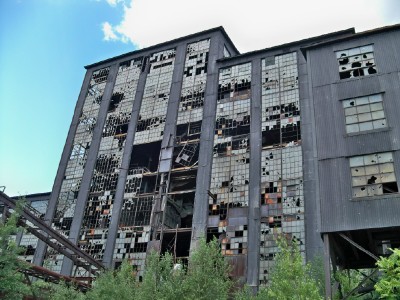 Eleven stories of tar-coated steel, scads of partially dismantled machinery, hundreds of broken steel-reinforced windows and more insight into the ravages of time than you can hope to absorb in one visit make the Ashley/Huber Breaker a popular site for urban explorers in Northeastern Pennsylvania. Since closing in 1976, this mammoth structure has had to survive salvage operations, vandalism and Mother Nature, in addition to fears about typical Luzerne County style politics.
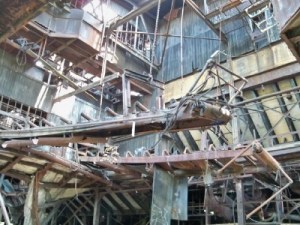 When it was built in 1939 to replace an older and out-dated structure, the Huber Coal Breaker was considered a technological marvel.
 The facility was operated by the Glen Alden Coal Company to process coal from three nearby mines. Seven to ten thousand people have worked at the Huber Breaker sorting, washing and loading 7,000 tons of coal daily into train gondolas.
 Long before companies like Nike and Ralph Lauren embraced the color “Pop” merchandising display technique to seduce consumers into buying their products, the Glen Alden Coal Company painted their coal blue as a marketing ploy that resulted in the moniker “Blue Coal Company”.








 Cheri Sundra