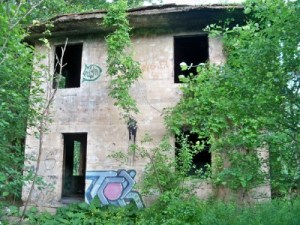
Posts Tagged ‘ decay ’

DEATH AND TAXES: Even the Dead Can’t Avoid Taxes and Abandonments

It’s been said that Urban Exploration Photography is ultimately about photographing failure.  Specifically, what we are capturing when we point our lens at a building in a state of abandonment and ruin is the inability of both individual owners and whole communities to maintain enough prosperity to support business, industry or redevelopment.  So what can be said when engaging in urban exploration exposes that you can’t even escape potential abandonment (and taxes) in death?

Because of that question, I consider this to be the strangest and most disturbing place that I’ve photographed to date.

This dilapidated mausoleum/chapel has notices taped to the front window that contain words such as “Tax Claim Bureau” and “Judicial Sale”, plus a figure in excess of $4,000.  The papers were all signed and dated during the summer of 2005, when they were evidentialy placed where they have remained since that date.   There are people interred on both sides of this deteriorating building as well as inside.  The roof obviously is in need of repair.  Two portions of the rear stained glass windows appear to be missing.  All of the flowers placed with the memorials are artificial, indicating that people are not allowed inside the structure on a regular basis, AND they were made aware of the fact that they would be denied access at some point.   There is also an obviously abandoned and overgrown cemetery office building located on the opposite side of the property.
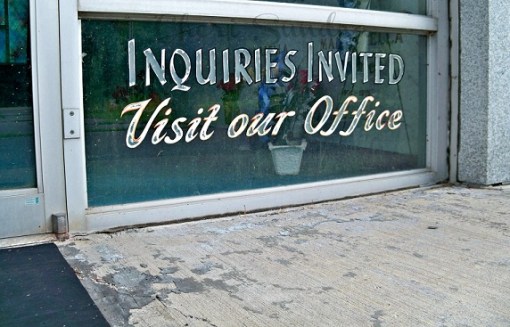
Someone does periodically maintain the grounds by cutting the grass where people are buried.  Other than that fact, there is no indication whatsoever that any activity takes place on the property.  It seems dead as the proverbial door-nail.  It’s hard to even try to guess what, if anything, is in the works for the “residents” of “Questionable Fate” Memorial Park.  I find that idea haunting and I have more to say about this location at the end of the post.

Memorial Park Office

Looking for some input from the outside world while I was editing these pictures and thinking about what to write, I posted an image from this series on Facebook.  Almost immediately, the picture generated the expected “Where’s this at?” from someone unaware that urban explorers just don’t ask that particular question, at least not in a public forum!

In my response, I explained that I was not going to disclose the location.  Which is a first for me; much to the annoyance of some other photographers of the same subject matter, I usually post my pictures on social media sites like Flickr with all of the pertinent tags and background information included.  I just learned early on that people were more likely to take the time to look at, and comment on, my pictures when they know what they are looking at and have some background information to add context and depth to their interpretation of the image.  If those components are missing, I usually question the effectiveness and purpose of this genre of photography.  But this Memorial Park mystery has me even questioning that point of view, at least in some cases.

I still believe that each of us engaged in this activity is really bound by ethics to disclose location information to other legitimate photographers/historians/documentarians.   At its core, urban exploration photography serves to visually challenge America’s current state of amnesia about its past economic failure. Ruins don’t happen overnight—they require DECADES of neglect!
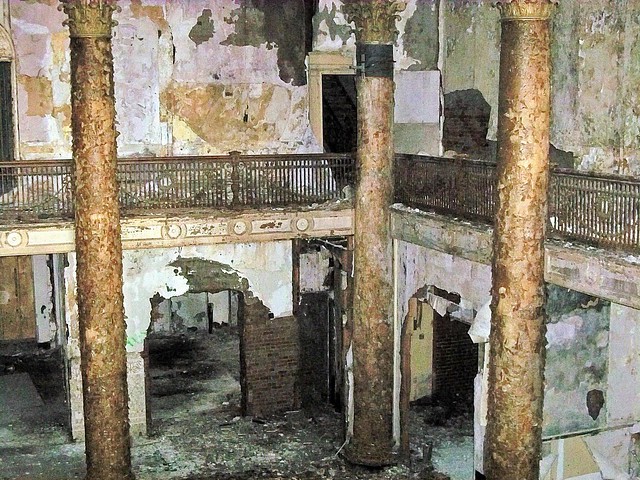
Hotel Sterling: The UnDead Days--Part 1 An Introduction
Hotel Sterling, Luzerne County, Pennsylvania

I am aware that full disclosure is considered controversial by some people who explore on a regular basis, since many believe that all locations should remain top secret information.

After a few years of doing this, I definitely reject that point of view. There seems to be a growing consensus, at least among mature, professional explorers, that we are acting as the archivists of America’s age of post-war industrial decline.
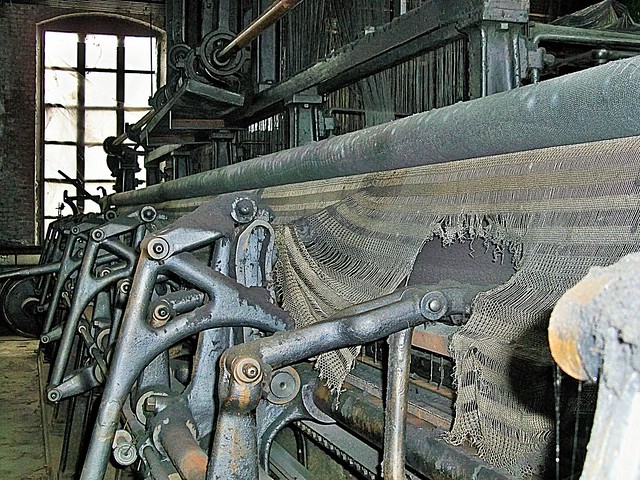
The Loom Room, Scranton Lace {EXPLORED}:  UE Magazine
Abandoned Scranton Lace Factory

America is  a nation in transition.  For generations we have been running away from a much required correction to our economy, way of life and expectations.  Our cities and small towns are struggling to provide basic services to residents.  We are living in dire economic times befitting the fall of an empire.  Almost every community across the county is littered with more long-term abandonments than they can even begin to hope to restore and that is serving as our wake up call, reminding us that we can no longer pretend that we are able to continue to grow our economy exponentially.

While people like to believe that our current economic state is a recent and unexpected occurrence caused by one president or another, the truth is that America’s decline actually began decades ago. Some economists believe that it really started with the end of World War II.

Fast forward to today, after the big “preservation” push during the 90s, and the start of the new millennium, following the time when communities looked to “Savior Building” redevelopment/preservation projects to jump-start their struggling economy.  Those projects, more often than not, resulted in unmet goals and half completed endeavors. Now, those same proponents of preservation are singing a vastly different tune.  Quotes from a Preservation Pennsylvania representative in 2011, paint a grim picture for abandonments of historical significance in my state, when asked about the finding help to save the long-abandoned Hotel Sterling:
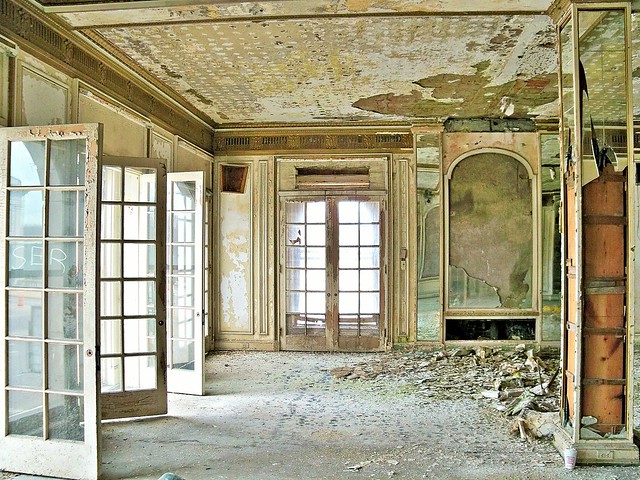
It's a Zombie Ballroom now at the Hotel Sterling

 Zombie Ballroom at the Hotel Sterling

The state is filled with historic structures facing demolition. These are difficult times economically. Private funders don’t have money. The government doesn’t have any money, and typically that’s where money comes for historic preservation,” – “Preservation Pennsylvania is monitoring Hotel Sterling”, Times Leader, April 3, 2011

 I know many explorers operate under the assumption that if they keep these locations a secret, they can remain our personal playgrounds forever.  As a collective group, we may give lip service to preservation, but that is not the case, as observed in an interview by journalist Len Albright:

 “I’ve interviewed people who have been to the same building 20 or 30 times, they just love it so much,” he says. “But when I asked them if they’d like to organize a cleanup or a preservation effort, they’d be indifferent. They might think that’s fine for someone else to do … after awhile, though, they’d be off to hunt for the next abandoned building.”

That pretty much sums it up, for the most part, we are “ruin porn whores” first and foremost, myself included.  But thinking that an abandonment can remain abandoned indefinitely is unrealistic.  The only reason an abandonment would exist in the first place would be as a direct result of a failed economy.  In order for these communities to move forward, they are going to have to eradicate these structures from their landscape.  To leave them sit there, just signals the slow death of their entire social structure.

Huber Breaker Ruins:  The Art of Industrial DecayLong Abandoned Huber Breaker, Ashley Pennsylvania

It’s obvious that in order for economic recovery to start, these buildings are going to have to come down, especially if they have reached that tipping point where just building a new structure is far more economical than restoring what is there now.  And that’s why I share location information, I recognized that the structures have historical value, and they are doomed (which is why they are beautiful), and I want as many photographers to photograph them as possible before they are gone.  It is part of the history of the building, and the community, and deserves to be documented as much as any other event that occurred on the site.

Which brings me back to the questions raised by my haunting discovery of this memorial park, “why not share the location”?  It just doesn’t fall into the same category, and because I’m sure that people with loved ones buried there would not appreciate droves of urban explorers flocking there to gawk.  Plus there are weirdos out there who vandalize both crypts and corpses, so we certainly don’t want to tell them where a mausoleum of questionable status is located!

I was also asked, more than once,  via private message, “if the location isn’t worthy of sharing, why even bother posting the picture in the first place?”
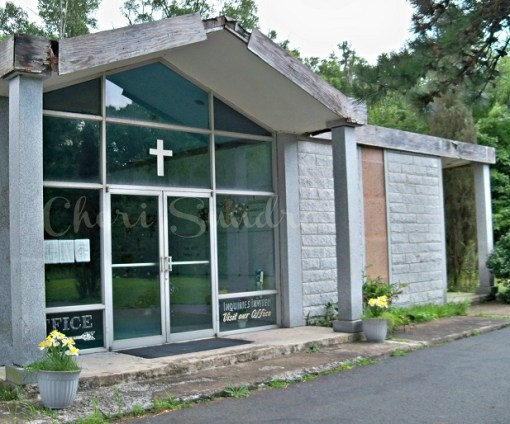
I posted the picture because it touched me at a core level, as it obviously did for the other people who took the time to “like” my Facebook post, to comment, or to contact me privately.  Many people were wondering about who is maintaining the property and why. My best guess would be that people with loved ones buried at the location may be going there to cut grass, or the county where it is located has taken on the responsibility.

The tax notices are from 2005.  That was seven years ago.  Maybe someone has taken it over since then & just lacks the funds to do any repairs yet (although I would think they would at least remove the notices from the windows!)  I kind of hope that the families of the people buried there would pull their resources to take over the park for themselves, which would seem to be the least upsetting option.

 The funniest message was from the wife a man, well versed in history, who was puzzled as to WHY a cemetery would owe back taxes. I shared a copy of the notice posted on the door with them, because I believe it contains a clue.  The Tax Claim Notice lists the former owner as “Blank” Memorial Garden INC, and I’m thinking that the fact that it belonged to a corporation and not a religious institution may play a role in the present circumstances of the location! It may now be incorporated, but I guess there is no money to be made in death unless it’s tax free!  😉

This is why I believe that posting these images is important; it adds another layer to our national discussion about the fall of our empire, even without disclosing the location.  What does it really say about society when corporations and taxation interfere with the ability to maintain the final resting place of our dead?

@@@@@@

Return To

GUERRILLA HISTORY

Table of Contents

Cheri Sundra © 2012
All Rights Reserved

The House Of Fans

Wrong Turn

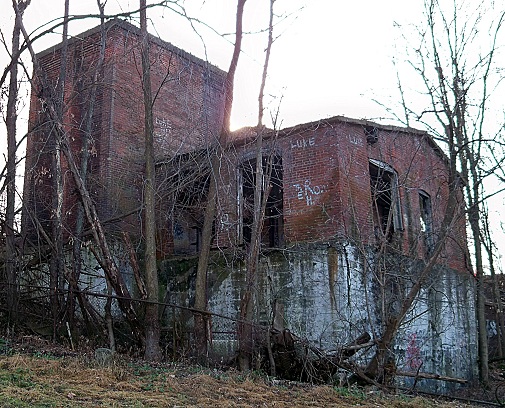
If you spend any time in Northeastern Pennsylvania, one thing that becomes evident is that everything and everyone here has ties to the anthracite coal mining industry.  The entire landscape has been permanently scarred by mining, and the reminders don’t look as if they will ever go away.  One such relic is the The Dorrance Colliery Fan Complex. 

Forgotten URBEX Chair at the Wilkes-Barre City Cemetery

Located on North River Street, right down the road from the long abandoned Hotel Sterling, directly behind the Wilkes-Barre City Cemetery and nestled along the Susquahanna River, remains the last portion of  the Dorrance Colliery.  For those of you outside of the NEPA region, a colliery is a coal mine and the buildings associated with it. 

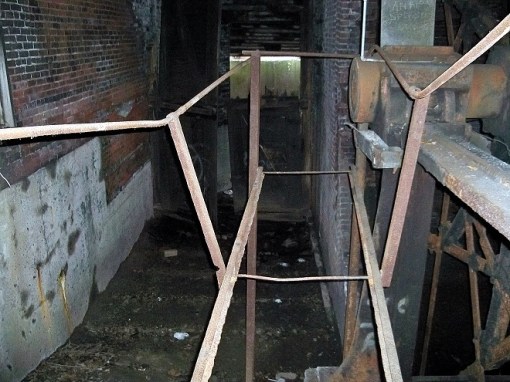
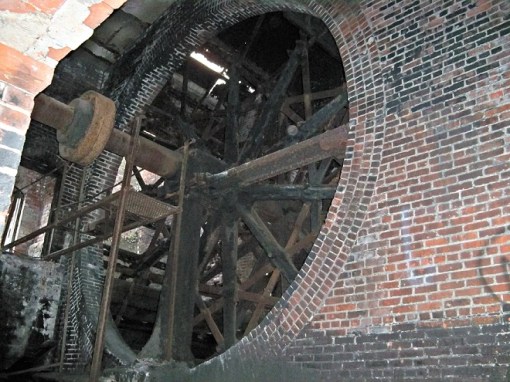
 The Lehigh Valley Coal Company operated this particular colliery from 1880 until 1959 and this fan complex was there for all of it.  Fans were required for safety reasons, such preventing gas explosions.  (Ahhh, the good old days of mining coal with open flame lamps!) 

While this veritable death-trap of a fan house still remains, the actual coal breaker and the other buildings were demolished in the 1980s to make room for a personal care home. 


Are they 100% sure that tetanus can’t become airborne?  😉 

***2016 Update: Some of these structures were recently demolished

facebook

@@@@@@@@

Return To

GUERRILLA HISTORY Table of Contents


Cheri Sundra © 2012
All Rights Reserved
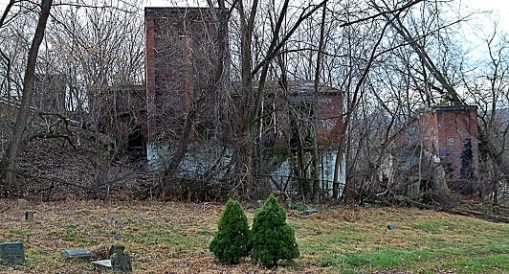
Huber Breaker Ruins: The Art of Industrial Decay

***Every photo also serves as a link to more of each photographer’s work

Photographer Scott Frederick, Philadelphia, Pennsylvania

Existing in a state of ruin and completely stripped of all functionality, the Huber Breaker looms over the bleak landscape of Ashley, Pennsylvania, a monument of the industrial revolution reduced to a useless scar, blighting the landscape.  A detritus of a bygone way of life, it has the power to tell us things about the past, while existing very much in the present.   

Photographer Jamie Clarke (aka RiddimRyder), Ontario, Canada

The Huber Breaker, a facility created for literally breaking chunks of coal into smaller bits, is a decaying piece of infrastructure from an industry that built an entire region.  Today the deafening noises and the human element of its function have been replaced by silence and total desolation as the abandoned breaker sits brooding on the landscape, now a decaying tomb in the post-industrial world.  Amazingly, it almost resembles something from a sci-fi movie set, in defiance of the fact that the machinery became outdated decades ago.

Photographer Dawn Robinson—Baltimore, Maryland

Photographer Stacy Shannon—Alexandria, Virginia

Photographer Enrico Fiore

History tells us that the breaker’s windows were designed for maximum use of sunlight, yet today the structure remains characteristically dark and somber, creating a compelling atmosphere for the photographers stopping by to ponder the passage of time and to bear witness to the slow destruction of this forsaken structure left behind by a long defunct enterprise.   

Photographer Enrico Fiore

Photographer Stacy Shannon—Alexandria, Virginia

Photographer LUIGI ROMANO (aka Egoista_73) with model Nicholas Bishop Michael of Model Mayhem #1634905

Machines often have a steampunk quality that can fuel the artistic imagination while the setting is comprised of titanic spaces that lend themselves to appearing like majestic ruins full of twisted metal and distant vanishing points. 

Photographer Jenn O’Malia—Groton, Connecticut

Photographer Dawn Robinson—Baltimore, Maryland

Blight itself can inspire all kinds of emotions in people because it is a display of failure that gives voice to the darker aspects of our communities. It can be shocking to directly confront the kind of neglect that sets in when the bottom falls out of a region’s economy. You are forced to realize that an industry once thrived at that location, generating wealth and opportunity for a privileged few, and all that remains for the community today is a massive hulk of neglect and decay, asking why the real estate that it stands on isn’t even valuable enough to warrant redevelopment.

Photographer LUIGI ROMANO (aka Egoista_73) with model Nicholas Bishop Michael of Model Mayhem #1634905

Photographer Cheri Sundra

 The obligatory history:

The Huber Breaker opened in 1939 to meet the bustling needs of the Anthracite coal industry and was able to process 7,000 tons of coal daily.  The company dyed the coal a blue color as a branding gimmick and it was advertised as “Blue Coal”. When demand for the mining industry declined, the facility closed in 1976.   Since that time, it has been left abandoned and open to vandals and scrappers. 

Photographer Geo Romolo, Toronto, Ontario

“This coal breaker, along with many others, is very special to me. They capture “Americana” at its best. The American Heartland could not be represented without these industrial backbones of our past. They represent to me the men and women that labored here. Our cities were and still are built on coal and steel. One image cannot even begin to capture the hard labor our forefathers put into pioneering the industrialization of America as we know it.”~~ Geo Romolo  

Photographer Jim Cook, Tunkhannock, Pennsylvania

“As a child growing up in the Wyoming Valley, the heart of the northeastern coal region,  I always wondered while passing by  that gargantuan structure on the highway what it would have been like to work there, or even be inside such a massive place. It wasn’t until I was older that I had an opportunity to step inside and take a look for myself. At that point in time the breaker had seen better days; the floors were starting to cave and the windows were mostly broken. However,  I really enjoyed exploring the breaker for various reasons, the most significant being the fact that it was such an integral part of the community where I grew up and its demise left the area and its occupants depressed. It is rich in history and that is why I enjoy photographing and documenting these forgotten places.”~~Jenn O’Malia

Photographer Jenn O’Malia—Groton, Connecticut

Photographer Stacy Shannon—Alexandria, Virginia

Photographer Dawn Robinson—Baltimore, Maryland

Photographer Cheri Sundra

Photographer Katherine Rogers (aka Dilated Pupil) , Tattoo Artist, Reading, Pennsylvania

“The Huber Coal Breaker was the first stop on our adventure this week and what a beauty it was!  ….This location is a bit unsafe because of the broken stairs and hanging debris, but we made our way up through the maze of death as I like to call it! The more time we spent in the Huber the more there was to shoot.”  ~~Scott Frederick Photography Blog

A Christo-esque Breaker Moment: I can’t help but wonder if this was a leftover background embellishment from a photo shoot, just a prank or was someone trying to make an artistic statement?~~Cheri Sundra

@@@@@

I was recently interviewed for an article about the Kirby Park Zoo Ruins:

Times Leader

~*~*~*~*~*~

Return To

GUERRILLA HISTORY Table of Contents


Cheri Sundra © 2012
All Rights Reserved

Angela Park: An American Eulogy

The abandoned amusement park of your childhood memories is where I decided to stop one day. ”Drove my Chevy to the levee but the levee was dry” were the lyrics  I was singing on my way to the long rotting carcass that was once the local amusement venue known as “The Playground of Northeastern Pennsylvania “.  A hollowness hung in the air as I pulled up to the field primarily containing weeds and busted up concrete, where the remains of Northeast PA memories of happier times lay abandoned, desolate and for the most part, dejected.

So Bye-Bye Miss American Pie

How the residents loved Angela Park! Just read any number of the accounts by local historians and reporters to learn the facts about the rise and decline of this once popular roadside attraction that reads like a sadly typical American eulogy to lost community, prosperity, and small town life.

I’m not really concerned about our agreed upon history about this specific park. I feel that way about many of the places I explore, much to the bewilderment of many local history buffs. I’m always interested in something different than facts about a long gone past. I’m concerned about the history of “just yesterday” and “now”.

I think that we often forget that history evolves, and while we can’t change the past, we can choose how to shape our present and future history. History is a verb, or it can be if we choose to make it into one. And how we choose to interpret events as they occur, often tells us unspoken truths about ourselves and society at that moment in time, if we care enough to listen.

This Used to Be My Playground

Standing at the park entrance, I longed to hear the clatter of the wooden roller coaster followed by happy shrieks as the cars crest and swoosh. I would have loved to see the electric sparkle on the ceiling of the bumper car pavilion and to catch a whiff of the mixture of greasy French fries, cotton candy, diesel fuel, and chlorine in the air. That’s the stuff memories are made of!

I could still smell that scent of pine that you would experience every time you rode the train near the picnic grove. But as far as I could tell, that was the only recognizable trait left from my memory of Angela Park since the burning charcoal and the picnickers left long ago.

I’ve visited abandoned places to photograph them before, but none that had been a part of my childhood experience. It really mattered to me that I’d been there to ride the Tilt-A-Whirl and Carousel. I have fond memories of what seemed like a cutting edge arcade during the pre—Wii and XBOX era. Angela Park was a fun place to spend a day with family or friends that we all had easy access to, back when we had a real sense of shared community. During those times, small towns across the nation had local amusement parks to go to during a simpler era when even the annual broadcasts of the Wizard of Oz or Willie Wonka & the Chocolate Factory were popular shared cultural events among millions of households with children.

As I stand there and look out at this amusement park from my childhood memories, it looks back at me, all neglected and ugly. Being there felt unsettling because all I could see was what wasn’t there anymore. Then I realized that this place still had life. Maybe not necessarily pleasant signs of life—but life just the same. It was hard to tell if that rustle in the weeds was a snake, a rat, or maybe a cute little bunny retreating as I moved closer.

People still come to the ruins of Angela Park as evidenced by the makeshift skateboard park which they’ve built, like good little recyclers, by re-purposing the abandoned pieces of lumber and wide concrete pads where concessions, games or rides once stood. At least the things the last community left behind are being used by others to try to construct some sense of community for themselves.

Somehow, abandoned places always take on a sometimes infinite number of second lives. Eastern State Penitentiary in Philadelphia, an abandoned jail turned museum, has an artist installation paying homage to this concept called The Ghost Cats which represents a testimony to survival as it calls attention to the lives of a colony of cats that took over the building for 28 years after it was abandoned as a jail in 1971.

Recorded accounts of Angela Park’s first attempt at second life, during the 1990’s and into the early part of the new millennium, are portrayed as a Twilight Zone-esque creepy-carnival-nightmare-come-true with descriptions of graffiti covered buildings where local “Goths” would hang out and frighten the local community with their drawings of six-pointed stars and drug references, potentially holding astral-crossing seances—whatever that means! This was also the time of national panic about school children who dressed in black like the “The Trench Coat Mafia” at Columbine High School, with communities full of the kind of fear-mongering that led to the sort of witch hunt that resulted in the hasty conviction and imprisonment of the now free West Memphis Three.

But that was also a different era in our recent history, before the proliferation of Ritalin, before schools were required to offer Emotional Support in the classroom and before bands like Green Day  articulated the newly evolving teenage angst of millions of Jesus of Suburbia  -types living in their soul-sucking cul-de-sacs across the nation. This was the time prior to the national frenzy of worshiping the tragically cursed souls of vampire boys who sparkle, before the culture of the undead became fashionable, and before “Goth” became a label for kids who were usually intellectual in nature and prone to artistic divergences outside of mainstream culture.

It was during this era that Angela Park became a local monument to vandalism and indifference, full of “Big City” type graffiti—which was scary to small town minds because they didn’t know what it all meant. This was prior to graffiti becoming recognized as a legitimate form of art with museums and art galleries  featuring graffiti exhibits and Paloma Picasso  designing her graffiti inspired jewelry for Tiffany & Co.  According to reports prior to demolition, the arcade at Angela Park was supposedly the most graffiti covered structure of all, a fitting and cool tribute for an abandoned arcade. Those hometown graffiti artists deserve applause for a job well done.

Given the lack of understanding by the community at that time about the kids who hung out at the discarded park, and the fact that all good things must eventually come to an end, the remaining structures at Angela Park were razed. Sadly, a new, more organized purpose has yet to be realized on the property.

Second Life After Abandonment

In a perfect world, I’d like to think that communities have the insight and resources to listen to what abandoned locations are telling them about potential uses for the future. In the case of Angela Park, the obvious answer would be to turn it into a legitimate skate park. But since the prohibitive cost of insurance was a major contributing factor to the decline of the amusement park, it is unlikely that a skate park could ever be realized at the location due to the high cost of liability.

It would be wonderful if someone would redevelop the location as another community-centric space with a progressive twist such as a simple public graffiti park. It would be easy to plant some flowers, put up some benches and build a huge wall for the purpose of allowing local graffiti artists to showcase their craft. Graffiti happens, usually in inconvenient places. Why not create legitimate places for it? It could become a constantly changing art exhibit for the community, by the community, and the wall could be repainted or cleaned off at regular intervals (like the graffiti wall in front of Graceland) so that there is always room for more artwork on a regular basis. Just like history, art can also be a verb and has the power to bring communities together. In this current era of America’s post-industrial decline, communities are left with too many abandoned places, few resources for development and a complete lack of imagination when it comes to ideas for new uses for these spaces.

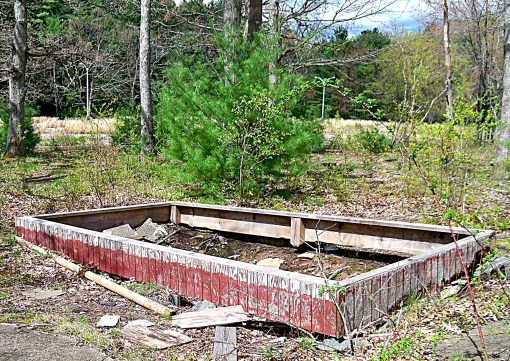
But whatever happens to the site of Angela Park in the future, the property, just like the community surrounding it, will constantly continue to change. As it stands now, Angela Park’s once proud Olympic size swimming pool holds trees instead of water, and the parking lot is well on its way to being eventually swallowed by the plants that have forced their way through cracks in the concrete. When humans fail to act, Mother Nature always reclaims her ground with the help of Father Time as he wears away the structural integrity of the objects that people leave behind.

angela-5

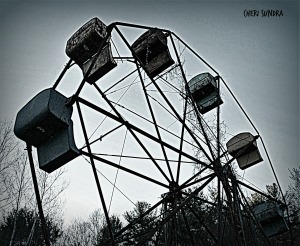
For an update about the Park’s Ferris Wheel, click here:

Cheri Sundra

The Obligatory History of Angela Park

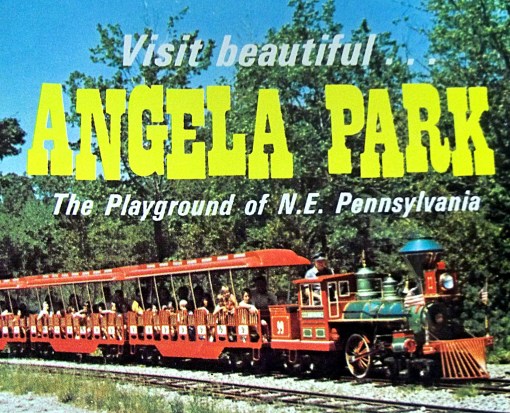
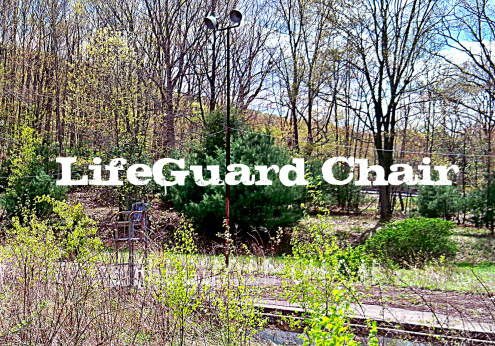
Angela Park opened during the summer of 1957 on Route 309 in Butler Township, just north of Hazleton, Pennsylvania. The amusement park started with only six rides which included a junior style wooden roller coaster built by the Philadelphia Toboggan Company. Throughout the years, a Paratrooper, Swinging Ship, Carousel, Spiral Slide, Scrambler, Ferris Wheel, Antique Cars, Tilt-A-Whirl, The Giant Slide, The Sky Ride, Tea Cups, an assortment of Kiddie Rides, The Swingin’ Gym, four refreshment stands, Porky the Paper Eater (an interactive pig-shaped trash receptacle that vacuumed paper through his mouth and told kids not to litter), several souvenir stands, a stage, an arcade, athletic fields, miniature golf, picnic facilities, and an Olympic size pool with changing facilities, lounge chair and diving boards helped the park earn the title the “Playground of Northeastern Pennsylvania”.

In 1985 the Barletta Family (the park was named after family matriarch Angela) sold the park to the Mirth Master Corporation, based in Downington, because the younger members of the family were not interested in operating the park. Less than three years later, Mirth Master filed for bankruptcy. The park closed after the 1988 season.

Several attempts to reopen the park failed. One attempt was led by Dr. Robert Childs of Hazleton, who hoped the park could continue as a nonprofit organization. Sadly, the park was put on the auction block in March of 1990 and the rides were auctioned off.

The structures at the park fell into disrepair and were vandalized after the park closed. The location was used for several years in the late 1990s as a training facility for the Lackawanna Junior College Police Training program.

In 2004, all remaining structures were demolished. All that remains at the location today are a few concrete footers, crumbling pavement, and a swimming pool filled with dirt and plant life. According to Wikipedia, the land is currently owned by New Land Development of Lackawanna County. Fishing is permitted on the property by courtesy of the landowner.

***All nostalgic images of Angela Park were captured by photographing a brochure from the collection of the Luzerne County Historical Society

@@@@@@@

Return To

GUERRILLA HISTORY Table of Contents

Cheri Sundra © 2011
All Rights Reserved


~*~*~*~*~*~*THE KIRBY PARK ZOO RUINS:

Looking for my article about the Kirby Park Zoo?  You’ll have to look for it in the September issue of IndependentNEPA!

Abandoned Zoo Graffiti

Visit my Flickr page for a more detailed look at all of the abandoned zoo ruins at:

http://www.flickr.com/photos/cheri_sundra/sets/72157624116662929/

Back To

GUERRILLA HISTORY Table of Contents

Cheri Sundra © 2010
All Rights Reserved

Post-Apocalyptic Chic Ghost Town: Concrete City, Nanticoke PA


By Cheri Sundra


Abandoned: 1924

Pictures from June 1 and June 7, 2010

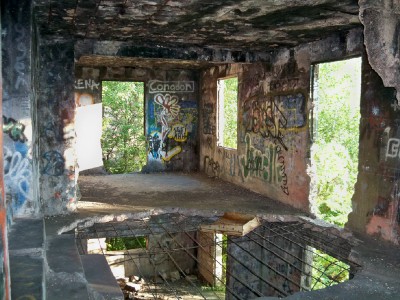
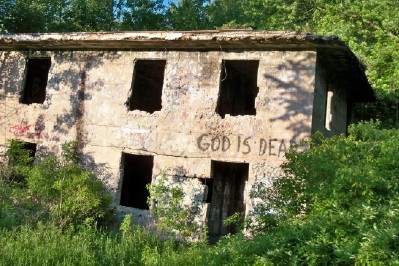
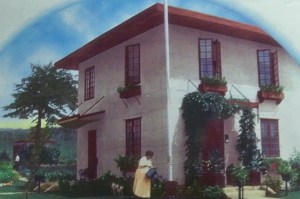
Nanticoke has its own post-apocalyptic-esque ghost town—the only thing missing is the roving band of marauders.  Referred to by some as one of the failed technological experiments in Pennsylvania railroad and coal mining history,  and by others as the first example of modern-day cookie-cutter or tract housing, the Concrete City ruins still stand as a monument to the “company housing” living arrangements experienced by some area workers during the late 1800’s and the early 1900’s.  Described as “virtual villas” by the upper class of coal mining families, these houses were regarded as a futuristic marvel when first constructed.

“Company Housing” in Pennsylvania usually referred to villages comprised of frame-built wooden houses, commonly called “shanties” by county assessors, that were hastily built by industrialist owners for their low-paid employees.  By controlling their housing arrangements, employers maintained more control over the lives of their employees and had more opportunity to exploit workers and their families.  A great example of this “traditional” company town can be seen at Eckley Miner’s Village, located just 9 miles east of Hazleton, Pennsylvania.

Concrete City is “company housing” with an architectural twist.  The “city” is a very early example of International Style Architecture which is characterized by buildings with rectilinear forms, unadorned of ornamentation or decoration and constructed with steel, glass and reinforced concrete.  This architecture style is a minimalist concept that stresses functionalism.

Pennsylvania railroads were using concrete, a novel building material at the start of the 20th Century, on a wide variety of projects.  Concrete City was built by the Coal Division of D L and W Railroad for employees of the Truesdale Colliery. The homes, which were built in 1911 and opened in 1913, were rented out to a hand-full of their current employees for $8.00 per month. Called the “Garden City of the Anthracite Region” by its designers, the requirements to be met by employees for residency consideration in this cutting-edge, model worker housing community included English as a first language and employment with the company in a position of “high value” such as mine supervisor, foreman or technician.

Concrete City consists of 20 buildings.  Each one was a duplex that housed two families.  Each half of every single standing structure contained a kitchen, living room and dining room downstairs and four bedrooms on the second floor.  Concrete outhouses were constructed behind each house.

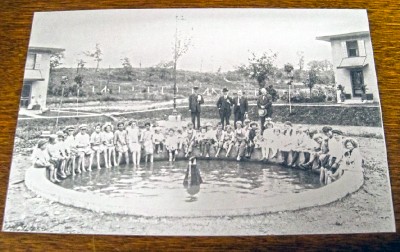
All of the houses were arranged around a central plaza that was about the size of a football field which contained a pavilion, baseball field and a tennis court.

There was a wading pool for children and a waist deep, circular swimming pool with constantly flowing water for adults which are said to be the first in-ground pools built in the Wyoming Valley.  The pool was emptied in 1914 after a boy drowned.  Concrete sidewalks illuminated by electric lights and landscaped yards completed the futuristic community.  Concrete City residents were said to be plagued by dampness because moisture constantly seeped thru the porous concrete which led to condensation on the walls.

This is a picture of an item from the archives of the Luzerne County Historical Society.

Eleven years after it’s construction, Concrete City was abandoned because the owners did not want to install an expensive sewer system as required by

Concret City Now

the township in 1924. Ironically, demolition of the modern “Garden City of the Anthracite Region” was halted when it was discovered that the implosion of 100 sticks of dynamite in one of the houses had very little impact.  The concept of demolishing the city made of concrete was deemed too expensive, despite the fact that coal was discovered under the site after it was abandoned.

Currently, many of the structures exhibit fire damage because the Luzerne County Volunteer Fireman’s Association has used Concrete City as a training center.

Despite the fact that it has been designated as an historical site in 1998 by the Pennsylvania Historical and Museum Commission, locals frequently use Concrete City for paint ball games or parties as evidenced by the numerous paint balls and beer cans scattered about the grounds. Graffiti covers all of the buildings throughout the entire abandoned community.

Concrete City ruins photographed on June 1 & June7, 2010

NEED MORE CONCRETE CITY IN YOUR LIFE?

***To see how Concrete City seems to be experiencing new life as a frequently changing urban art gallery, go to Spontaneous Acts of Art–Concrete City Ruins

***Want more in-depth history of Concrete City, with a twist?  Check out   Of Concrete City, Mermaids and the Ghost Town Stairs to Nowhere (Part 1) and  Of Concrete City, Mermaids and Ghosts (both Past & Present) Part 2

***And visit Vimeo to watch my Concrete City mini-Movie!

*****Back to GUERRILLA HISTORY Table of Contents

Cheri Sundra © 2010              
All Rights Reserved
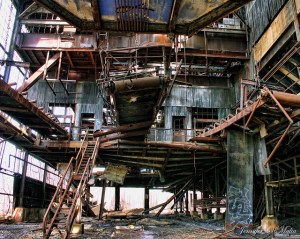


Ghost Town Graffiti


Back To

GUERRILLA HISTORY TABLE of CONTENTS


Cheri Sundra © 2010
All Rights Reserved