Posts Tagged ‘ graffitti ’

For Lovers Only–Abandoned Penn Hills Pocono Resort

That kid Rich 1

Photo Courtesy Rich Zoeller aka THAT KID RICH  

CRW_0156

Photo Courtesy of Jennifer O’Malia

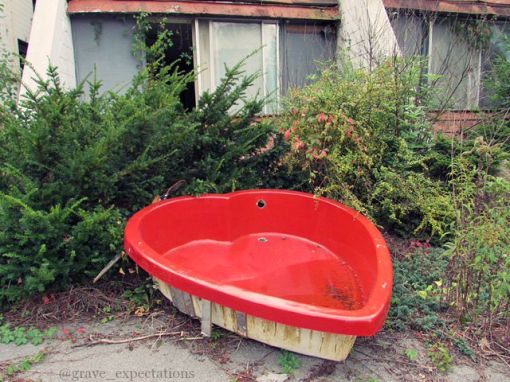
Welcome to JizzneyLand!  Celebrated as the “Paradise of Pocono Pleasure” and “a place of unbridled passion”, the honeymoon resort known as Penn Hills catered to Swinging Young Couples.  With tacky, lust inspired décor like round beds, heart-shaped whirlpool bathtubs, gaudy floor-to-ceiling shag carpeting, and mirrors on the ceiling, the Hotel California had nothing on this place!

Grave_Expectations PennHills4

Photo Courtesy of Adrienne Shellenberger aka GRAVE EXPECTATIONS 

If these walls could talk they’d tell stories of love, infidelity, lust, corruption and Mob connections! As soon as I started posting pictures from this location on social media, I had several women reach out to tell me tales of visiting here with suave Italian “business men”, who owned fancy cars, printing shops, drop ship businesses, video distribution companies, and other undefinable “business interests”.  Of course, no one wanted to be interviewed in detail “on the record”, but Billy D’Elia is the name that came up, in association with these men, several times as the three different women shared their stories with me.

Kat Penn Hills_DSC5901 copy

Photo Courtesy of Katherine Rogers

CRW_0162Photo Courtesy of Jennifer O’Malia

Kat Penn Hills_DSC5795 copy

Photo Courtesy of Katherine Rogers

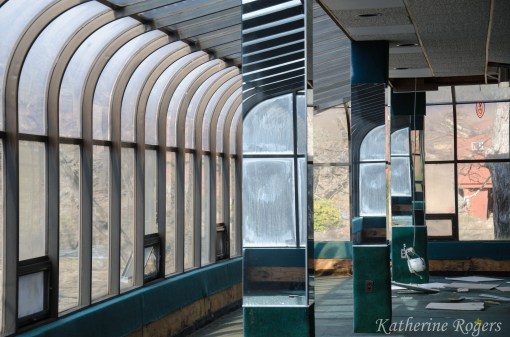
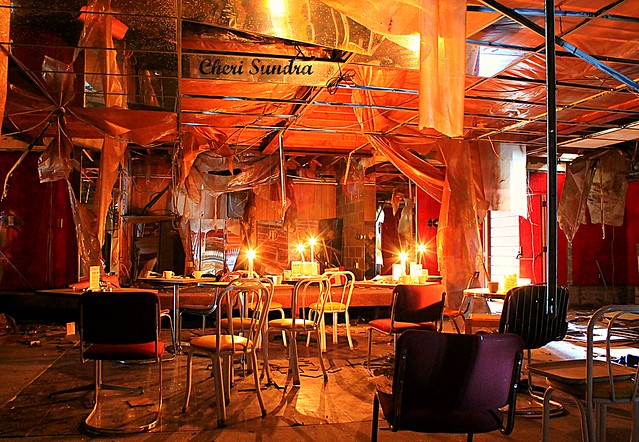
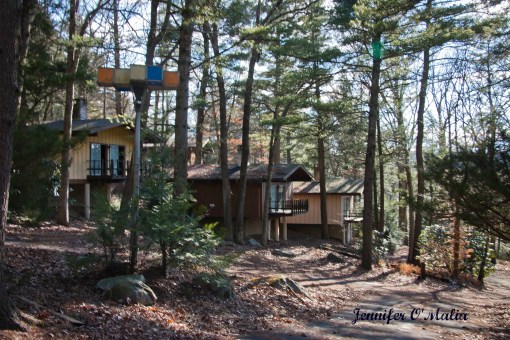
While this location started as a tavern in 1944, the 500 acre resort grew to include skiing, golf, swimming, archery, ice skating, snowmobiling, tennis, an indoor game room, a massive dining hall, and a night/comedy club.  The property also contained one cool historical feature–modernist streetlights from the 1964 World’s Fair.

World’s Fair Pavilion & Street Lights

1964 World’s Fair Street Light at Penn Hills
CRW_0160

Photo Courtesy of Jennifer O’Malia 

During its prime in the 1960s and 1970s, Penn Hills was so popular that reservations often had to be made months in advance.  Anyone living in the Tri-State Area during the 1970s will remember the TV commercials with the slogan: “Penn Hills for lovers only.  You’re never lonely at Penn Hills….. Just 90 minutes from New York City!”

CRW_0131

Photo Courtesy of Jennifer O’Malia

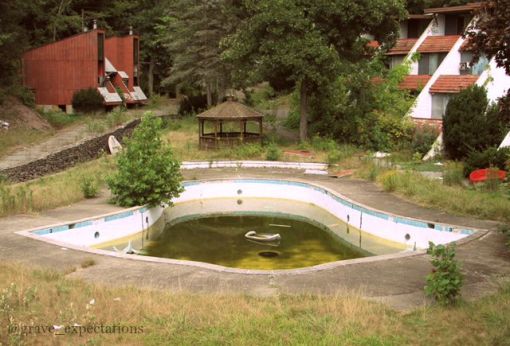
Located in Analomink, Monroe County, Pennsylvania, the resort began its decline in the late 1980s, along with many of the resorts and hotels in that same region.  Some blame the rising affordability of air travel at that time, coupled with the inexpensive packages available at all-inclusive resorts at destinations in countries like Mexico.  Others say the resorts in the Poconos were built up in anticipation of legalized casino gambling in the state of Pennsylvania, which didn’t materialize as quickly as developers assumed it would.

Wedding Bell Shaped Pool
Grave_Expectations PennHills5

Photo Courtesy of  Adrienne Shellenberger aka GRAVE EXPECTATIONS

CRW_0156

Photo Courtesy of Jennifer O’Malia

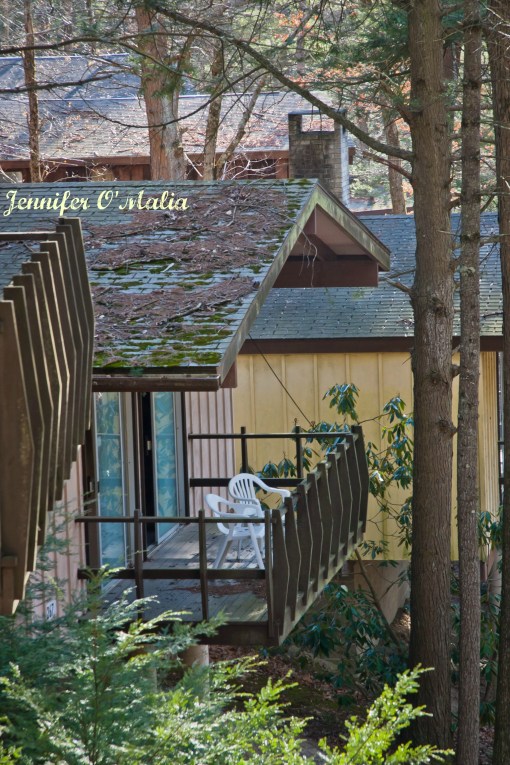
For whatever reason, lovers visiting Penn Hills in the new millennium found the accommodations horrifying during the last few years that it was open.   Consumer reviews from online travel sites definitely articulate how much the resort and its services deteriorated since its hey-days as a honeymoon destination spot.  Consumers described a resort that was deserted and scary.   They depict rooms that smelled moldy, contained outdated furniture, chipped paint and non-operational whirlpool tubs.  Accommodations were full of bugs, stains, and littered with graffiti containing slogans such as “We got screwed at Penn Hills”.  They also claimed that the drinks at the bar were watered down, the food was barely edible and the property was literally falling apart.   Reviews say that the wood on the buildings was rotting, the pool was peeling, the tennis courts had potholes, archery targets were no longer standing upright, and most of the buildings looked abandoned.

That Kid Rich

Photo Courtesy Rich Zoeller aka THAT KID RICH Kat Penn Hills_DSC5735 copy Photo Courtesy of Katherine Rogers

CRW_0094

Photo Courtesy of Jennifer O’Malia

Grave_Expectations PennHills1

Photo Courtesy of Adrienne Shellenberger aka GRAVE EXPECTATIONS

When Penn Hills co-founder, Frances Paolillo died in 2009 at the age of 102, the resort closed less than two months later. According to multiple internet sources, the workers’ final paychecks were never issued.  The Monroe County Tax Claim Bureau reported that Penn Hills owed about $1.1 million in back taxes and was on a payment plan since 2006 to defray that debt. Portions of the property were sold at tax sale. In June of 2013, the remaining parcel was purchased for $25,000 at a repository sale by Penn Resort Investment, LLC, based in Jim Thorpe.  According to newspaper reports, Stroud Township officials have been trying to get the new owners to secure the property.

Grave_Expectations PennHills6

Photo Courtesy of Adrienne Shellenberger aka GRAVE EXPECTATIONS

Since declining into a state of abandonment, the resort, which was already in serious disrepair, has fallen victim to copper thieves, flooding, vandalism, and recent fires.  According to newspaper reports from December 2014, there have been a total of 98 instances requiring a police response at the resort since its closure, because of suspicious circumstances, burglary, and theft.  Stroud Township says if the current owners don’t cooperate, the township could eventually demolish the old resort and put a lien on the property.

Kat Penn Hills_DSC5911 copy

Photo Courtesy of Katherine Rogers

That Kid Rich Penn Hills

Photo Courtesy Rich Zoeller aka THAT KID RICH 

CRW_0172

Photo Courtesy of Jennifer O’Malia

Grave_Expectations PennHills3

Photo Courtsey of Adrienne Shellenberger aka GRAVE EXPECTATIONS

~*~*~

Some of My Own Photos From That Location:

The Laugh with Abandonment Comedy Club
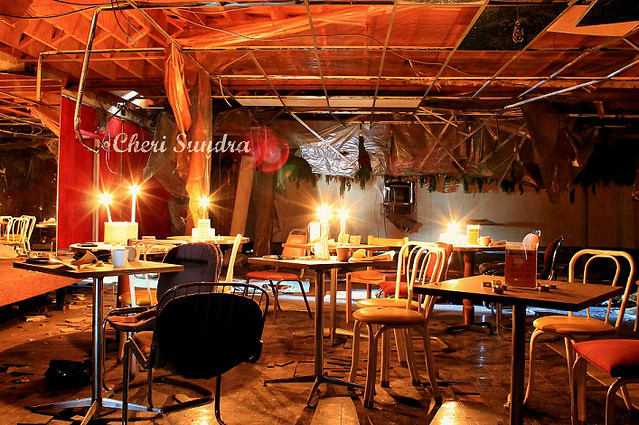
Laugh With Abandonment Comedy Club
Comedy Club View 2

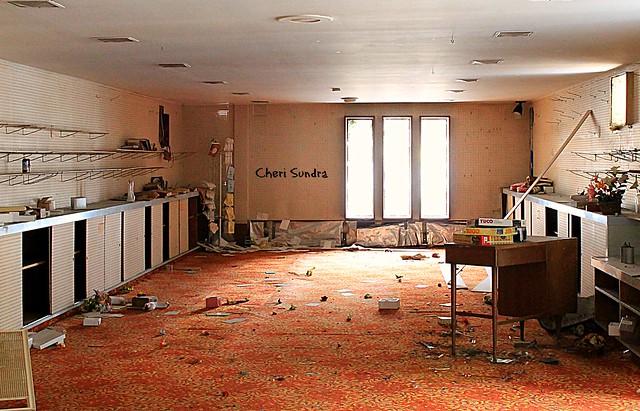
The Abandoned Gift Shop

Gift ShopPenn Hills Gift Shop

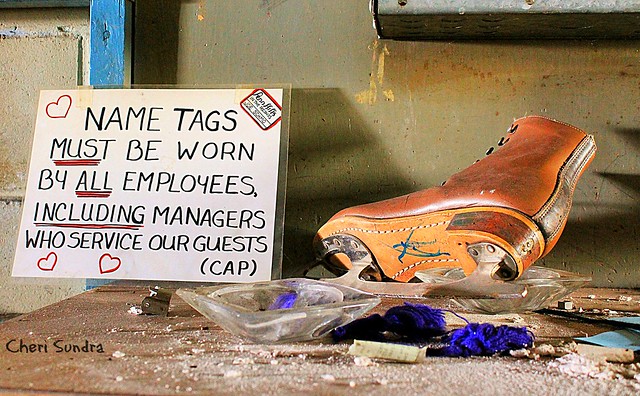
The Abandoned Skating Rink
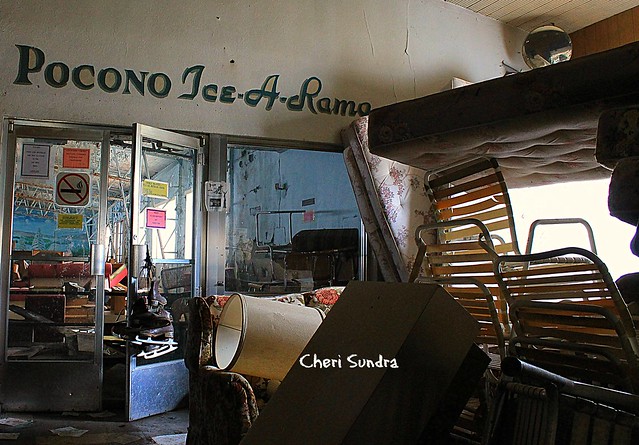
Skating Rink 2

Skating

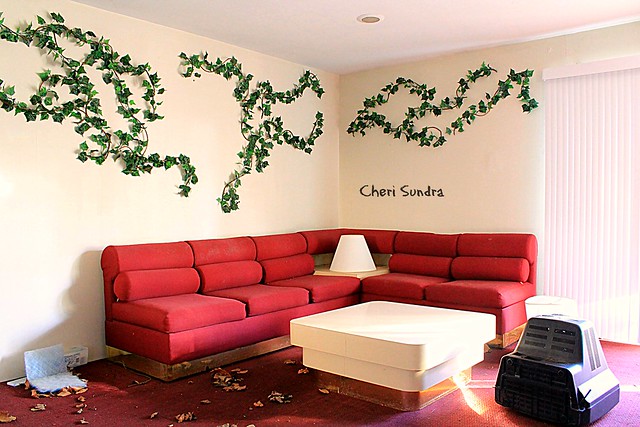
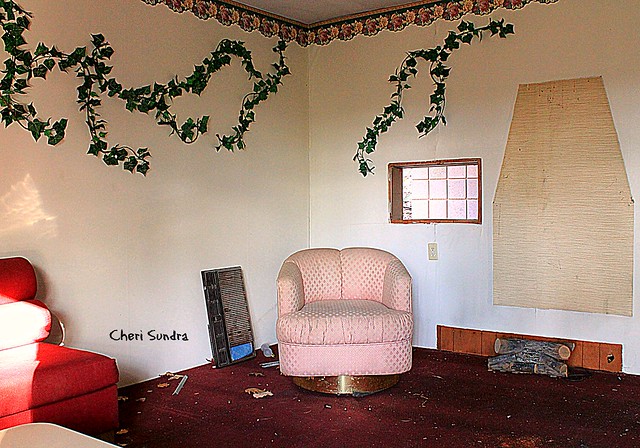
Guest Rooms (some don’t seem totally “abandoned”)
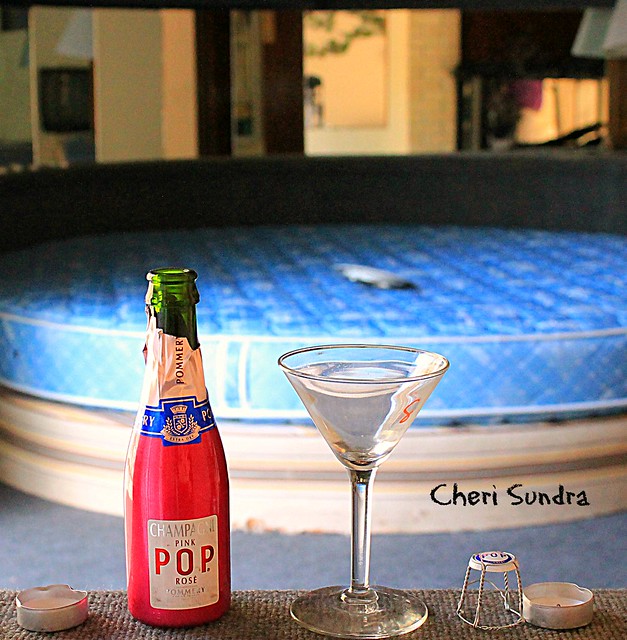
Guest Room 1
Guest Room 2

Guest Room 3

Abandoned Indoor Pool (no, that’s not ice)
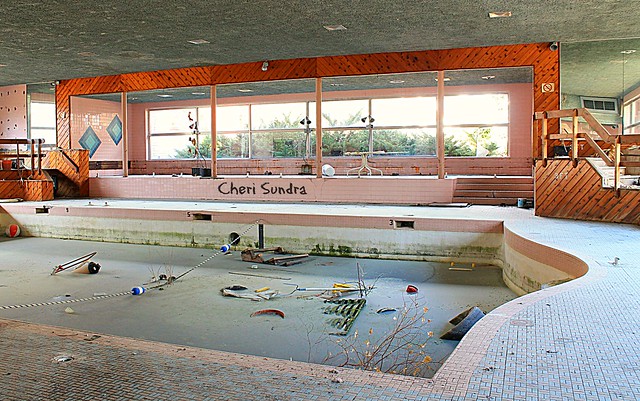
Indoor Pool

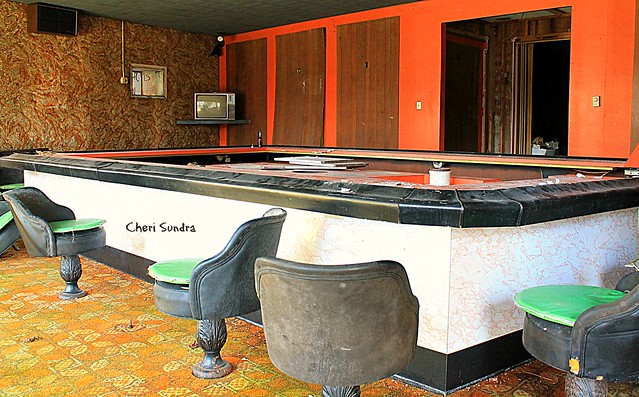
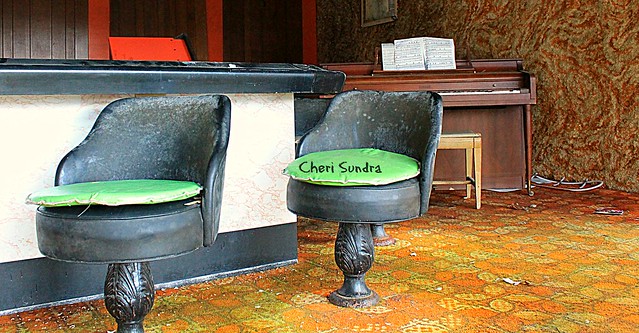
Abandoned Indoor Poolside Bar

Pocono Palace Easter Weekend 065 fixed
Pocono Palace Easter Weekend 070 sig

~*~*~

facebook

Return To Guerrilla History Table Of Contents 

Cheri Sundra © 2015
All Rights Reserved

Find my photos on Flickr!

(Video) Ghost Town: Post-Apocalyptic Chic “Concrete City”–another Unemployed Zombie Building Infiltration Specialist Production

To see my video featuring a fun romp thru a ghost town in Pennsylvania visit: (Video) Ghost Town: Post-Apocalyptic Chic “Concrete City”–another Unemployed Zombie Building Infiltration Specialist Production Abandoned in 1924, Concrete City is said to be the first example of modern-day cookie-cutter or tract housing.  This residential development, built in 1911, consisted of 20 buildings, each one housing two families.  Both halves of every structure contained a living room, kitchen and dining room downstairs, with four bedrooms on the second floor.  Outhouses were constructed behind the dwellings.  The homes were arranged around a central plaza that contained a pavilion, baseball field, tennis court and wading pool.  Concrete sidewalks illuminated by electric lights and landscaped yards completed this cutting-edge community, which was abandoned in 1924 because the owners did not want to install an expensive sewer system as required by the township.

 Return to

GUERRILLA HISTORY 

Table of Contents

Cheri Sundra © 2012 All Rights Reserved

Post-Apocalyptic Chic Ghost Town: Concrete City, Nanticoke PA


By Cheri Sundra


Abandoned: 1924

Pictures from June 1 and June 7, 2010

Nanticoke has its own post-apocalyptic-esque ghost town—the only thing missing is the roving band of marauders.  Referred to by some as one of the failed technological experiments in Pennsylvania railroad and coal mining history,  and by others as the first example of modern-day cookie-cutter or tract housing, the Concrete City ruins still stand as a monument to the “company housing” living arrangements experienced by some area workers during the late 1800’s and the early 1900’s.  Described as “virtual villas” by the upper class of coal mining families, these houses were regarded as a futuristic marvel when first constructed.

“Company Housing” in Pennsylvania usually referred to villages comprised of frame-built wooden houses, commonly called “shanties” by county assessors, that were hastily built by industrialist owners for their low-paid employees.  By controlling their housing arrangements, employers maintained more control over the lives of their employees and had more opportunity to exploit workers and their families.  A great example of this “traditional” company town can be seen at Eckley Miner’s Village, located just 9 miles east of Hazleton, Pennsylvania.

Concrete City is “company housing” with an architectural twist.  The “city” is a very early example of International Style Architecture which is characterized by buildings with rectilinear forms, unadorned of ornamentation or decoration and constructed with steel, glass and reinforced concrete.  This architecture style is a minimalist concept that stresses functionalism.

Pennsylvania railroads were using concrete, a novel building material at the start of the 20th Century, on a wide variety of projects.  Concrete City was built by the Coal Division of D L and W Railroad for employees of the Truesdale Colliery. The homes, which were built in 1911 and opened in 1913, were rented out to a hand-full of their current employees for $8.00 per month. Called the “Garden City of the Anthracite Region” by its designers, the requirements to be met by employees for residency consideration in this cutting-edge, model worker housing community included English as a first language and employment with the company in a position of “high value” such as mine supervisor, foreman or technician.

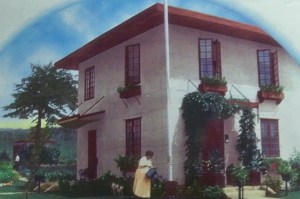
Concrete City consists of 20 buildings.  Each one was a duplex that housed two families.  Each half of every single standing structure contained a kitchen, living room and dining room downstairs and four bedrooms on the second floor.  Concrete outhouses were constructed behind each house.

All of the houses were arranged around a central plaza that was about the size of a football field which contained a pavilion, baseball field and a tennis court.

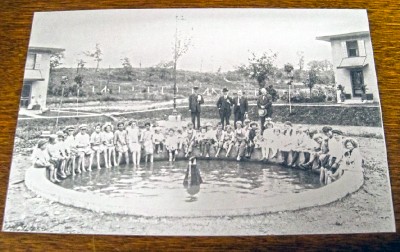
There was a wading pool for children and a waist deep, circular swimming pool with constantly flowing water for adults which are said to be the first in-ground pools built in the Wyoming Valley.  The pool was emptied in 1914 after a boy drowned.  Concrete sidewalks illuminated by electric lights and landscaped yards completed the futuristic community.  Concrete City residents were said to be plagued by dampness because moisture constantly seeped thru the porous concrete which led to condensation on the walls.

This is a picture of an item from the archives of the Luzerne County Historical Society.

Eleven years after it’s construction, Concrete City was abandoned because the owners did not want to install an expensive sewer system as required by

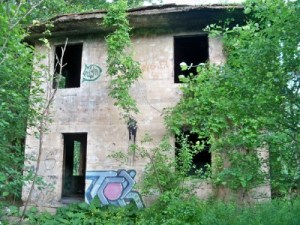
Concret City Now

the township in 1924. Ironically, demolition of the modern “Garden City of the Anthracite Region” was halted when it was discovered that the implosion of 100 sticks of dynamite in one of the houses had very little impact.  The concept of demolishing the city made of concrete was deemed too expensive, despite the fact that coal was discovered under the site after it was abandoned.

Currently, many of the structures exhibit fire damage because the Luzerne County Volunteer Fireman’s Association has used Concrete City as a training center.

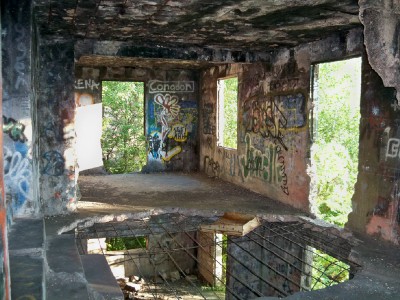
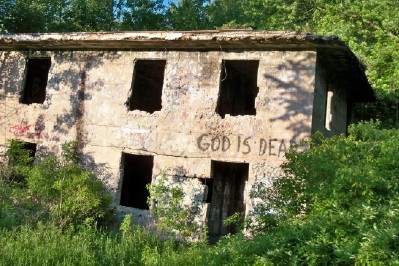
Despite the fact that it has been designated as an historical site in 1998 by the Pennsylvania Historical and Museum Commission, locals frequently use Concrete City for paint ball games or parties as evidenced by the numerous paint balls and beer cans scattered about the grounds. Graffiti covers all of the buildings throughout the entire abandoned community.

Concrete City ruins photographed on June 1 & June7, 2010

NEED MORE CONCRETE CITY IN YOUR LIFE?

***To see how Concrete City seems to be experiencing new life as a frequently changing urban art gallery, go to Spontaneous Acts of Art–Concrete City Ruins

***Want more in-depth history of Concrete City, with a twist?  Check out   Of Concrete City, Mermaids and the Ghost Town Stairs to Nowhere (Part 1) and  Of Concrete City, Mermaids and Ghosts (both Past & Present) Part 2

***And visit Vimeo to watch my Concrete City mini-Movie!

*****Back to GUERRILLA HISTORY Table of Contents

Cheri Sundra © 2010              
All Rights Reserved


Ghost Town Graffiti


Back To

GUERRILLA HISTORY TABLE of CONTENTS


Cheri Sundra © 2010
All Rights Reserved